
The following report is by Call of the Creek:
Stream Conditions & Weather
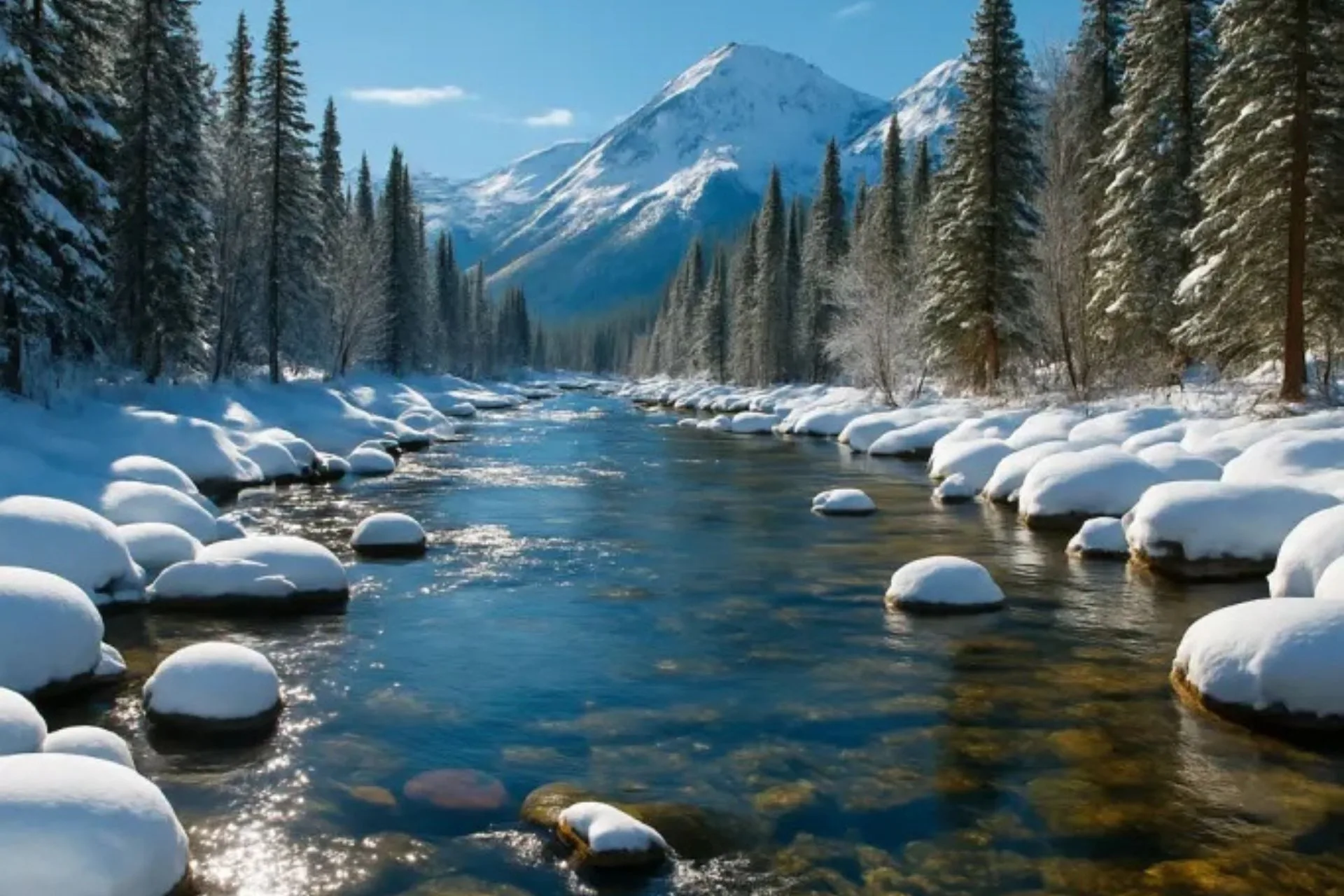
December settles hard across Southwest Montana, locking the high-country creeks under ice and pushing nearly all trout activity into slower, deeper winter water. Daytime highs hover in the 20s and low 30s, and overnight lows tighten river edges into steel. Water temps on the Madison, Gallatin, and Big Hole are running cold — often 34–38°F — which means trout slide into softer seams and conserve every calorie. Clarity remains strong across most systems, especially tailwaters, which makes presentation the difference-maker.
Hatch activity shifts into its simplest winter form: midges. Tiny clusters form when sunlight breaks through, usually between 11 a.m. and 2 p.m. Trout won’t move far, but they will rise in gentle back-eddies or sip emergers just beneath the film when conditions line up. Sub-surface is still the dominant game; fish are holding deep, slow, and predictable.
Flows on major rivers are stable for winter: the Madison stays firm and wadeable, the Gallatin holds clear unless storms roll through the canyon, and the Big Hole remains in its classic winter pattern — beautiful, sparse, and demanding slow presentations. The theme this month is simple: move less, observe more, and fish the water that looks “too slow” for summer.
Key Waters to Watch
Madison River (Upper & Lower)
Flows are steady and clarity is excellent. Trout pod up in long, slow glides and at the edges of deep buckets. Midge clusters and Griffith’s Gnats can pull a few fish in the mid-day window, but the real work happens below: small zebra midges, tungsten Perdigons, and soft hackles rolled slowly near the bottom. A light winter breeze is enough to shut down the topwater, so be ready to switch quickly.
Gallatin River (Canyon & Meadow Sections)
The canyon is beautiful but cold and shaded; fish the few sunlit hours to avoid icing guides every cast. The meadow stretches near Big Sky hold more consistent wintering spots — soft bends, deep trenches, and undercut edges. Tiny midge pupae and WD-40s in size 20–22 are the staples. Expect subtle strikes; an indicator barely twitches, or the drift simply stops.
Big Hole River
Classic winter solitude. Ice shelves grow daily, narrowing the fishable seams to slow-side pockets and deeper center channels. Streamers can still work early or late in the week during mild spells — thin-profile patterns stripped painfully slow. Most days, though, small midges and hare’s-ears fished near the bottom will outproduce everything else.
Jefferson River
Low, cold, and technical — but rewarding for the patient angler. Deep winter holes and long tailouts are holding browns that still respond to slow-drift nymph rigs. Use extra weight to reach the bottom and keep presentations tight. Don’t expect numbers; expect one or two heavy fish showing up when everything lines up.
Ruby River (Tailwater)
A bright spot for winter anglers. Stable flows and consistent water temps keep fish active longer each day compared to freestones. Midge emergers, RS2s, and slim-bodied nymphs in the 18–22 range produce steady action. This is the river where you can still find mid-day risers in December if you’re patient enough.
Fly Patterns & Tactics
Dry Flies
– Griffith’s Gnat #18–22
– Hi-Vis Midge Cluster #18–20
– CDC Midge Adult #20–22
Nymphs
– Zebra Midge (Black, Olive, Red) #18–22
– WD-40 #20–22
– RS2 (Grey/Black) #20–22
– Thin-bodied Perdigons #16–20
– Soft Hackle Pheasant Tail #16–18
Streamers
– Thin-profile sculpin patterns #6–10
– Sparkle Minnow (olive) — fished slow
– Black Leech #8
Tactics
– Fish 11 a.m. to 3 p.m. when temps peak.
– Target soft, deep winter water — ignore faster seams entirely.
– Keep drifts slow and weighted; trout aren’t chasing.
– Expect subtle takes — tighten up at the slightest hesitation.
– When rising trout appear, switch to midge clusters immediately.
Rules & Reminders
– Watch for shelf ice and unstable edges — Montana rivers shift daily in winter.
– Respect redds if you move near areas where late brown-spawn activity may linger.
– De-ice your guides often; frozen guides can crack rods under pressure.
– Clean and dry wading gear to prevent aquatic hitchhikers.
– Ensure your Montana fishing license is current — many visitors forget winter expiration dates.
Reflections from the Stream
Winter in Southwest Montana teaches a different kind of patience. The rivers run quiet, shadows stretch long across the snow, and every fish feels earned because every cast requires intention. It’s a season where you hear your own footsteps, see your breath in the air, and watch the river’s surface change color with each hour of weak sun.
December strips fly fishing back to its essentials — confidence, rhythm, and presence. When a trout finally rises or your indicator pauses just long enough to matter, it feels like the river giving you a small, quiet nod.