
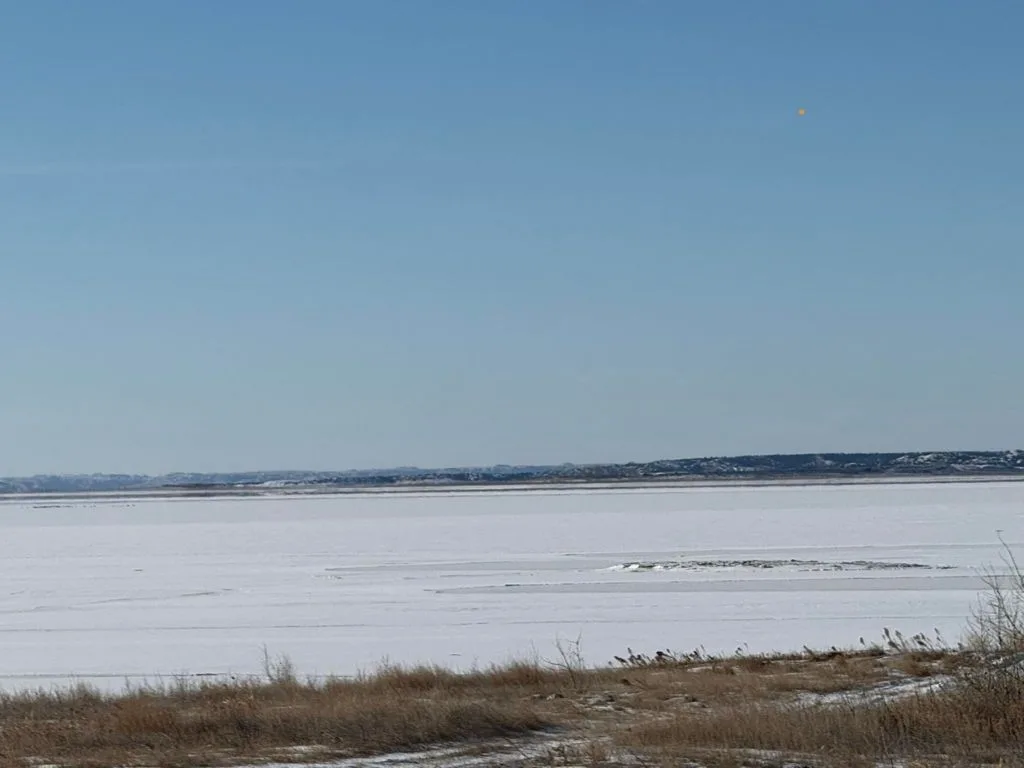
Here’s the latest ice update from Lakeridge Lodging and Bait Shop. As others have reported, parts of Fort Peck Lake have capped over again, but conditions remain thin, snow-covered, and unpredictable.
Key Takeaways
- Some areas have capped over again, but the ice is still thin and inconsistent.
- Snow cover can hide open cracks and slush, making hazards harder to spot.
- New capped ice may meet older unstable ice—use extra caution.
- Dry Arm, Flat Lake, and Duck Creek bays have stayed frozen, but that does not mean all ice is safe.
Current Fort Peck Lake Ice Conditions
Reports indicate sections of the lake are capped (thin thin) and snow covered, meeting older, unstable ice. With snow on top, open cracks and slush can be harder to see. Conditions are described as unpredictable.
Areas Mentioned
- Dry Arm
- Flat Lake
- Duck Creek bays
These bays have stayed frozen, but again, that does not mean all ice is safe ice.
Safety Reminder
Stay safe and stay warm.
Photos: via Lakeridge Lodging and Bait Shop.
FAQ
Has Fort Peck Lake capped over again?
Yes. The update notes that parts of the lake have capped over again, but conditions are still thin and unpredictable.
Why are current ice conditions described as unpredictable?
Ice is reported as thin and snow-covered in places, meeting older unstable ice. Snow cover can also make open cracks and slush harder to see.
Which areas are still frozen according to this report?
Dry Arm, Flat Lake, and Duck Creek bays have stayed frozen.
Does frozen ice mean it’s safe to travel on?
No. The report specifically warns that frozen conditions do not mean all ice is safe ice.
Montana's outdoor week, in your inbox at 7am Friday.