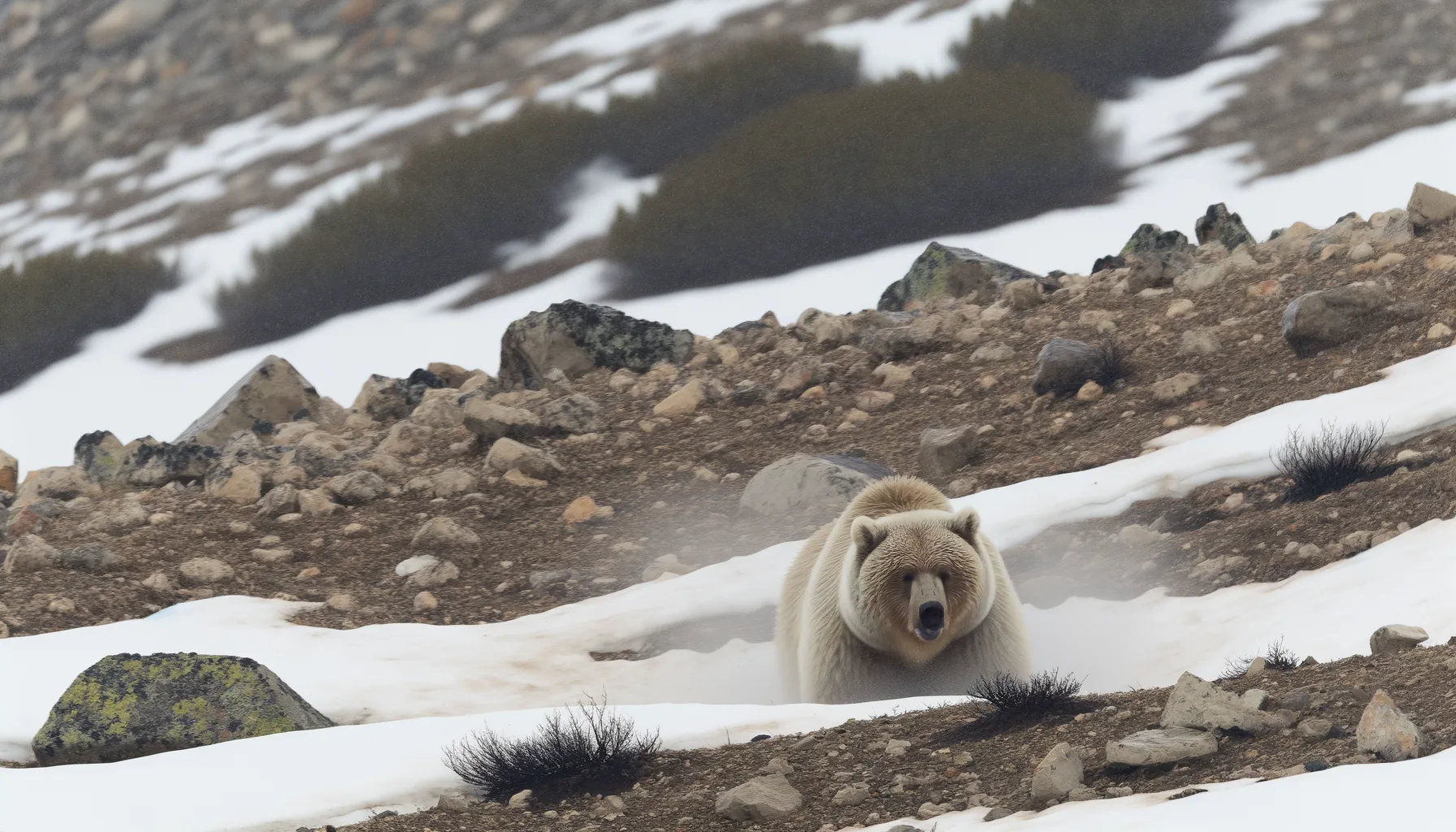
The first grizzly of the season is out, and if you’re planning spring fishing trips, shed hunts, or early season scouting in bear country, you need to understand what this means for your safety and success in the backcountry.
Yellowstone biologists just confirmed what experienced Montana outdoorsmen already suspected—grizzlies are emerging from their dens, and they’re hungry. The first documented bear of 2026 was spotted doing exactly what you’d expect: feeding aggressively on a bison carcass. This isn’t just wildlife trivia. It’s a critical reminder that spring in Greater Yellowstone and Northwest Montana demands a different level of awareness than any other season.
What Drives Bears Out Early
Grizzlies don’t emerge on a calendar schedule. They respond to a combination of temperature, snowpack, and most importantly, their own metabolic needs. After months without eating, a bear’s first priority is replacing lost body mass—they can lose up to 30% of their body weight during hibernation. That winter wolf kill, that elk that didn’t make it through a hard February, or that bison carcass near a river? Those are magnets for hungry bears.
Here’s what matters for you: carcass sites become danger zones. Whether you’re fishing a spring creek, hiking into a favorite glassing spot, or searching for fresh sheds, understanding bear behavior around food sources could save your life. Bears defending a food cache are exponentially more dangerous than bears simply traveling through country.
The Wolf Connection Nobody Talks About
There’s an underappreciated dynamic at play in Montana’s backcountry that directly affects where and when you’ll encounter grizzlies. Wolves create carcass sites. Wolves weaken prey. Wolves provide the very food sources that draw bears out of their dens early and keep them concentrated in specific areas through late spring.
In areas with healthy wolf populations—much of Northwest Montana, the Greater Yellowstone Ecosystem, and increasingly the Bitterroot—you’re dealing with a landscape shaped by predator-on-predator interactions. A wolf kill from January is still feeding a grizzly in March. That matters when you’re planning where to fish, where to hunt spring turkeys, or where to set up trail cameras.
Practical Adjustments for Spring 2026
If you’re heading into bear country before green-up—roughly mid-May in most of Montana—here’s what changes:
- Carry spray on your chest, not your pack. Spring bears move fast and they’re food-obsessed. Reaction time matters more in March than August.
- Scout drainage bottoms with optics first. Don’t hike into thick riparian cover blind. Glass it thoroughly. Bears concentrate near water and winter kill sites in valley bottoms.
- Assume every dead elk or deer has a claim on it. If you spot a carcass, mark it on your GPS and give it a half-mile berth minimum. Come back in two weeks.
- Fish in groups. That solo spring creek session might be meditative, but it’s also when you’re most vulnerable. Two anglers make more noise and present a bigger perceived threat.
- Adjust your timing. Early morning and dusk are prime feeding times. Consider midday excursions when bears are more likely to be bedded.
The Bigger Picture
Early bear emergences aren’t anomalies anymore—they’re the pattern. Whether it’s warmer winters, changing snowpack, or robust prey populations, we’re seeing grizzlies active earlier and later than historical norms. For Montana outdoorsmen, this compresses the “safe season” on both ends and demands year-round bear awareness in occupied habitat.
The good news? We’re better prepared than ever. Bear spray works. Education is widespread. Most conflicts are preventable. But only if you treat every spring outing in grizzly country with the seriousness it deserves.
That first bear out of the den in Yellowstone isn’t just a wildlife spectacle. It’s a signal. Spring has consequences in Montana’s backcountry. Make sure you’re ready for them.
Source inspiration: MSN