
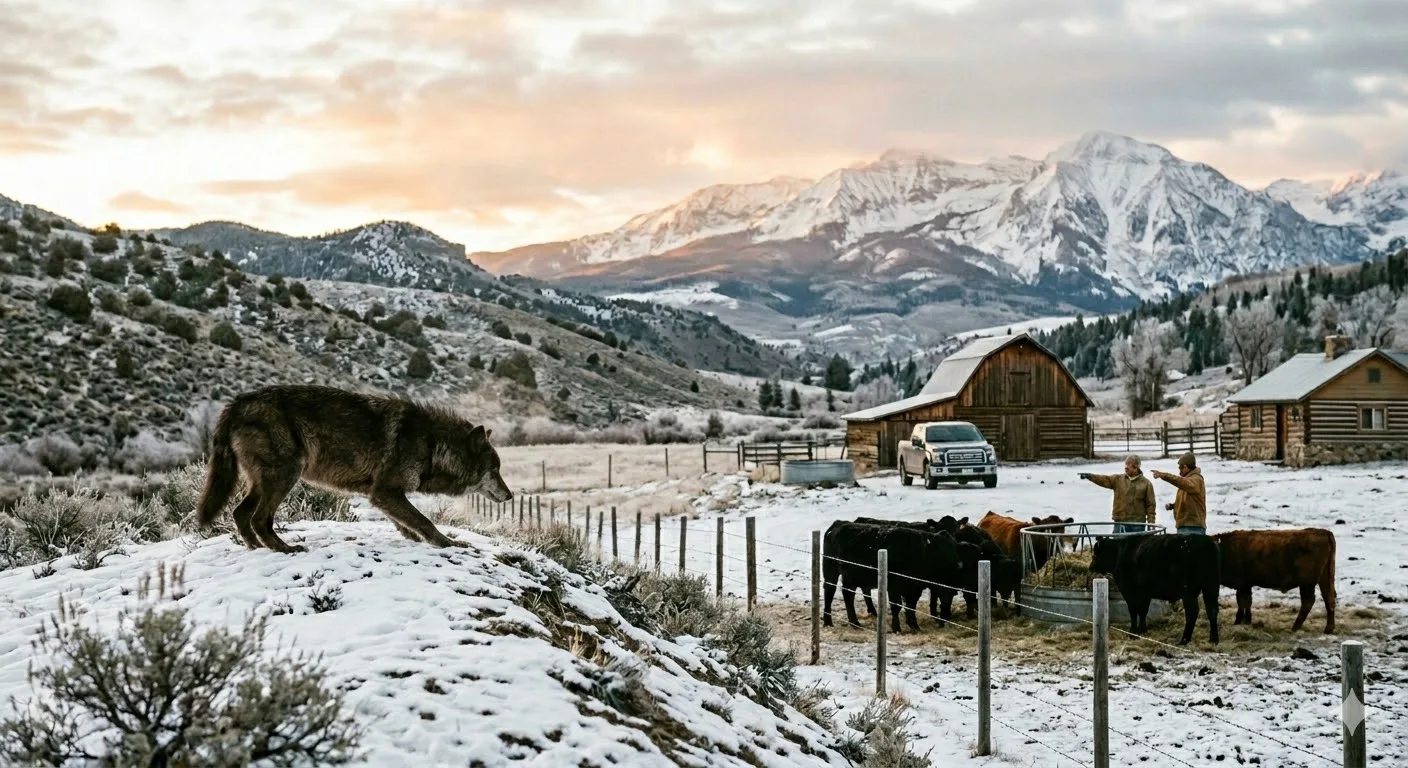
Colorado’s ambitious plan to bring the “big bad wolf” back to the Rockies is officially hitting a very big, very bad milestone: a $1 million price tag for livestock losses, according to an article via OutdoorHub.
What started as a ballot initiative in 2020 has turned into a pretty high-stakes game of “who’s picking up the check?” As it turns out, the state’s ranchers are the ones left holding the bill, and they’re totally over it.
Cattle vs. Canines: The Math Doesn’t Add Up
Recent data shows that compensation claims for wolf depredation—essentially a “reimbursement for lunch”—are skyrocketing. A single group of ranchers in Grand County recently submitted an invoice for over $580,000!!
At its March meeting, Colorado Parks and Wildlife approved more than $700,000 in compensation for livestock losses tied to wolves in 2025. That money went to just six ranchers, and the agency now expects total claims for the year could exceed $1 million. (via OutdoorHub)
Between the actual livestock kills and the “stress-induced” weight loss of the survivors, the initial budget of $350,000 has been blown out of the water.
Funding the Fangs
Ironically, the money to pay for these losses is coming from “Born to Be Wild” license plates. Thousands of Coloradans are driving around with wolf-themed tags, effectively Crowdfunding the very predators that are causing the financial headache.
But even with the fancy plates, the program’s total cost—including flying wolves in from British Columbia—has soared past $5 million.
Summary
Colorado ranchers are now pushing for a “pause” on more releases, arguing that they shouldn’t have to subsidize a biological experiment with their livelihoods.
What’s happening in Colorado with wolves hits close to home for us in Montana. For years, we’ve lived with the direct impact of wolf packs, navigating the complex balance between conservation and the livelihoods of our ranchers and rural communities. We know firsthand the realities of rising management costs and conflicts, making this isn’t just a Colorado story—it’s one we are living every day in the Big Sky State.