
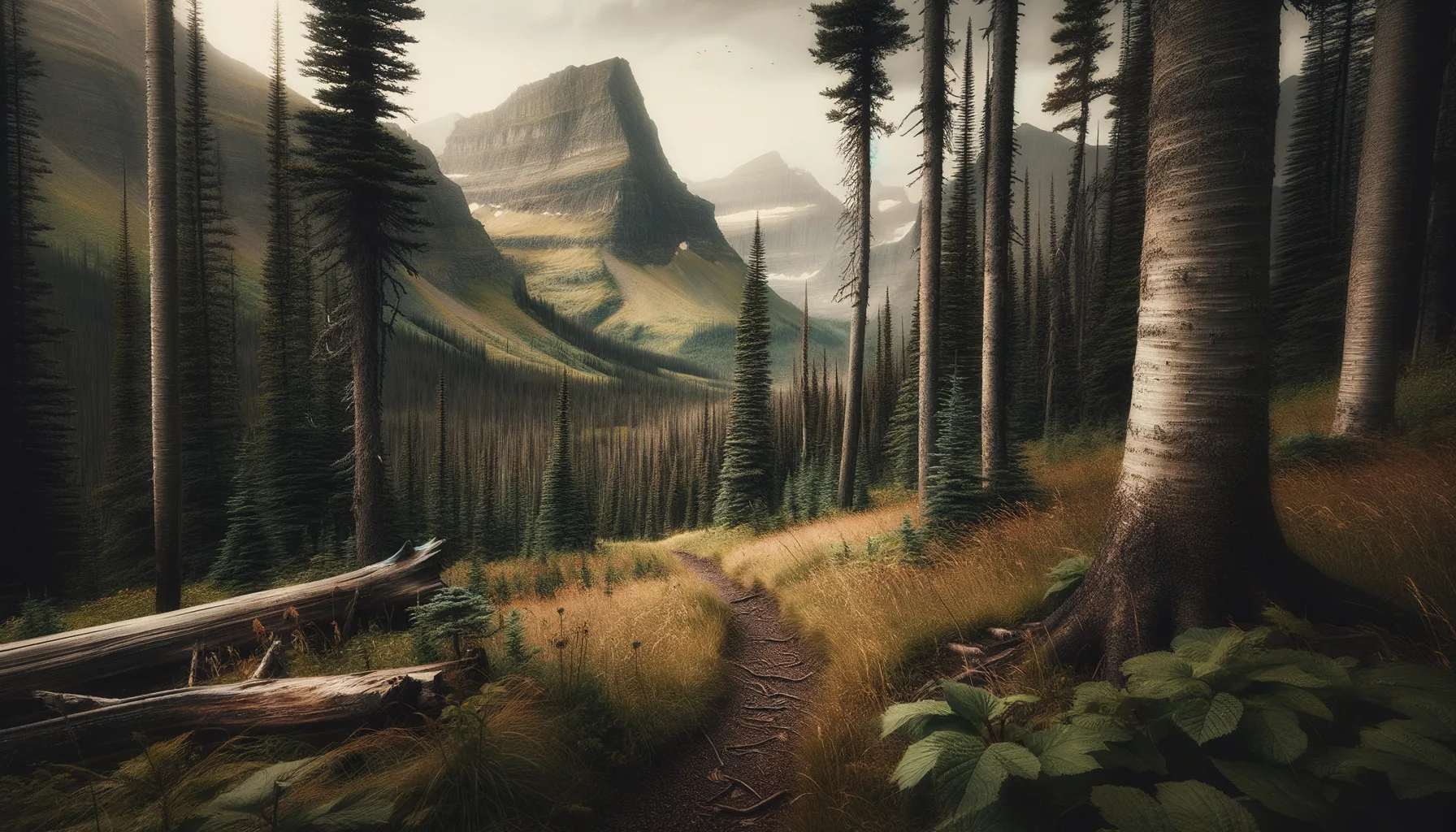
If you’re planning to chase spring black bears into the Gravelly Range this April, cast dry flies on the Bitterroot River come June (and keep an eye on flows in our Montana River Report), or pack into the Bob Marshall Wilderness for elk season next fall, pay close attention.
Right now, federal officials are moving to eliminate one of the most important protections for the roadless backcountry that makes all of it possible — and they’re doing it without holding a single public meeting in Montana.
Key Takeaways
- A coalition of 17 Montana recreation and sportsmen’s organizations says the Forest Service is pushing to rescind the Roadless Rule with zero public meetings in Montana.
- The 2001 Roadless Area Conservation Rule restricts road construction and large-scale timber operations across about 58.5 million acres of national forest nationwide, including millions of acres in Montana.
- If rescinded, protections could shift to a forest-by-forest, decision-by-decision process that invites incremental impacts over time.
- The process is a central issue: the original Roadless Rule included more than 600 public meetings nationwide and 34 in Montana, while the current rescission effort has held none in the state.
- Hunters, anglers, outfitters, and other users can contact elected officials, submit Forest Service comments, and coordinate through sportsmen’s and backcountry organizations.
That’s not hyperbole. It’s the central alarm being raised by a coalition of 17 Montana recreation and sportsmen’s organizations, including voices from the Missoula Mountain Bike Coalition, the Montana Backcountry Alliance, and the Missoula Nordic Club.
John Stegmaier, executive director of the Missoula Mountain Bike Coalition, along with Adam Switalski, Boris Granovskiy, and Henry Reich, recently wrote to the chief of the U.S. Forest Service demanding something straightforward: talk to the people who actually use these lands before you make irreversible decisions about them.
What’s Actually Being Threatened
The 2001 Roadless Area Conservation Rule has been the backbone of backcountry protection on national forests for more than two decades. It restricts road construction and large-scale timber operations across roughly 58.5 million acres of national forest nationwide — including millions of acres right here in Montana that hunters, anglers, and outfitters depend on every single year.
We’re talking about the roadless drainages in the Crazy Mountains where elk winter. The upper reaches of the Bitterroot’s tributaries — Blodgett Creek, Sweathouse Creek, Bass Creek — where bull trout and westslope cutthroat persist because the watershed above them hasn’t been carved up by logging roads. The Swan Range terrain that produces the kind of backcountry elk hunting that draws sportsmen from across the country and fills local economies in Seeley Lake, Condon, and Swan Lake.
Forest Service political appointees are now pushing to rescind the Roadless Rule entirely. If that happens, protection for these areas doesn’t disappear overnight — but it shifts to a forest-by-forest, decision-by-decision process that opens the door to incremental degradation.
Roads fragment elk habitat. Sedimentation from logging operations hammers native trout streams. Once you punch a road into a roadless drainage, you don’t get that country back.
The Process Problem Is the Problem
Here’s what should make every Montana hunter and angler’s blood boil, regardless of where you land politically: when the Forest Service created the Roadless Rule back in 2000-2001, it held more than 600 public meetings across the country. Thirty-four of those meetings were right here in Montana.
Communities showed up. Outfitters testified. Hunters and anglers made their voices heard. That’s how a rule affecting your backcountry is supposed to work.
The effort to rescind that same rule? Zero public meetings. Not one. No sessions in Missoula, no forums in Hamilton, no public comment nights in Bozeman or Kalispell or Dillon.
The very officials arguing they want to return control to local communities are making this decision without asking local communities a single question. That’s a process failure that should unite every outdoor user in this state — whether you’re a die-hard elk hunter who packs ten miles in on horseback, a fly fisher working a Bitterroot tributary, or a snowmobiler who runs the Lionhead Range.
These are your lands. This is your access. And the decisions being made right now will determine whether that access looks the same in ten years.
What’s at Stake for This Season — and Every Season After
Spring bear season dates vary by hunting district — check current FWP regulations for your specific district. Turkey seasons kick off across western Montana in mid-April. Shed hunters are already glassing hillsides in the Gravelly Range and the foothills of the Beartooths. Every one of those pursuits takes people into exactly the kind of country the Roadless Rule currently protects.
If you’re heading into bear country this spring, it’s also worth reviewing the broader seasonal reality of spring bear activity and hunter risk windows; see First Grizzly Spotted in Yellowstone Signals Montana’s Riskiest Backcountry Window—What Hunters Need to Know Now.
Longer term, Montana’s outdoor economy — valued at $3.4 billion annually and supporting tens of thousands of jobs tied to outfitting, guiding, lodging, and gear — is built on intact, wild country.
You can’t sell an elk hunt into a clearcut. You can’t charge a premium for a trout fishing experience in a silted-up, road-crossed drainage. The quality of the resource is the product.
What You Can Do Right Now
The coalition of Montana organizations is calling on the Forest Service to hold public meetings — with virtual options — on every national forest where roadless areas exist. Here’s how you can add your weight to that demand:
- Contact your U.S. Senators and Representative directly. Senators Steve Daines and Tim Sheehy, and Representative Greg Gianforte’s successor in the House all have constituent services lines and email contacts. Call or write and tell them you expect public meetings before any changes to Roadless Rule protections in Montana.
- Submit formal comments to the Forest Service. The USDA Forest Service accepts public input through fs.usda.gov. Write specifically about the forests and drainages you hunt and fish — the Beaverhead-Deerlodge, the Custer-Gallatin, the Lolo, the Flathead, the Helena-Lewis and Clark. Named places and personal experience carry weight.
- Connect with Montana sportsmen’s coalitions. Organizations like the Montana Wildlife Federation, Backcountry Hunters & Anglers, and the Montana Backcountry Alliance are actively coordinating responses. Get plugged in and amplify the ask for public meetings.
- Show up if meetings are scheduled. If the Forest Service responds to pressure and schedules public meetings in Montana, be in the room. Bring your hunting partners, your outfitter, your fishing guide.
The backcountry that defines Montana hunting and fishing didn’t protect itself. Generations of hunters and anglers fought for public access and wild places, and that fight is never really over.
The people making decisions about your elk country and your trout streams right now are listening — but only if you speak up before the decisions are finalized. Don’t wait until the road is already built.
Related Reading
- Montana River Report: Western Rivers Spike 14% as March Melt Arrives (Clark Fork, Bitterroot, Blackfoot)
- First Grizzly Spotted in Yellowstone Signals Montana’s Riskiest Backcountry Window—What Hunters Need to Know Now
- Freezout Lake Snow Goose Migration: Why Montana Hunters Should Go in March (Best Scouting Before Fall)