
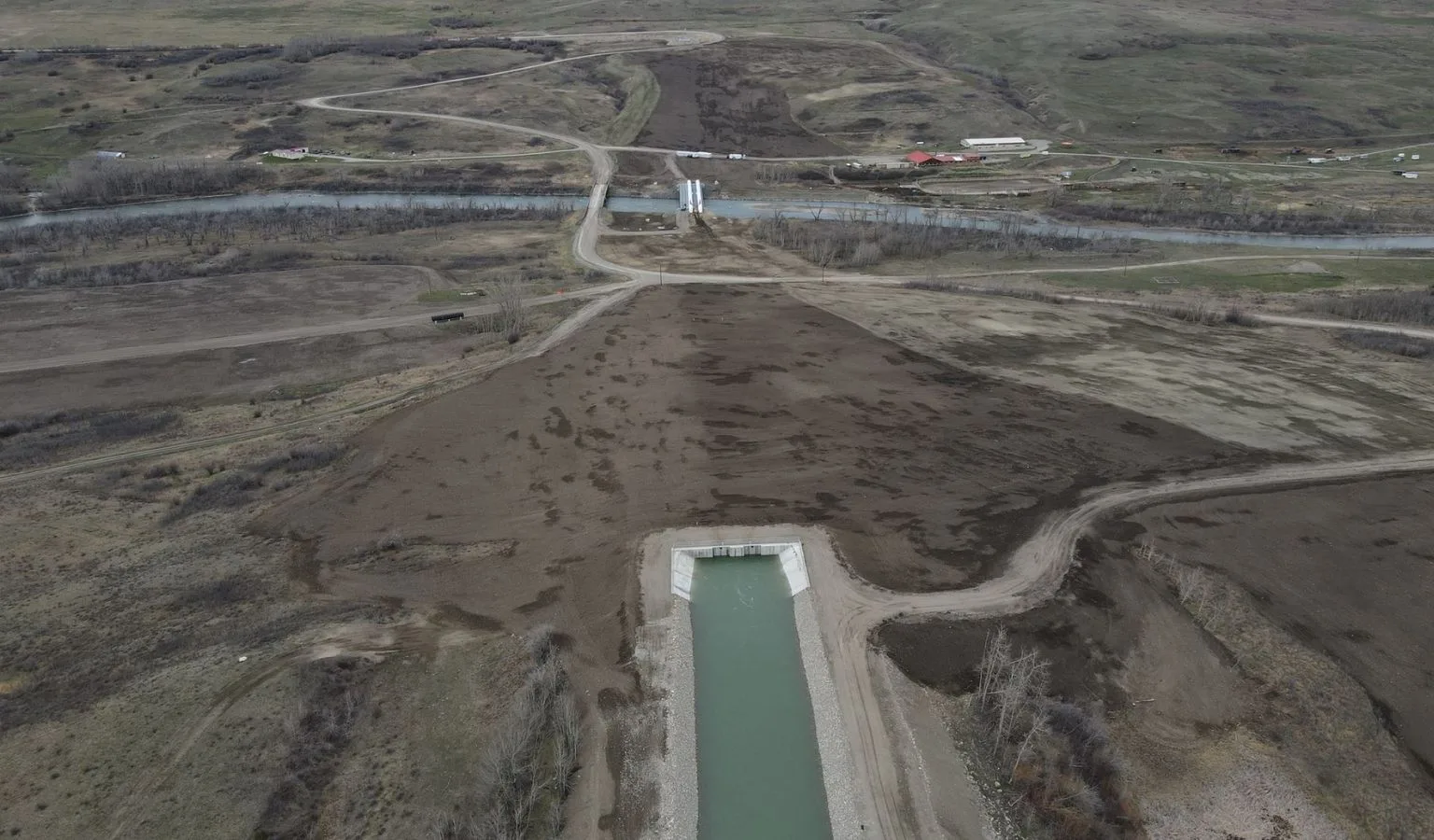
As the snow begins its annual retreat at the St. Mary siphon, new aerial photography reveals a site in transition. Hydroseeding crews are officially out in force, though onlookers might find themselves squinting at their screens. Unlike the “radioactive” neon greens and blues typically associated with fresh commercial seeding, this project is taking a decidedly more subtle approach, according to a recent post by The Milk River Project.

The lack of vibrant dye initially raised a few eyebrows—even among the project team. It’s a common reflex to equate “bright blue” with “total coverage,” but the visual evidence from the sky tells a different, more natural story.
From a bird’s-eye view, the application doesn’t scream for attention. Instead of a bold turquoise blanket, the tackifier appears as a muted, darker greenish-gray tone, particularly visible along the outer edges of the site.
“I’ll admit, I questioned the coverage at first too since I am used to seeing that bold color on lawns,” noted one observer of the initial flyover.
While the aesthetic is understated, the functionality remains top-tier. The choice of a more neutral-toned tackifier allows the work to blend into the landscape almost immediately, avoiding the “Smurf-village” look while still providing the necessary stabilization for the soil.

The takeaway for those monitoring the progress is simple: don’t let the lack of neon fool you. While it might look thin from a thousand feet up, the ground-level reality is much more substantial.
“It is more subtle in appearance, but rest assured the coverage is there, especially when you get closer—it just blends in a little more than that bright blue stuff.”

The St. Mary siphon is effectively tucked in for the season. The seeds are down, the coverage is uniform, and the site is protected—it’s just doing so with a little more dignity than your average suburban lawn.

Montana's outdoor week, in your inbox at 7am Friday.