
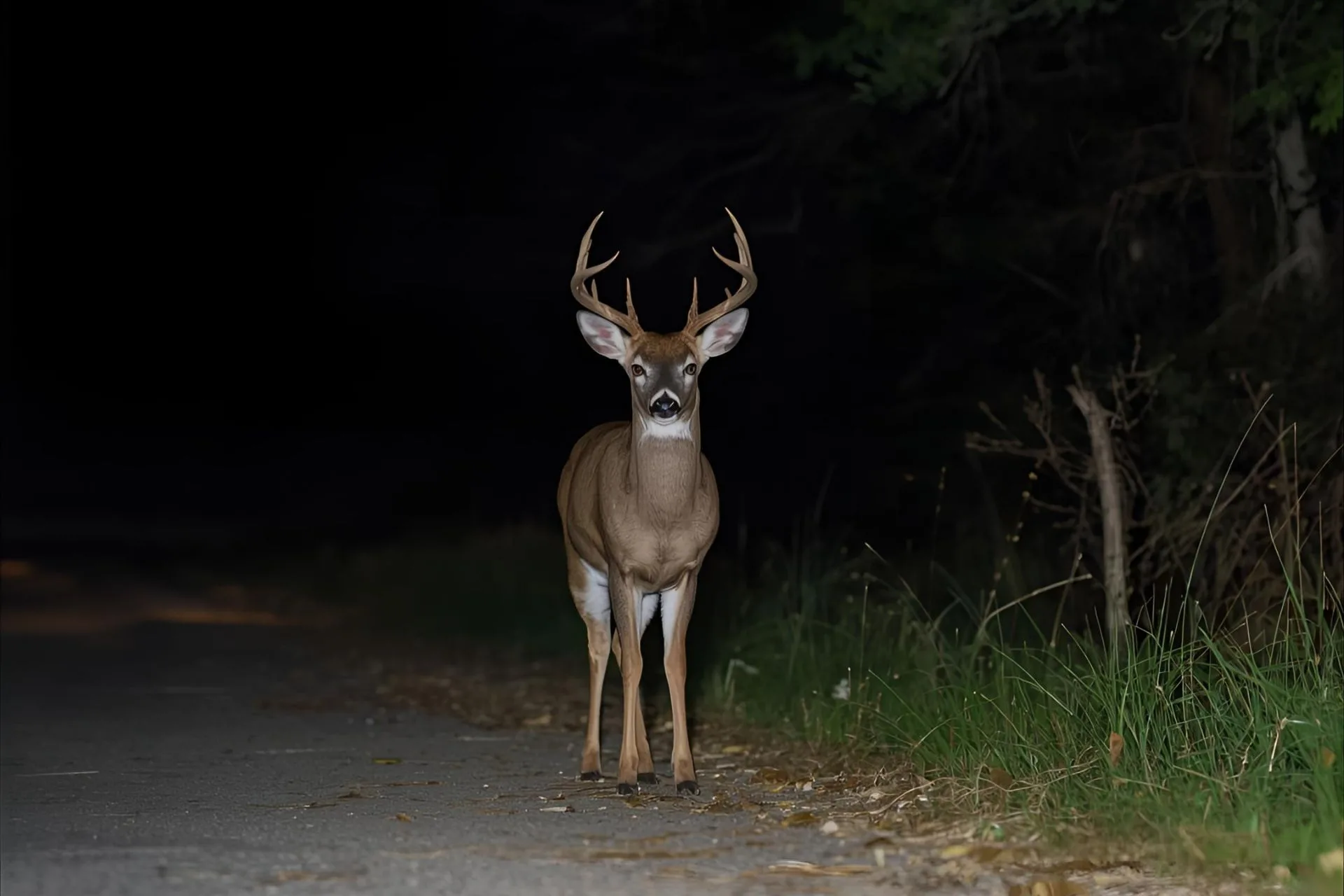
Twice a year, we all pretend to know how to change the microwave clock…and apparently, deer hate the time change just as much as some people do. When the clocks “fall back” in November, mornings might get brighter, but evenings get darker…and that’s when the chaos hits. Forbes reported that a study of crash data from 23 states found deer-related car collisions jump 16% the week after we switch to standard time. It turns out that deer are basically on Tinder in the fall (due to the rut where activity spikes 50%), and when you mix that with more drivers headed home in the dark, the results are kind of messy.
Researchers say if we ditched the time change and just stuck with daylight saving time year-round, we could save an estimated 36,550 deer, 33 people, and $1.19 billion in damages annually. Don’t forget about the shattered bumpers! Meanwhile, permanent standard time would make things way worse…more crashes, more costs, more sad deer. So as you are slightly unhappy about your extra-dark commute this week, just remember that it’s not only your sleep schedule that is off–wildlife’s are, too.
What do you think about falling back and springing forward?
Montana's outdoor week, in your inbox at 7am Friday.