
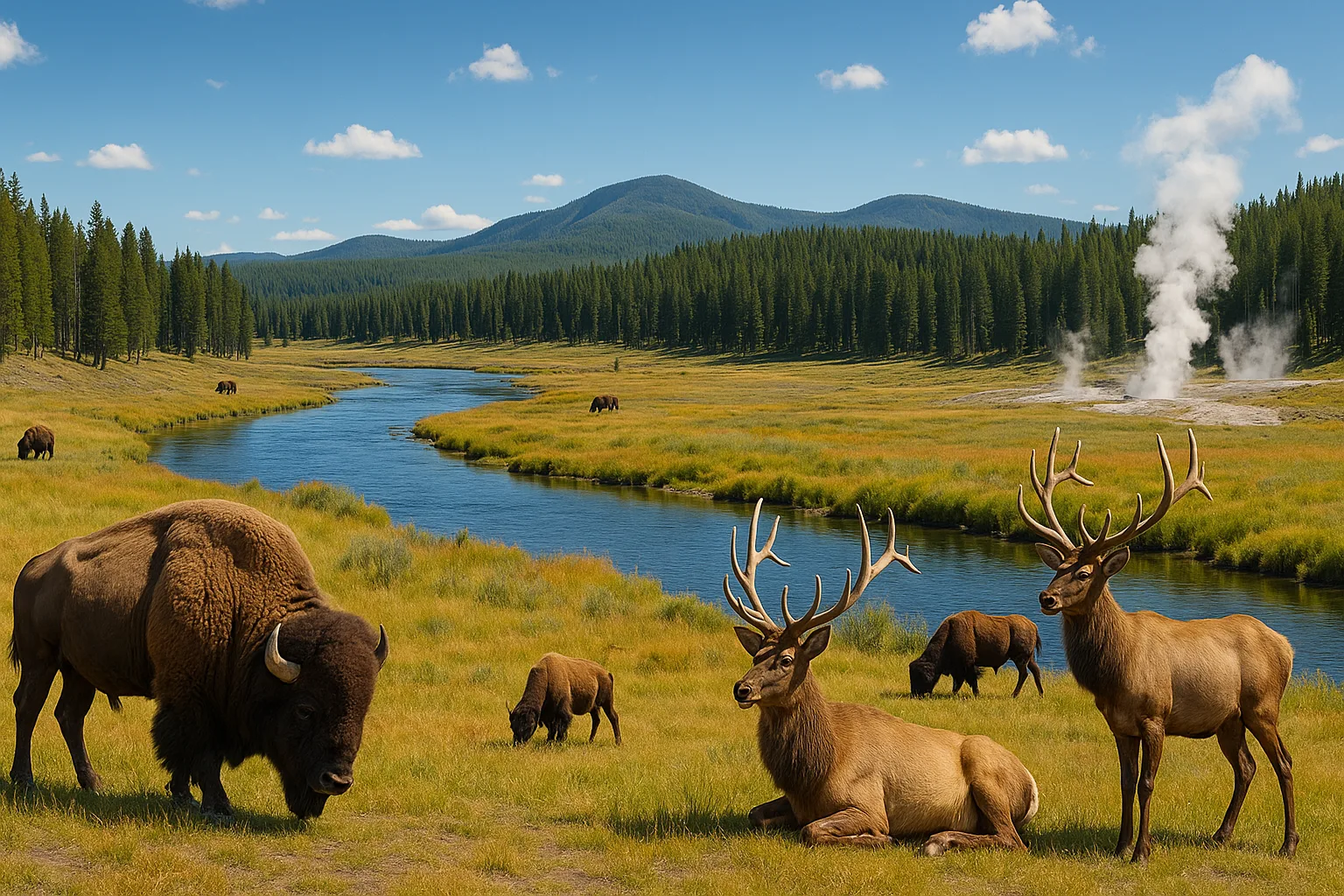
Yellowstone National Park is buzzing with wildlife, creating an unforgettable spectacle for visitors this season. As winter’s grip loosens, the park’s diverse animal populations are becoming more active—making this a prime time for wildlife enthusiasts and casual observers alike.
Key Takeaways
- Spring brings a noticeable surge in Yellowstone wildlife activity as animals emerge from winter patterns.
- Bison herds are especially prominent, and visitors often see calves alongside their mothers.
- Elk are frequently spotted in meadows, drawing photographers and wildlife watchers.
- Grizzly bears and wolves tend to become more visible as they search for food after winter.
- Abundant wildlife is an indicator of ecosystem health—and it also supports tourism and local jobs.

What’s Happening: Yellowstone’s Spring Wildlife Surge
With the arrival of spring, Yellowstone National Park is experiencing a surge in wildlife activity. From bison and elk to grizzly bears and wolves, the park’s fauna is emerging from winter hibernation and shifting migration patterns. This seasonal revival offers a unique chance to witness these animals in their natural habitat.
Recent reports suggest that bison herds are particularly prominent, with calves often seen frolicking alongside their mothers. Elk are also frequently spotted in the park’s meadows, a scene that reliably draws photographers and nature lovers. Meanwhile, Yellowstone’s famous predators—grizzly bears and wolves—are becoming more visible as they roam in search of food after the long winter months.
If you’re especially interested in Yellowstone’s predator-prey dynamics, see our coverage of a dramatic encounter: Bison Herd Faces Off With a Pack of 23 Wolves in Yellowstone’s Lamar Valley (Video).
Why It Matters: Ecosystem Health and Local Economies
The presence of abundant wildlife in Yellowstone is more than a boon for tourists—it’s a key indicator of the park’s ecological health. Interdependent relationships between species, from prey to predator, help maintain a balanced ecosystem that supports biodiversity. This seasonal resurgence also underscores the importance of conservation efforts that protect these natural processes.
Wildlife viewing is also a major economic driver for the surrounding region. According to the National Park Service, visitors spent over $444 million in communities near Yellowstone in 2022, supporting thousands of jobs. A healthy wildlife population directly contributes to local economies, reinforcing the need for ongoing protection and sustainable tourism practices.
Wildlife management and protection remain ongoing priorities in and around the park. For related context on wolf conservation concerns near Yellowstone’s boundary, read: Illegal Killing of Yellowstone Wolf Near Park Border Sparks Montana Poaching Investigation.
The Bigger Picture: Yellowstone’s Role in Conservation
Yellowstone National Park, established in 1872, is America’s first national park and a cornerstone of conservation efforts in the United States. Spanning over 2.2 million acres, the park includes forests, rivers, and geothermal features—ecosystems that support a wide range of wildlife species.
Historically, wildlife management in Yellowstone has faced major challenges, from the near-extinction of wolves in the early 20th century to more recent debates over bison management. The reintroduction of wolves in the 1990s stands as a notable conservation success story, contributing to improved ecological balance as prey populations were naturally regulated.
What to Watch For: How to View Wildlife Responsibly
As the season progresses, visitors should stay mindful of both the opportunities and responsibilities that come with wildlife viewing. Binoculars and cameras are essential for observing the park’s animals while keeping a respectful distance.
Looking ahead, park management continues to focus on balancing visitor access with wildlife conservation. Initiatives aimed at reducing human-wildlife conflicts and promoting habitat protection will be crucial as visitor numbers are expected to climb. Climate change remains a looming challenge as well, with potential impacts on migration patterns and habitat availability for many species.
For a separate look at how Yellowstone plans and manages major infrastructure work that affects visitor access, see: Yellowstone National Park seeks public input on environmental assessment for North Entrance Road Reconstruction Project.
For more detailed insights and updates, readers can refer to the original coverage by the Rexburg Standard Journal.
Frequently Asked Questions
- What wildlife can be seen in Yellowstone National Park in spring?
- Yellowstone is home to bison, elk, grizzly bears, wolves, and many other species that can be visible during spring as activity increases after winter.
- When is the best time to visit Yellowstone for wildlife viewing?
- Spring and early summer typically offer strong opportunities to see active wildlife as animals emerge from winter patterns.
- Why are bison more noticeable this time of year?
- Reports indicate bison herds are particularly prominent in spring, and visitors often see calves alongside their mothers.
- Are grizzly bears and wolves easier to spot in spring?
- They can be more visible as they roam in search of food after the long winter months, though sightings are never guaranteed.
- How does wildlife affect Yellowstone’s ecosystem?
- Wildlife supports ecological balance through interconnected relationships—especially prey and predator dynamics—which helps maintain biodiversity.
- What measures are in place to protect Yellowstone’s wildlife?
- Conservation efforts include habitat protection, visitor education, and management approaches aimed at reducing human-wildlife interactions and conflicts.
- Why is Yellowstone National Park important for conservation?
- As America’s first national park, Yellowstone remains a model for preserving biodiversity and protecting large natural landscapes.
- How does wildlife viewing benefit communities near Yellowstone?
- Tourism tied to wildlife viewing is a significant regional economic driver. The National Park Service reports visitors spent over $444 million in nearby communities in 2022, supporting thousands of jobs.
Related Reading
- Bison Herd Faces Off With a Pack of 23 Wolves in Yellowstone’s Lamar Valley (Video)
- Illegal Killing of Yellowstone Wolf Near Park Border Sparks Montana Poaching Investigation
- Yellowstone National Park seeks public input on environmental assessment for North Entrance Road Reconstruction Project
- No, Animals Aren’t Fleeing Yellowstone: Experts Debunk the Viral “Exodus” Eruption Rumor
- Viral ‘Norris Basin Eruption’ Video Claims 200-Meter Jets—Here’s What Steamboat Geyser Really Does
Montana's outdoor week, in your inbox at 7am Friday.