
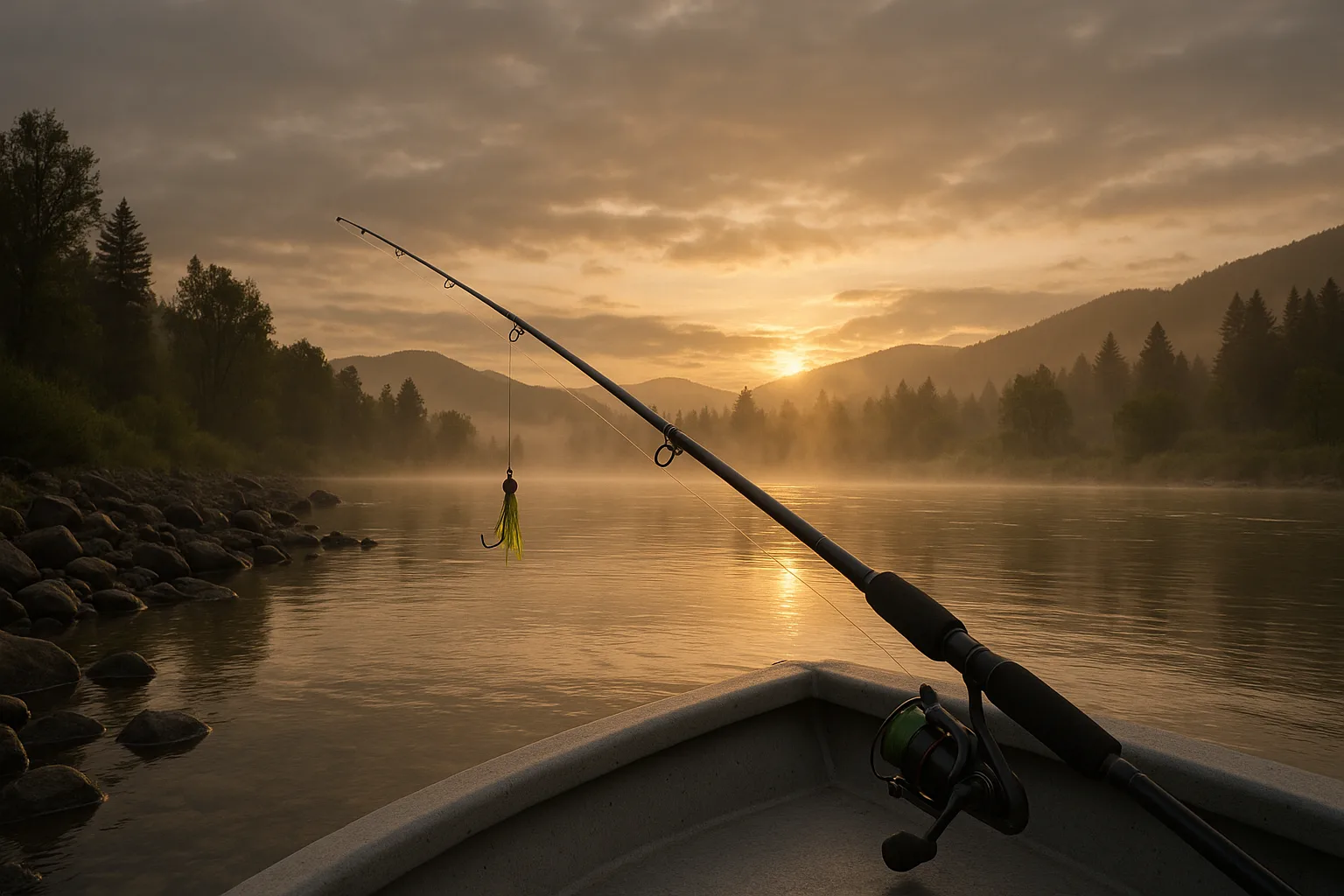
There’s a narrow window every spring when walleye fishing shifts from slow and grinding to almost absurdly productive. It doesn’t last long—maybe a few weeks, depending on water temps and where you are in the region—but if you hit the pre-spawn jig bite right, you’ll remember it for years. Miss it, and you’re left chasing fish that have already moved shallow to spawn and aren’t particularly interested in eating.
Key Takeaways
- The pre-spawn jig bite is a short, temperature-driven window—hit it right and the fishing can feel unreal.
- Staging walleye often set up on transitional structure like the last major break before spawning flats, plus points, humps, and riprap.
- Jigs shine now because they drift naturally and can be crawled, dragged, subtly hopped, or held in place.
- Jig weight is everything: stay in bottom contact without crashing through the strike zone too fast (often 1/8 to 3/8 oz).
- Wind-blown points and shorelines can concentrate fish by pushing warmer water and bait toward specific structure.
That’s exactly the moment the Fish Head Assassin channel is zeroing in on with their latest breakdown of the pre-spawn jig bite. And honestly, the timing feels right. We’re heading into that stretch of late winter into early spring where the ice has either gone or is going, water temps are creeping toward that 40–45°F range, and walleye are starting to stage on transitional structure before their spawning run.
Why Jigs Work So Well on Staging Walleye
The jig isn’t a glamorous bait. It’s not going to get its own TV segment or a flashy marketing campaign. But it’s arguably the most versatile and effective walleye presentation there is, and the pre-spawn period is when it really earns its reputation.
Here’s the thing about staging walleye: they’re not in full feeding mode yet, but they’re not completely shut down either. They’re positioned—usually on the last significant depth break before spawning flats, or along rocky points and gravel humps—and they’re willing to eat if something drifts naturally into their zone. A jig does exactly that. You can slow-roll it, drag it, hop it subtly, or just hold it steady and let the current or wave action do the work. The fish don’t need a lot of convincing.
Fish Head Assassin’s approach leans into this natural presentation style. The emphasis is on reading the bottom, staying in contact with the jig, and not overworking it. That’s advice that sounds simple but is genuinely hard to execute consistently, especially for anglers who are used to more aggressive techniques. Patience is the actual skill here.
Weight selection matters more than most people admit during this period. Too light and you lose bottom contact, especially if there’s any wind or current. Too heavy and the jig drops too fast, blowing through the strike zone before a sluggish pre-spawn fish can commit. Somewhere in the 1/8 to 3/8 oz range tends to be the sweet spot, adjusted for depth and conditions.
Timing the Bite: What the Water Is Telling You
The pre-spawn window is temperature-driven, full stop. Walleye begin their spawning migration when water temps consistently hit the upper 30s and start pushing toward 45°F. In Montana and across the northern Rockies, that typically means late March into April, though elevation and specific water bodies can push that timeline in either direction.
What makes this period tricky is that the fish aren’t uniformly distributed. You’ll find some fish already tight to spawning habitat—rocky shorelines, riprap, gravel bars—while others are still suspended out in deeper water, feeding up before the run. The jig lets you work both scenarios. Cast to the shallows and crawl it back, or drop it vertically in 15–25 feet and work the bottom contour. Same bait, different story.
If you’re trying to narrow down where to start on a given day, it can help to cross-check what’s happening around the state—especially as conditions change fast during ice-out and early runoff. These statewide roundups can be useful context: Statewide MT Fishing Report Compilation 12.29.24 and Statewide MT Fishing Report Compilation 12.18.24.
Fish Head Assassin touches on something that a lot of anglers overlook: the importance of wind-blown points and shorelines during this time of year. Wind pushes warmer surface water—and the baitfish that follow it—toward specific banks and structure. Walleye know this. They’ll stack up on the windward side of a point in ways that can seem almost too easy once you’ve figured it out. Almost.
Color choice during pre-spawn tends to favor natural, muted tones in clear water—think chartreuse-and-white, perch patterns, or straight white—while stained or murky water calls for something with more contrast. Bright orange, pink, or a solid chartreuse can make a difference when visibility is limited, which is common in spring runoff conditions.
One thing worth paying attention to as you watch the Fish Head Assassin video is the emphasis on when to be on the water, not just how. Early morning and late evening are obvious, but the pre-spawn period often produces strong midday bites too, especially on overcast days when light penetration is low and fish feel less exposed moving into shallower staging areas. Don’t sleep in and assume the bite is over by 9 a.m.
Spring walleye fishing has a way of humbling you if you show up with assumptions. The fish are there, the jig works, but the details—depth, speed, weight, timing—all have to align. Get them right, and a pre-spawn jig bite is about as good as freshwater fishing gets in this part of the country.
If you’re looking for a little extra stoke while you wait for that window to open, check out this Montana video of an angler reeling in a 13 pound walleye.
Frequently Asked Questions
When does the pre-spawn walleye bite start in spring?
Pre-spawn walleye activity typically picks up when water temperatures reach the upper 30s to 45°F, which in Montana and the northern Rockies usually falls between late March and mid-April depending on elevation and local conditions.
What jig weight is best for pre-spawn walleye?
Most anglers find 1/8 to 3/8 oz jigs work best during the pre-spawn, adjusting heavier for deeper water or strong wind and lighter for shallower, calmer conditions to maintain a natural, slow presentation while keeping bottom contact.
Where do walleye stage before spawning?
Pre-spawn walleye typically hold on transitional structure like depth breaks, rocky points, gravel humps, and riprap shorelines—the last significant structure before their actual spawning flats.
What colors work best for walleye jigs in spring?
In clear water, natural colors like white, chartreuse-white, and perch patterns tend to perform well. In stained or murky spring runoff conditions, brighter colors like orange, pink, or solid chartreuse can be more effective.
How do you fish a jig for walleye in cold water?
Slow down significantly. Drag or crawl the jig along the bottom rather than aggressively hopping it, maintain constant contact with the bottom, and pause longer between movements to give cold, sluggish fish time to commit.
Do pre-spawn walleye only bite early and late in the day?
No. While early morning and late evening can be productive, the pre-spawn period often produces strong midday bites too—especially on overcast days when light penetration is low.
How deep should you jig for pre-spawn walleye?
It varies because fish aren’t uniformly distributed. Some are tight to spawning habitat in shallower water, while others are still deeper and staging. The same jig approach can be used shallow (cast and crawl) or deeper (vertical in 15–25 feet and work the bottom contour).
What’s the biggest mistake anglers make during the pre-spawn jig bite?
Overworking the bait or losing bottom contact. The approach emphasized here is staying in contact with the jig, reading the bottom, and letting a natural presentation do the work—patience matters.
Watch the full video on YouTube
Related Reading
- [VIDEO] Montana Angler Reels in a 13 Pound Walleye
- FWP Helena Area Reservoirs Fishing Report 5.5.25
- Statewide MT Fishing Report Compilation 12.29.24
- Statewide MT Fishing Report Compilation 12.4.24
Montana's outdoor week, in your inbox at 7am Friday.