
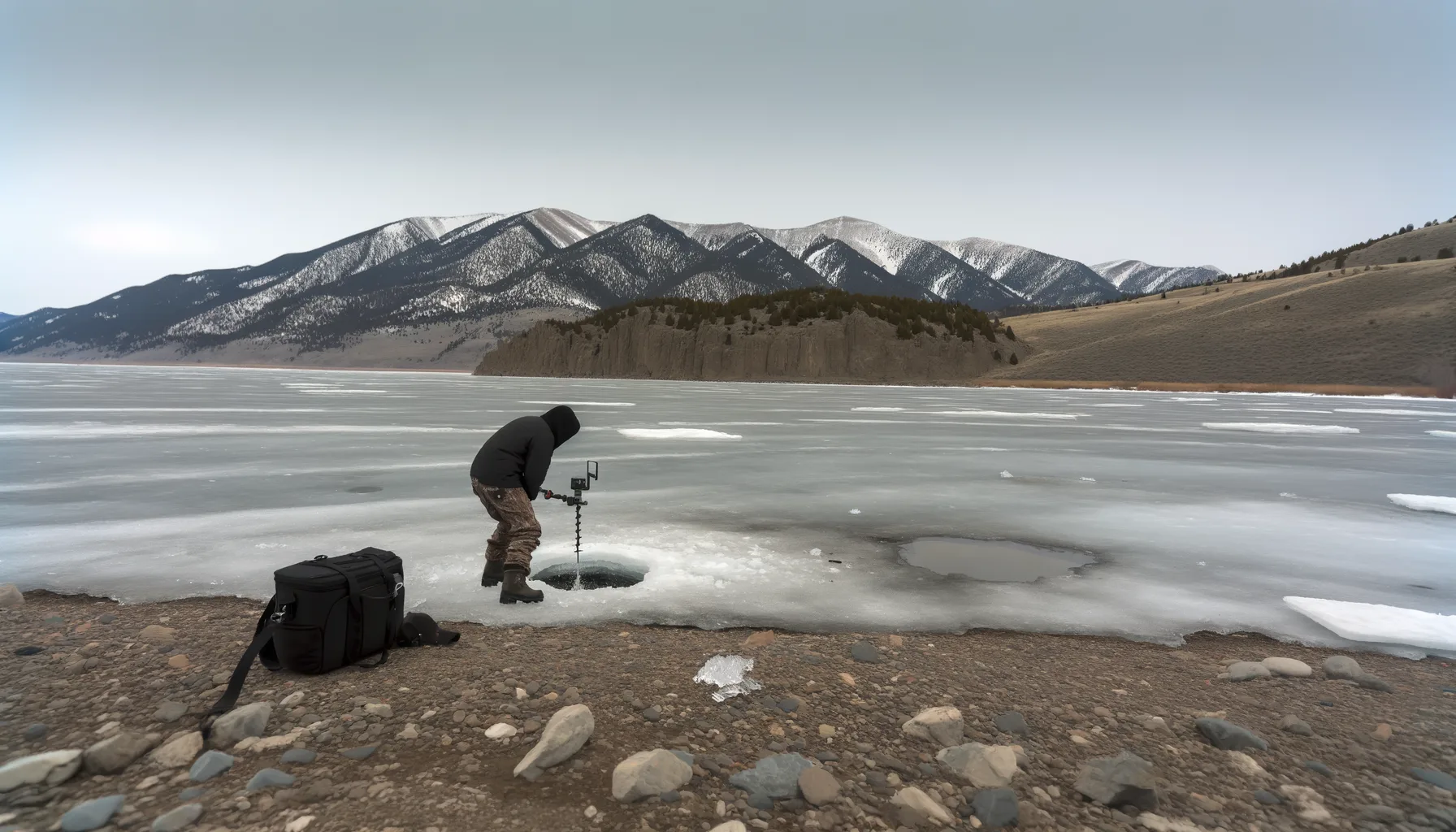
As temperatures climb and daylight hours stretch longer across Big Sky Country, Montana’s ice fishing season is rapidly approaching its final curtain call. With historical data showing mid-March as the critical transition period when ice conditions become increasingly unpredictable and dangerous, now is the time for serious conversations about Montana ice fishing safety.
The 2025 season served as a stark reminder of how quickly conditions can deteriorate. Multiple safety warnings were issued across the state’s premier ice fishing destinations, with several close calls and equipment losses reported when anglers pushed their luck too far into spring. As we head into what could be the final weeks of hard water fishing, understanding current conditions and knowing when to call it quits could save your life—and your gear.
Current Ice Conditions: The Big Three
Canyon Ferry Reservoir
Montana Fish, Wildlife & Parks recently issued their final ice fishing report for Helena area reservoirs, including Canyon Ferry, with a stern reminder that “ice conditions can be extremely variable.” Current reports indicate that while some areas of Canyon Ferry still maintain fishable ice thickness, the quality is deteriorating rapidly with the recent temperature swings.
Canyon Ferry ice conditions are showing classic signs of late-season deterioration: honeycomb structure, surface pooling during warm afternoons, and significant variations in thickness across the reservoir. The deeper areas near the dam face are showing the most concerning signs, while the upper end near Townsend maintains somewhat more stable conditions.
Local guides report ice thickness ranging from 8-15 inches in the better areas, but emphasize that these numbers are misleading when dealing with deteriorating ice quality. What might measure 12 inches thick could have the structural integrity of half that measurement.
Fort Peck Reservoir
The legendary walleye waters of Fort Peck are experiencing similar challenges. Known for producing monster walleye—including that famous 17.75-pound fish that nearly claimed the state record—Fort Peck’s vast expanse creates unique ice safety challenges during the transition period.
Eastern Montana’s harsh continental climate typically maintains ice longer than western reservoirs, but don’t let that fool you. Fort Peck ice report updates from local outfitters indicate significant softening in traditional hot spots around the dredge cuts and deeper structure areas. The sheer size of Fort Peck means conditions can vary dramatically from one end to the other, making real-time assessment crucial.
Wind has been a major factor this season, creating pressure ridges and areas of unstable ice. The recent warm spell has accelerated deterioration around inflows and areas with current, making previously safe routes potentially deadly.
Flathead Lake
Montana’s largest natural freshwater lake west of the Mississippi presents unique challenges during ice-out season. With the 2025 Spring Mack Days event currently underway, attention has shifted to open-water fishing, but some die-hard ice anglers are still targeting the few remaining hard water areas.
Flathead’s depth and size mean that when ice starts to go, it can happen fast and violently. Current conditions show significant deterioration along the southern end, with only scattered areas of questionable ice remaining in protected bays. Most experienced local anglers have already switched to open-water tactics.
Critical Safety Protocols for Last Ice Fishing
When conditions become marginal, your approach to Montana ice safety must become even more conservative. Here’s what every angler needs to know:
Essential Safety Gear
- Ice picks or spikes: Wear them around your neck, not in your tackle box
- Flotation suit or life jacket: Non-negotiable during late ice conditions
- Ice spear or chisel: Test ice frequently as you move across the surface
- Rope: Minimum 50 feet for self-rescue or helping others
- Communication device: Cell phone in waterproof case or satellite communicator
Ice Assessment Techniques
Late-season ice requires constant vigilance. Clear, black ice that’s 4 inches thick is generally safe for walking, but spring ice is different. Look for these warning signs:
- Honeycomb or candle ice: Vertical crystals that break apart easily
- Gray or white ice: Indicates air bubbles and weakness
- Water on top: Sign of significant deterioration underneath
- Creaking or cracking sounds: Ice talking to you—listen carefully
Test ice every 150 feet, more frequently in questionable areas. If you’re punching through with moderate effort, turn around immediately.
When to Call It Quits
Knowing when to end your last ice fishing adventure for the season requires honest assessment of both conditions and your own risk tolerance. Consider these factors:
Weather patterns: Consecutive days above freezing, especially when combined with wind and rain, rapidly deteriorate ice quality. Even if overnight temperatures drop below freezing, the damage is often already done.
Time of day: Early morning typically offers the best conditions during transition periods. Afternoon warming, even on cold days, can create dangerous situations on marginal ice.
Local knowledge: Pay attention to reports from local guides, bait shops, and FWP updates. When experienced anglers who know the water intimately stop going out, that’s your signal. These professionals depend on the ice for their livelihood, so if they’re calling it quits, you should too.
Your gut instinct: If something feels wrong, trust that feeling. No fish is worth risking your life. The beauty of Montana’s fishing opportunities is that open-water season is just around the corner, bringing new adventures and safer conditions.
Planning Your Transition to Open Water
As ice fishing winds down, it’s time to start thinking about the transition to open-water fishing. Spring offers exceptional opportunities across Montana’s waters, from pre-spawn pike to early trout hatches.
Use these final weeks to maintain and prepare your gear. Check your open-water tackle, service your reels, and scout locations for spring fishing. Many of the same structures that produced through the ice will be productive in open water, so note waypoints and successful spots for future reference.
The end of ice fishing season isn’t something to mourn—it’s a transition to new opportunities. By knowing when to walk away from deteriorating ice conditions, you ensure you’ll be around to enjoy everything Montana’s incredible fisheries have to offer year-round.
Final Thoughts on Montana Ice Fishing Safety
The allure of late-season ice fishing is undeniable. Fish are often aggressive, crowds have thinned, and there’s something special about squeezing out those final days on the hard water. But the risks during this transition period are real and potentially fatal.
Montana’s ice fishing community is tight-knit, and every season we hear stories of close calls and tragic accidents that could have been prevented. As we approach the end of the 2025 season, prioritize safety over success. No limit of perch, walleye, or trout is worth the risk of going through the ice.
Check current conditions before every trip, invest in proper safety equipment, never fish alone during marginal conditions, and most importantly, know when to call it quits. The ice will be back next winter, but only if you’re still here to enjoy it.
Stay safe out there, Montana anglers. Respect the ice, trust your instincts, and we’ll see you on the water—whether it’s hard or soft—throughout the year. When in doubt about ice safety, verify current conditions with local authorities and experienced anglers rather than assuming anything. Your life depends on making informed, conservative decisions.
Montana's outdoor week, in your inbox at 7am Friday.