
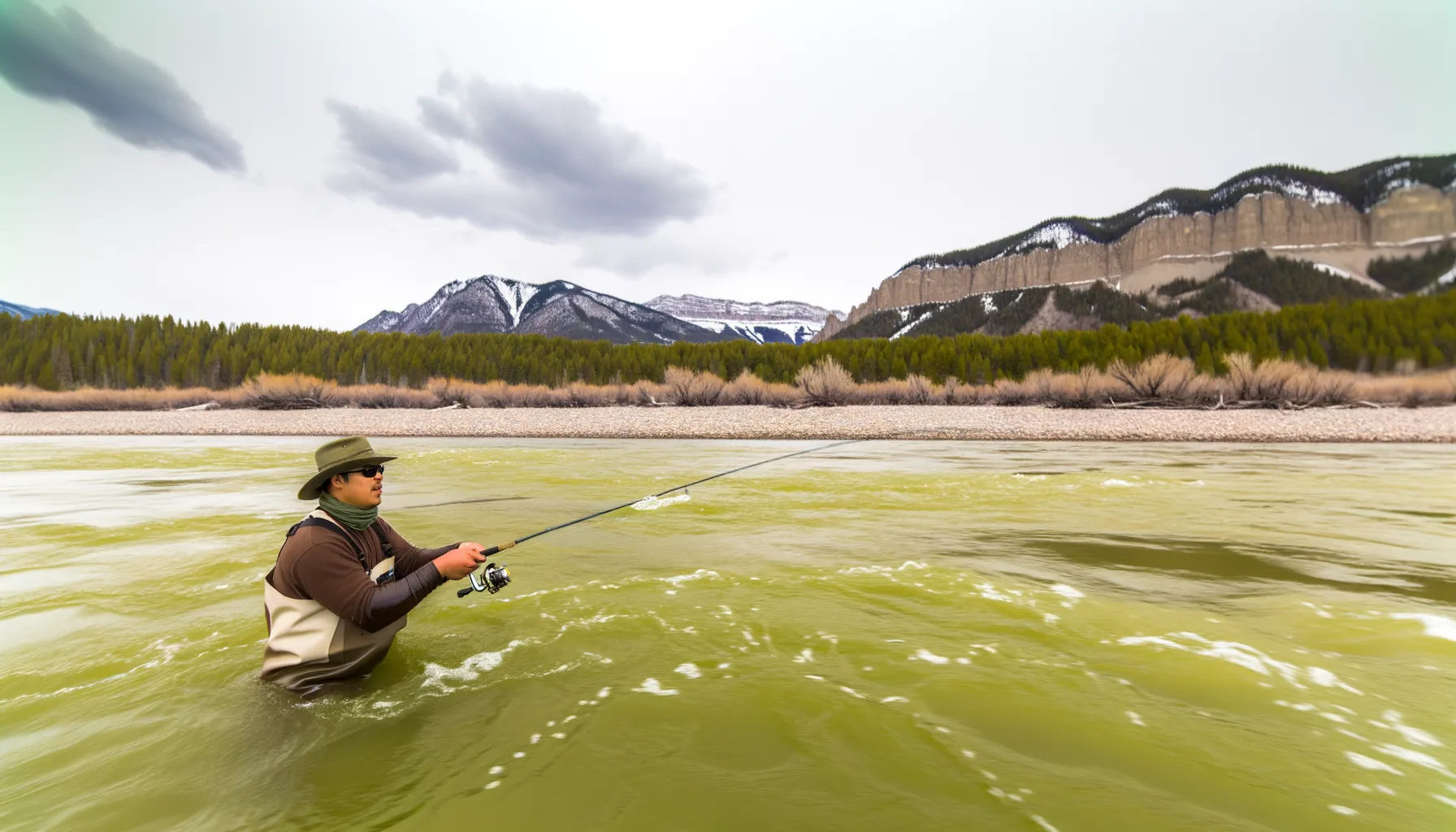
Every Montana angler knows the feeling—you’ve been counting down the days until your first solid day on the water, rods rigged and flies selected, only to arrive at your favorite stretch and find it blown out. Spring runoff and unpredictable weather patterns can turn prime trout water into chocolate milk seemingly overnight, but high water doesn’t have to mean you’re sidelined until summer.
Understanding how to read fluctuating flows and adapt your approach can be the difference between a frustrated drive home and one of the season’s most memorable days. While most fair-weather anglers pack it in when the gauge climbs, savvy Montana fly fishers know that trout still need to eat—you just need to meet them where they are.
The Flow Sweet Spot
High water isn’t binary. There’s “fishable high” and there’s “chocolate smoothie.” The key is monitoring not just current levels, but trends. Rivers that are slowly dropping—even if they’re still running high—often fish better than stable low flows. Why? Trout sense the change and begin repositioning for feeding, moving from their high-water hideouts toward more traditional lies.
Montana’s freestone rivers like the Blackfoot, Clark Fork, and Boulder all follow this pattern. When major tributaries dump fresh water into the system, everything downstream gets affected. But as those tributary flows stabilize and drop, you’ll find windows of opportunity—sometimes brief, but productive.
Check USGS flow data religiously during this transition period. Don’t just look at your target water; check the major feeders upstream. Hangman Creek affecting the Spokane River is a perfect example of this dynamic—one tributary can change conditions for miles downstream.
Where Trout Hide When Water Rises
High water pushes trout out of their typical feeding lanes. They’re not going to hold in the main current when it’s ripping, burning precious calories for minimal food intake. Instead, they seek relief:
- Inside bends and bank eddies: Where current breaks and food collects
- Behind large boulders and structure: Classic lies become even more critical
- Tailouts and pool margins: The soft water between fast and slow
- Side channels and backwaters: Often overlooked during normal flows, these become prime real estate
Your presentations need to change too. Heavy nymphs with split shot or tungsten beads get down to where fish are holding. Streamers swung or stripped through slower water can trigger aggressive strikes from trout that aren’t seeing many naturals drifting by. Forget delicate dry fly presentations—this is chuck-and-duck territory.
Gear Adjustments for Blown-Out Conditions
High, off-color water demands visibility and weight. Tie on darker patterns—black, purple, and olive show better silhouettes in murky water than pale or natural colors. Size up your flies; a #10 stonefly nymph gets noticed when a #16 mayfly disappears into the gloom.
Your tippet can go heavier—5X isn’t necessary when visibility is measured in inches. Drop to 3X or even 2X for nymphing, and don’t be shy about adding weight. Yes, it’s less elegant, but effectiveness trumps aesthetics when conditions are tough.
Strike indicators become essential tools rather than optional accessories. You’re fishing deeper, slower water with limited visibility—you need every advantage to detect takes. Go large and bright; this isn’t the time for subtle.
The Payoff: Fishing Pressure Drops
Here’s the silver lining that many Montana anglers overlook: when conditions get tough, crowds disappear. That popular run on the Madison that’s typically lined with drift boats? Probably empty when the water’s up. Trout that have been pressured for weeks suddenly have no reason to be selective or spooky.
Some of the best fishing of the entire season happens during these brief windows when water is high but clearing, flows are dropping, and every other angler is waiting for “perfect” conditions that may not arrive for weeks.
Spring in Montana means variable conditions—it’s part of the package. But anglers who adapt, who watch the trends rather than just the current state, and who are willing to adjust tactics based on what the river is telling them will find success when others see only obstacles.
Montana's outdoor week, in your inbox at 7am Friday.