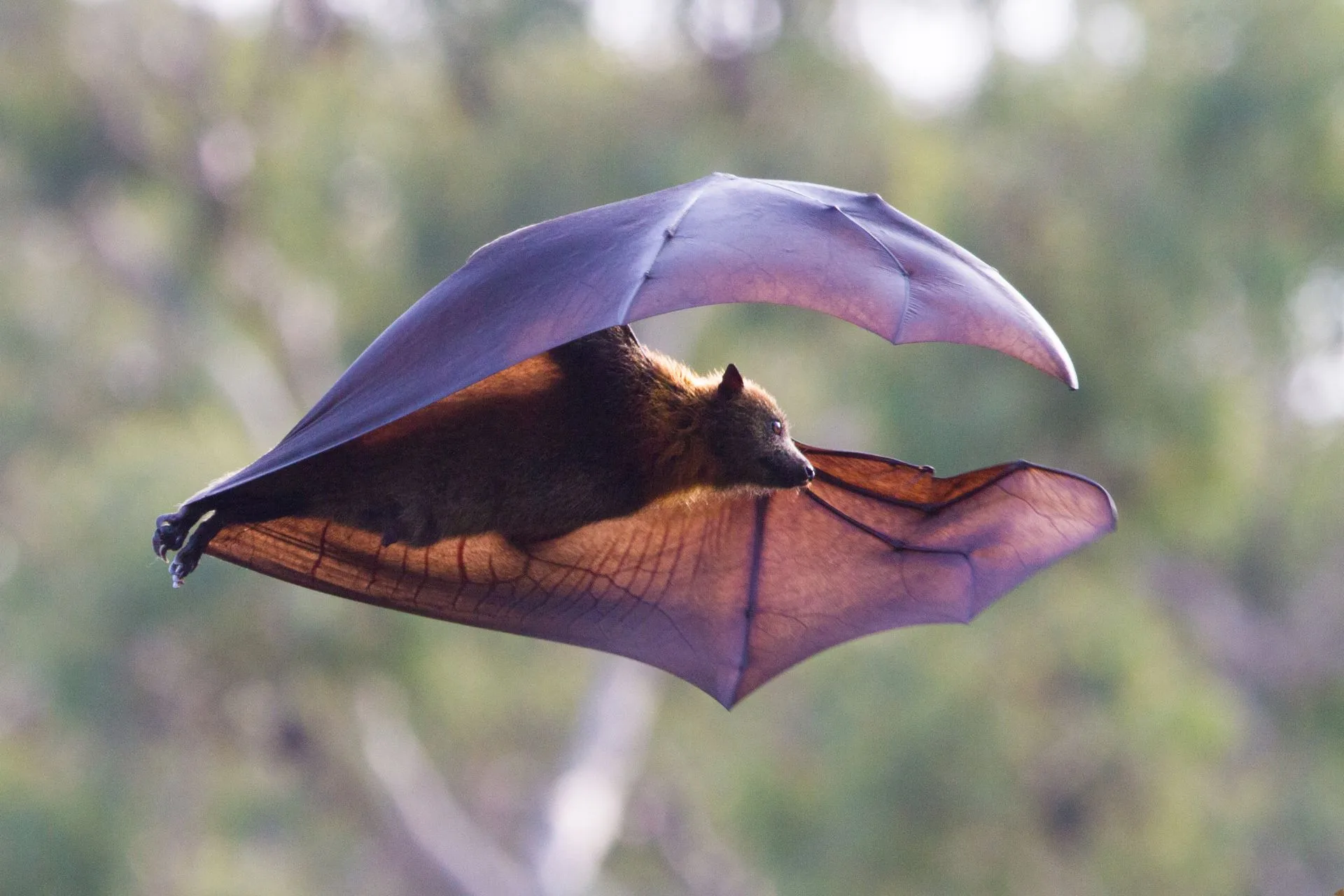
Bats are essential night-time pest controllers in Grand Teton National Park—and just like in Montana, they can carry rabies, a rare but serious virus that affects mammals, including humans. Rabies spreads through bites, scratches, or saliva, and bat bites can be so tiny they go unnoticed. This summer, a suspected bat colony was discovered above several guest rooms at Jackson Lake Lodge, which prompted closures and public health follow-ups to determine if any guests require preventive treatment.
What is considered a bat exposure to rabies?
- A bite or a scratch from a bat to a human.
- Saliva contact from a bat to a human’s open cut or mucus membrane.
- Physical contact with a bat.
- A person who cannot confirm or communicate a potential exposure—like a child, a deep sleeper, or someone who is mentally impaired or on mind-altering drugs—might be considered at-risk.
Visitors in Wyoming, Montana, and beyond can stay safe by keeping their distance from wildlife, never handling bats, and reporting any unusual or aggressive behavior to park staff. If a bat enters your room or tent, leave immediately and alert trained personnel to handle it. While caution is important, bats remain a critical part of ecosystems in both states—from little brown and big brown bats to hoary and long-eared bats—quietly keeping insect populations in check while people enjoy the outdoors.
Montana's outdoor week, in your inbox at 7am Friday.