
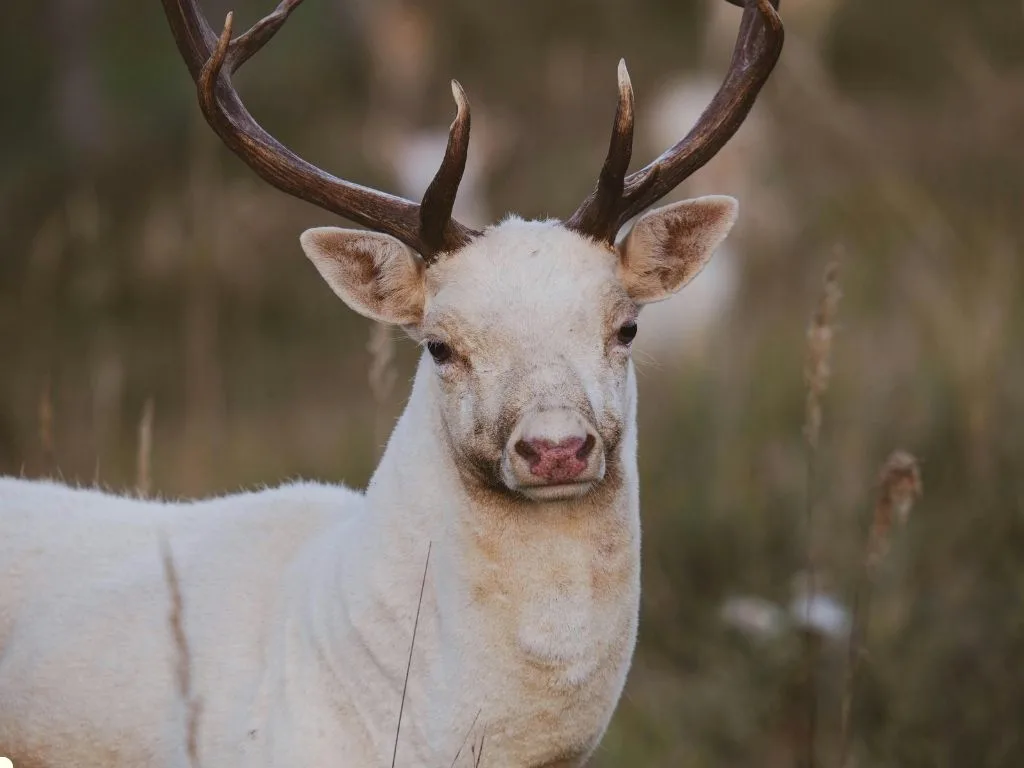
Every once in a while, nature throws us a plot twist that looks straight out of fantasy—an animal dressed in ghostly white, or one cloaked in midnight black. Turns out, it’s not magic at all, but genetics doing its thing. The secret sauce behind these jaw-dropping looks is melanin, the pigment that colors fur, feathers, skin, and eyes. When melanin shows up differently than usual, we get four headline-stealing conditions: leucism, albinism, piebaldism, and melanism—and while they’re often lumped together, they’re actually very different stories.
- Leucism is the subtle rebel: it causes a partial loss of pigmentation, so animals may appear pale or white but still have normally colored eyes and sometimes faint patterns.
- Albinism is the full reset—no melanin at all—resulting in pure white animals with pink or red eyes, along with sensitivity to sunlight and higher survival challenges.
- Piebaldism is a genetic condition that causes animals to have irregular patches of white mixed with their normal coat color, often creating a spotted or blotchy appearance. Unlike albinism, pigmentation is only partially affected, and the eyes usually remain their normal color.
- Melanism, the dramatic overachiever, where excess melanin turns animals unusually dark—like the famous “black panther,” which is actually just a melanistic leopard.
Each condition is rare, mesmerizing, and a reminder that nature doesn’t exactly follow a single color palette. There seems to be some experimentation, and when there is, it leaves us staring a little longer than usual.
As a matter of fact, FWP just shared the following photos of a leucistic elk that were recently captured by somebody named Greg on their game camera, along with a picture of a leucistic Northern Shoveler they discovered a few years back. Pretty cool to see!


Feature Photo credit: Vladimir Srajber