
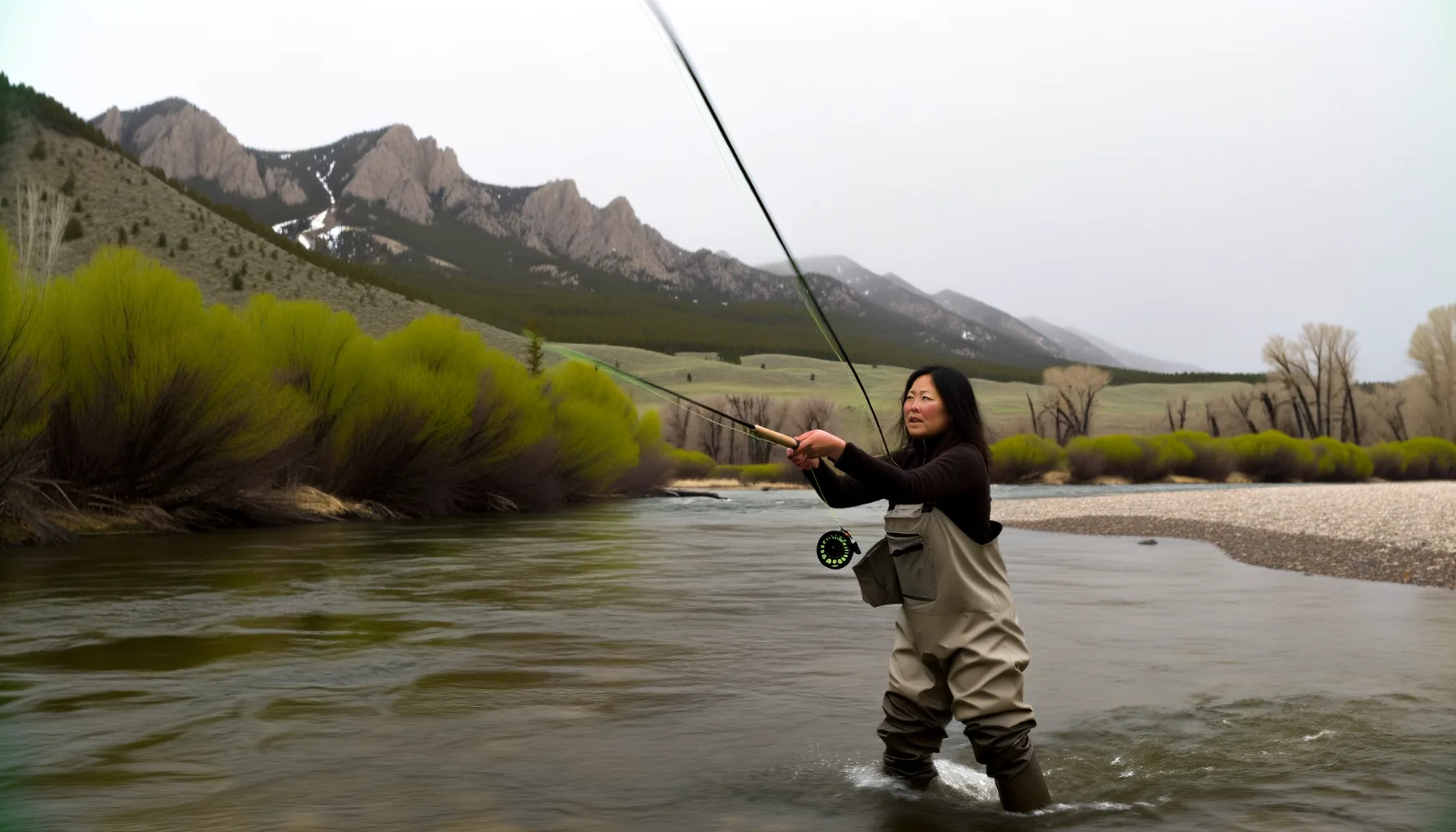
Right now, in that precious window between winter’s last grip and the snowmelt that blows out Montana’s rivers by late April, some of the best trout fishing of the year is happening. The Madison is running clear below Ennis. The Gallatin through Gallatin Gateway is fishable and hungry browns are on the move. Spring creeks near Livingston are absolutely dialed in. And every angler gearing up for these conditions is asking the same question at the fly shop counter: should I be throwing a 4-weight or a 5-weight?
It’s not a trivial question, and the honest answer is that both rods belong in a Montana angler’s quiver — but for different reasons, on different water, at different times. Here’s how to think through it before you load up the truck and head to your favorite stretch.
The Case for a 5-Weight: Montana’s Workhorse Rod
If you’re fishing the Madison River between Quake Lake and Ennis — big, brawling freestone water with consistent winds rolling down the valley — a 5-weight is your default choice. This is especially true right now in early spring when you’re likely throwing heavier nymph rigs, tungsten beadhead stones, or even small streamers to coax pre-runoff browns and rainbows out of their lies.
A 5-weight, typically in the 9-foot range, gives you the backbone to turn over a two-fly nymph rig with a heavy anchor fly, punch a cast into a 15 mph Madison Valley headwind, and still have enough sensitivity to detect a soft take on a dead drift. For most anglers fishing Montana’s mid-sized to large rivers — the Jefferson near Twin Bridges, the Gallatin canyon stretch below Bozeman, or the Clark Fork above Missoula — a 5-weight handles 90 percent of situations without complaint.
The 5-weight is also the more forgiving choice if you’re newer to fly casting. It loads easier in a wider range of conditions, it doesn’t punish casting errors as harshly, and when a 20-inch brown decides to run downstream on the Madison, you’ll be glad you had the extra muscle.
The Case for a 4-Weight: Finesse Water and Spring Creeks
Now let’s talk about where a 4-weight absolutely shines right now in Montana: spring creeks. Armstrong Spring Creek, Nelson’s Spring Creek, and DePuy’s Spring Creek — all located in the Paradise Valley south of Livingston — are flowing gin-clear right now and completely unaffected by runoff. This is their moment.
On these spring creeks, you are presenting size 18 to 22 BWO (Blue-Winged Olive) patterns to highly selective brown trout in crystal-clear water with almost zero current variation. Delicacy is everything. A 4-weight in a quality mid-flex design delivers that — a softer presentation, lighter tippet protection (you’re throwing 6X or 7X fluorocarbon out here), and the pure joy of feeling a 16-inch brown trout work against a lighter rod blank.
A 4-weight also earns its keep on smaller tributaries and high-country streams. Think upper Gallatin headwater streams near Big Sky, Slough Creek in the Lamar Valley before Yellowstone roads open fully, or any of the smaller freestone streams threading through the Beartooth foothills east of Red Lodge. These waters call for accurate short casts and subtle presentations — exactly what a 4-weight was built for.
What About Wind and Pre-Runoff Conditions Right Now?
Here’s the practical reality of fishing Montana in March: wind is not your friend. Even on a calm spring creek morning, afternoon winds in the Paradise Valley can pick up quickly. On the Madison, wind is almost a given. This is one real-world reason many Montana guides lean toward the 5-weight as their single-rod recommendation for anglers visiting right now — it simply casts more reliably in variable conditions.
Pre-runoff flows also mean slightly off-color water on freestone rivers after any warm afternoon, and slightly heavier nymph rigs to get down to depth. Both conditions favor the extra power of a 5-weight over a 4.
The Bottom Line: One Rod or Two?
If you’re buying one rod for Montana trout fishing this spring and you plan to fish a mix of big rivers and small streams, buy the 5-weight. It handles the broadest range of Montana conditions, and you won’t be leaving fish on the table with it anywhere from the Bitterroot to the Bighorn.
If you already own a 5-weight and you’re asking whether a 4-weight is worth adding to the arsenal — yes, absolutely, especially if spring creek fishing is on your agenda. Pick up a quality 9-foot 4-weight, pair it with a quality reel and a double-taper floating line, and your Paradise Valley spring creek days will be transformed.
- Big freestone rivers (Madison, Gallatin, Clark Fork): 9-foot 5-weight, weight-forward floating line with nymph leader
- Spring creeks (Armstrong, DePuy’s, Nelson’s): 9-foot 4-weight, double-taper line, long 12-foot leaders with 6X tippet
- Small mountain streams and headwaters: 7.5 to 8.5-foot 4-weight for tight quarters and short presentations
Stop into any of the local fly shops — Fins & Feathers in Livingston, Madison River Fishing Company in Ennis, or Bozeman Angler — and the folks behind the counter will steer you right based on exactly where you’re headed. They know what’s hatching, what the flows are doing, and which rod makes sense for this week’s conditions. That’s intel you can’t get anywhere else. Use it.