
BRETT FRENCH | bfrench@billingsgazette.com
Mule deer are facing multiple changes to their habitat raising concerns about their continued survival, according to a recently published Wyoming study.
“Mule deer numbers are historically and notoriously variable, and research has yet to find the ‘smoking gun’ that explains periods of population growth and decline,” lead author Teagan Hayes, of the Intermountain West Joint Venture, wrote in an email. “The reality is that multiple factors and pressures are at play for each herd.”
From energy and housing development to disease, wildfire and invasive plant species, the challenges are numerous.
“Death by a thousand cuts definitely fits the mule deer population situation across the West,” said Brett Dorak, wildlife manager for Montana Fish, Wildlife & Parks in Miles City’s Region 7.
Yet perhaps no factor is more concerning and far-reaching than a warming climate.
“Expected increases in drought and decreases in summer precipitation may constrain options to sustain mule deer populations,” the study’s authors predicted.
Dorak agreed.
“As we have always said, weather and habitat are the primary drivers of our wildlife populations. When we look at the fluctuation of our mule deer herds over the last 40 years our valleys in our dataset are typically associated with severe winters or droughts.”
Prairies to peaks
In Montana and Wyoming, mule deer live in such varied habitats as the eastern plains to the western mountains. Many populations are migratory, seeking out lowlands, suburbs and ag fields during winter but “surfing the green wave” in the spring by hiking slowly higher in elevation to dine on nutritious plants as they green up.
In 2016, researchers tracked one Wyoming mule deer doe as it moved 480 miles roundtrip. Migratory deer that winter near Cody, Wyoming, climb 9,000-foot mountains as they hike as many as 75 miles to spend the summer in Yellowstone National Park, does giving birth along the way.
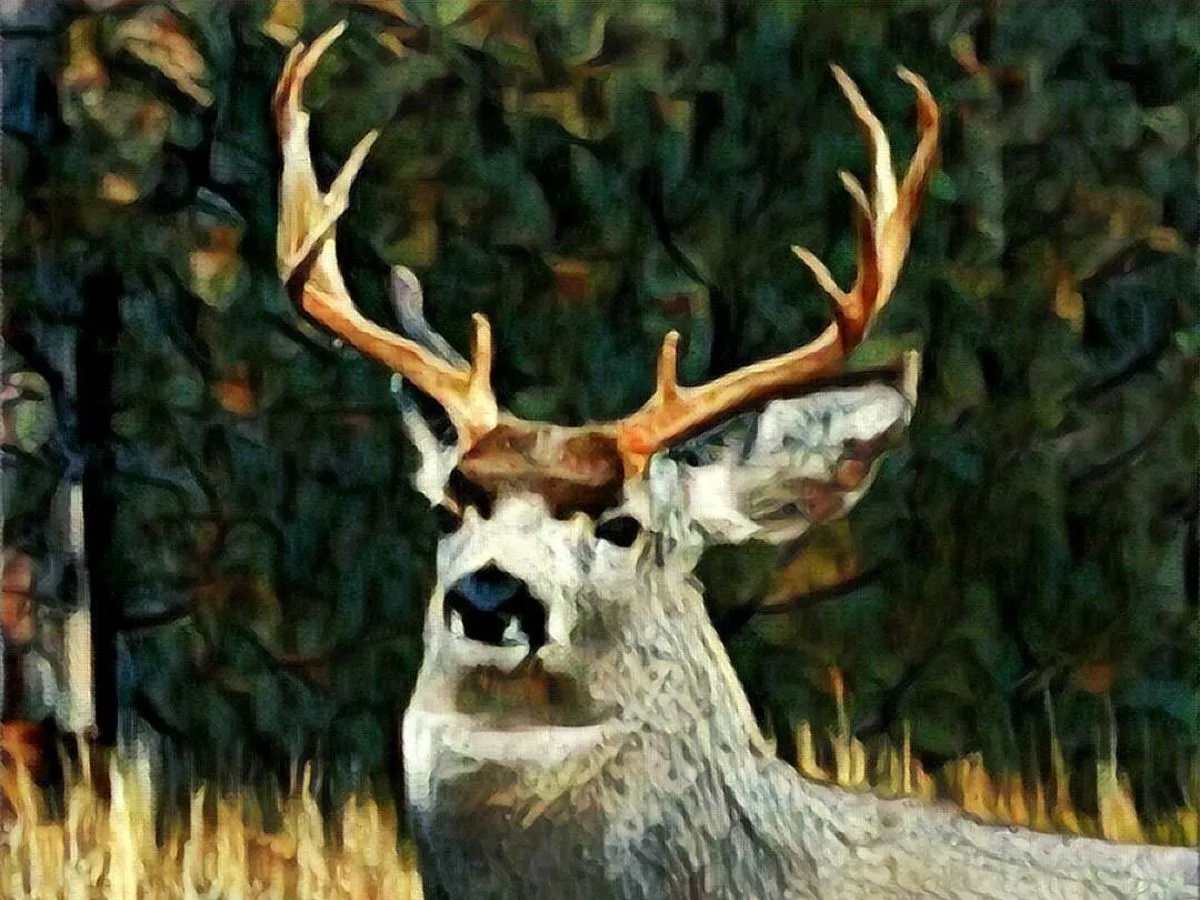
Identified by their mule-like ears and black-tipped tails, large bucks can grow to 250 pounds, while a fat doe may weigh 175 pounds. Another way to recognize them from their more numerous whitetail cousins is their bounding gait, called a stot, where all four legs leave the ground at once.
40 years of data
Forty years of data collected on 37 Wyoming mule deer populations was the basis for the study titled, “Integrating climate and anthropogenic dynamics can inform multifaceted management for declining mule deer populations.” Published in the journal Ecological Applications, authors included Teagan Hayes, Aaron Johnston, Embere Hall, Jill Randall, Matthew Kauffman, Chris Keefe, Kevin Monteith and Tabitha Graves.
The researchers specifically focused on winter range. Many populations annually migrate to specific places. The quality of that winter habitat, or its loss from development, has a big influence on female reproduction success.
In Wyoming, the mule deer population’s most recent peak was 578,000 animals in 1991. As of 2023 that had declined to an estimated 216,000.
Although focused on Wyoming, the findings may apply to other western states, including Montana, where mule deer face similar challenges.
“I think that paper does a great job incorporating many of the management challenges that mule deer and our western systems have been, and continue to face, as we move into the future,” FWP’s Dorak said.
Dorak’s southeast corner of Montana has the largest mule deer population in the state, an estimated 70,000 as of 2025. Yet that figure is 27% below the animals’ long-term average and almost half of what it was only 10 years ago.
At a recent regional meeting of wildlife managers, Brian Wakeling, FWP’s Game Management Bureau chief, said the consensus was that because mule deer populations cycle, the current low recruitment may simply be the bottom of a downturn.
“Is it the death knell at this point in time?” he said. “I don’t think we’re there yet, but it’s certainly not encouraging.”
The key to turning those populations around is not adding more stressors, he said.
Photo by Gateway Graphic Design and Photography