
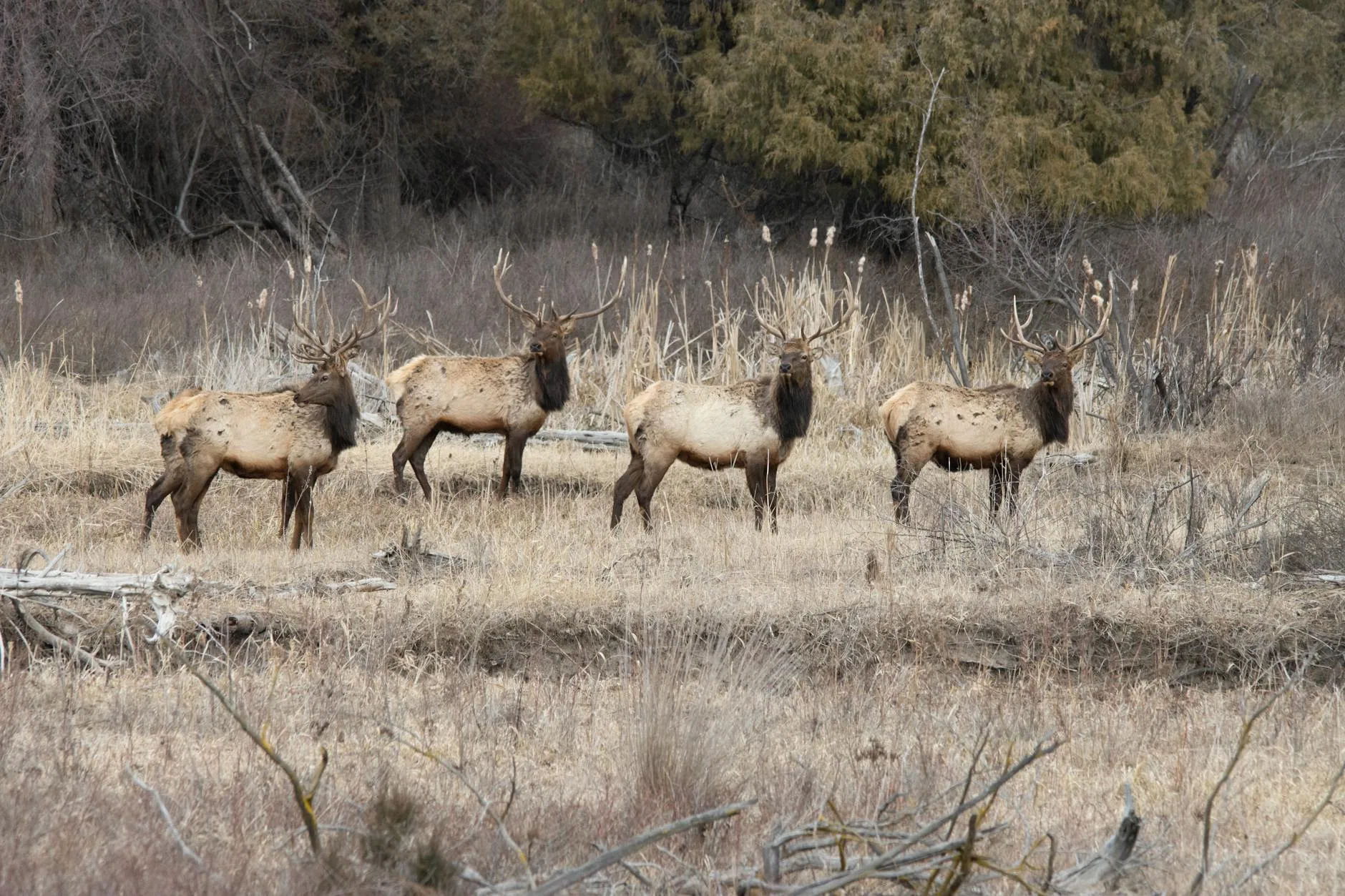
Right now, in this third week of March 2026, somewhere between 7,000 and 9,000 elk are stirring on the National Elk Refuge south of Jackson, Wyoming — and a good chunk of them are pointing their noses north. This happens every year. Most Montana hunters watch it from a distance. The ones paying attention in late March are the ones filling tags in November. Don’t be the other kind.
The Slow Walk North — And Why It Matters to You
The departure from the Refuge isn’t a sprint. These animals aren’t being pushed by hunters or pressure — they lollygag north through sagebrush flats, river bottoms, and timber edges, following snowmelt and green-up at their own pace. That leisurely pace is actually your intelligence asset. Bulls that leave first, move farthest, and arrive earliest in Montana are telling you something: they’re older, more dominant, and they know exactly where they’re going. They’ve made this trip before.
Your job right now is to figure out where “there” is — before the July scouting crowds show up and before anyone else puts boots on the ground.
The Primary Entry Corridors Into Montana
From the greater Yellowstone ecosystem, elk funnel north through several well-established corridors. Montana hunters need to know all of them.
The Centennial Valley and Red Rock Lakes corridor pulls elk out of the southern Yellowstone and Teton wilderness drainages through Fremont County in Idaho, then into Montana near Lima. Beaverhead County herds — particularly around the Snowcrest Range and Lima Peaks — get a steady injection of migratory animals every spring. The units covering the Centennial Valley are worth your serious attention. Cross-reference against current FWP district maps before you apply.
Honestly, the Gallatin Canyon and Taylor Fork route is probably the most significant pipeline of the bunch. Elk pushing through Grand Teton and into the southern Gallatin National Forest follow the river drainage north toward Big Sky and spread into the hunting districts covering the upper Gallatin corridor. These are some of Montana’s most competitive late-season units — and they earned that reputation. HD 316 and HD 311 are commonly associated with this area, but confirm current boundaries at fwp.mt.gov before you commit to anything on a license application.
The Clarks Fork and Sunlight Basin push moves a portion of migratory elk northeast through the Shoshone National Forest and into Carbon County via the Clarks Fork of the Yellowstone. That puts elk on the Beartooth Front — one of the most productive elk landscapes in the state, and one of the most pressured. HD 507 is commonly tied to this corridor. Verify current district lines before making permit decisions.
Finally, the Madison and Gravelly Range corridor pulls in migratory elk connected to Yellowstone’s interior and southwestern herds. The upper Madison drainage near Ennis and Cameron is a classic transition zone — the kind of country where you can glass a saddle in late May and already be planning your September hunt. HDs 362 and 380 are commonly referenced here, though boundaries should always be confirmed against current FWP maps.
What It Means for Late-Season Permit Holders Right Now
If you drew a late-season antlerless permit in any of these districts for 2025 — or you’re gearing up to apply for 2026 — pay close attention to where migratory animals are showing up this spring. Montana Fish, Wildlife & Parks typically opens the 2026 license and permit application window in late April. Now is exactly the right time to study migration behavior so you’re making informed district choices before that window opens, not scrambling after it closes.
Pull up the FWP elk population status reports for the Beaverhead, Gallatin, and Stillwater drainages. Herd objective data and recent population trend information for each hunting district is publicly available at fwp.mt.gov. Don’t wait until August to find out whether a unit is above or below objective — that information is sitting there right now, and it directly predicts permit availability and hunter success rates.
Early-Arriving Bulls: Your Best Scouting Tip for Fall 2026
Here’s the part most hunters skip entirely. When mature bulls reach their summer range in late May and early June — still carrying the fat reserves they built on winter range — they drop almost immediately into a low-pressure feeding and recovery mode. They’re remarkably visible and remarkably patternable during this window, before velvet growth pushes them into the timber in July and August.
If you can get glass on bulls in late May in the Gravelly Range, the Snowcrests, or the upper Gallatin drainages, you’re watching animals that will almost certainly return to the same general area come the September rut. Their home ranges compress hard during the rut and post-rut. The bull you watch feeding in a June meadow above the South Fork of the Madison is very likely the same bull you should be hunting in that same drainage during the third week of September. That’s not a coincidence — that’s a pattern you can plan around.
What to Do This Week
- Pull up onX or FWP’s hunting district boundary maps and identify which districts border the primary corridors above. Then review 2025 elk population data at fwp.mt.gov to understand herd status in your target units.
- Mark your calendar for a late May or early June glassing trip to the Gravelly Range, Snowcrest Mountains, or Taylor Fork area — and start tracking snowpack levels in the Centennial Valley and upper Gallatin now. Snowmelt timing will tell you when bulls hit their summer ranges, and that’s when you want to be behind your glass.