
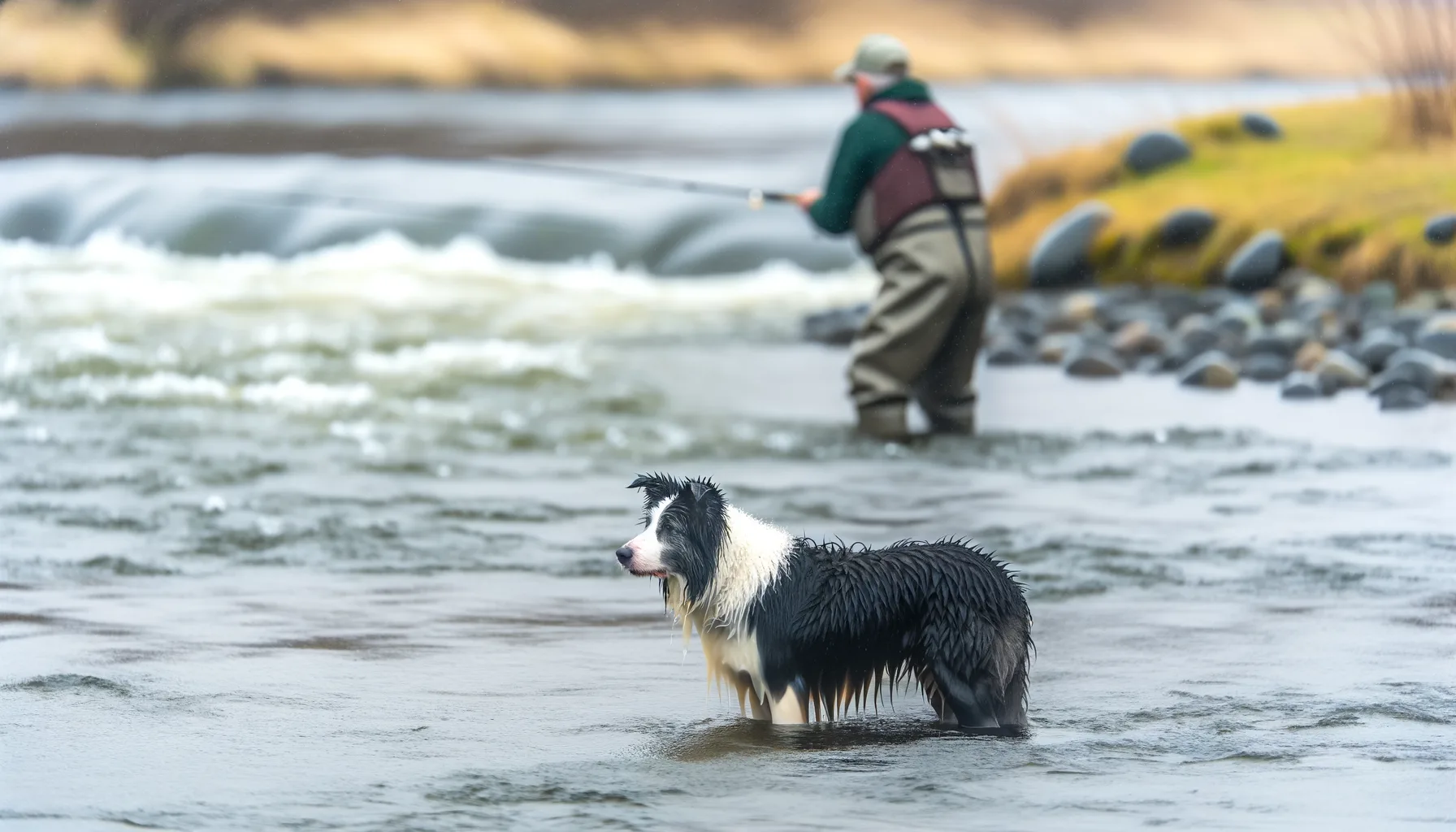
A post hit the fly fishing corners of Reddit this week that stopped a lot of us mid-scroll. An angler named JackOfAllTrouts shared a photo of his dog Tucker — named after the Tuckaseegee River in western North Carolina — along with a simple, gutting caption: “I just lost my net-man of 12 years.” Tucker had floated rivers from South Carolina to Utah, from Oregon to right here in Montana, chasing brown trout on rivers that many of us call home water. The post blew up because every serious angler who’s ever had a dog on the bow of a drift boat or posted up beside them on a gravel bar knows exactly what that loss feels like.
If you’ve fished Montana with a dog at your side, you already understand. There’s something specific and irreplaceable about a dog who knows the sound of a reel, who learns to hold still when you’re working a seam, who curls up on a pile of waders at the takeout without being told. They become part of the ritual. Losing them is losing a piece of the river itself.
The Montana Fishing Dog Tradition
Montana anglers have always brought their dogs to the water. It fits the culture here — public land access is generous, rivers are wide and wild, and the pace of float fishing on the Madison, Bitterroot, or Blackfoot gives a dog room to ride and rest. Labs and golden retrievers dominate the drift boats, but don’t discount the border collies perched on the gunwale of a raft on the Missouri between Holter Dam and Craig, or the blue heelers who’ve logged more miles on the Gallatin corridor than most out-of-state anglers will in a lifetime.
These dogs learn the game. They figure out that a tight line means stay put. They figure out that a net coming over the side means something worth watching. Some of them, like Tucker, see it all — tailing fish in saltwater flats, smallmouth on Midwestern rivers, and eventually the cold clarity of a Montana freestone stream in late summer. Montana is often the crown jewel of a fishing dog’s career, and it shows.
Dog-Friendly Access Points Worth Knowing
Not every fishing access site in Montana is created equal when you’ve got a dog in tow. Here are a few that work particularly well:
- Warm Springs Fishing Access Site, Bitterroot River: Wide gravel bars, gentle entry points, and good shade in the cottonwoods. Easy on older dogs whose joints aren’t what they used to be.
- Toston Dam Fishing Access, Missouri River: Broad flats and a manageable current on the upper end make this a solid spot for dogs who want to wade without getting hammered by spring flows.
- Polebridge area, North Fork of the Flathead: Remote, uncrowded, and surrounded by public land. Dogs can roam the gravel bars freely while you swing streamers for westslope cutthroat.
- Burnt Fork Fishing Access, upper Bitterroot: Smaller stream with gentler flows, good for introducing a younger dog to moving water without overwhelming them.
- Millegan Fishing Access, upper Missouri: Less traffic than the Craig stretch, with open gravel bars that give dogs room to explore between your casts.
Always check Montana Fish, Wildlife & Parks regulations before you go. Some wildlife management areas and spawning closures restrict dog access seasonally, particularly near sensitive bull trout and westslope cutthroat habitat in the Flathead drainage.
Spring Runoff Is Real — Keep Your Dog Safe
Right now, in mid-March, snowpack is still deep across the Northern Rockies. The warming trend coming in the next few weeks is going to push flows up fast on rivers like the Clark Fork, the Gallatin, and the Stillwater. This is the part of the season that catches people — and their dogs — off guard.
Here’s what you need to know before you load the truck:
- Check USGS streamflow gauges before every outing. A river that was 800 cfs on Tuesday can be 2,400 cfs by Friday after a warm rain hits the Beartooths or the Missions. Flows above 1,500 cfs on most mid-sized rivers are genuinely dangerous for dogs.
- Fit your dog with a canine PFD. This is non-negotiable during runoff. Even strong swimmers can get tumbled in turbid, debris-heavy spring water. Ruffwear makes a solid vest that works well for most breeds.
- Watch for strainers. Logs and debris pile up on outside bends during high water. If your dog goes in near a strainer, the situation can turn fatal in seconds. Keep dogs away from outside bends when flows are elevated.
- Cold water shock is real. Snowmelt-fed rivers in March and April run in the high 30s to low 40s. A dog that takes a long swim in that temperature range can experience hypothermia faster than you’d expect. Have a dry towel and a warm vehicle ready.
How to Honor a Dog You’ve Lost
If you’ve lost a fishing partner like Tucker, the grief is legitimate and the fly fishing community gets it — even if nobody else in your life quite does. A few Montana anglers I know have scattered ashes at a favorite access site, tied a fly in a dog’s name, or simply made a point to fish a meaningful stretch of water on the one-year anniversary. One guide on the Madison keeps a photo of every dog that’s ever ridden in his boat pinned to the bulletin board in his shop in Ennis. It’s become a wall of honor without anyone planning it that way.
The river keeps moving. But the best thing you can do for a dog you’ve lost is to eventually bring another one to the water — and start the whole education over again. Teach them what a tight line means. Let them figure out the net. Float them down something beautiful and watch their nose work the wind off the canyon walls.
Tucker got Montana. Not every dog does. That’s something worth celebrating, even through the grief.