
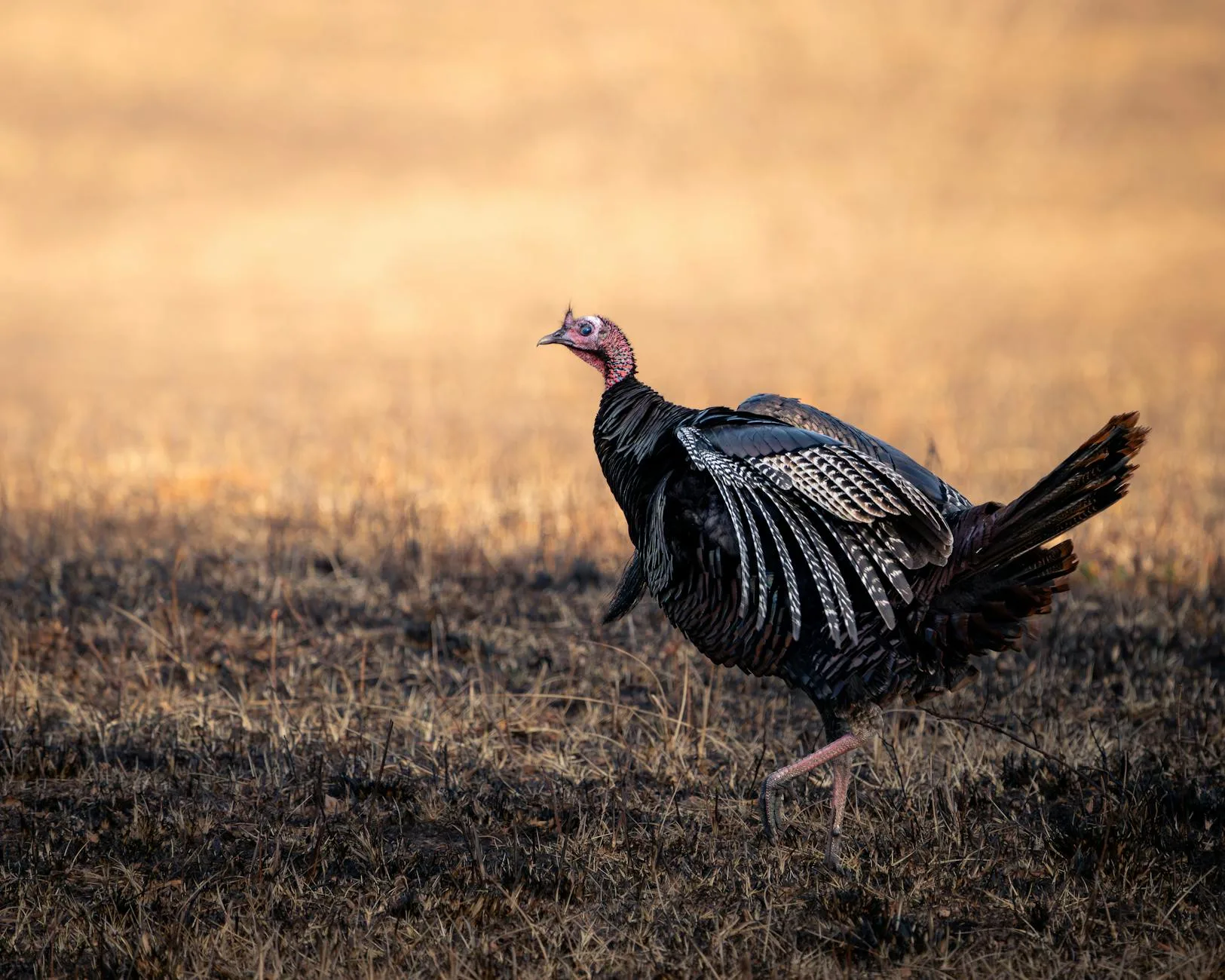
Where Merriam’s Are Right Now in Montana
You’ve got exactly one month. Montana’s spring turkey season opens April 15, 2026, and if you haven’t already been poking around the ponderosa draws and creek-bottom benches where gobblers are starting to sound off, now is the time to get after it. Merriam’s turkeys don’t require the same level of obsession as elk, but they reward preparation. The hunters who punch their tags opening week aren’t lucky — they’ve been watching the same ridge for two Saturdays before the season ever starts.
Mid-March means Merriam’s gobblers are transitioning out of winter flocks and starting to range toward their traditional strutting grounds. In southwestern Montana — think the Beaverhead-Deerlodge National Forest drainages near Dillon, the Gravelly Range foothills, and the lower Blackfoot River corridor — birds are following the snowline uphill. You’ll typically find them working the interface between open grassland and ponderosa pine, using the timber for roosting and the open parks for displaying.
In the eastern part of the state, along the Yellowstone River breaks between Miles City and Glendive, birds winter in the cottonwood bottoms and start pushing onto adjacent BLM grasslands as temperatures climb. The Missouri River Breaks north of Lewistown are another sleeper option — accessible BLM ground with big timber pockets and comparatively low pressure. Honestly, the Breaks get overlooked every year, and I don’t understand why.
Right now, your scouting job is simple: find roost trees. In Montana’s Merriam’s country, that almost always means old-growth ponderosa pine on south-facing slopes or big cottonwoods along major river corridors. Look for feathers, droppings, and scratch marks in the leaf duff below the timber. If you’re hearing distant gobbling in the morning hours, you’re in the right zip code.
Scouting Tactics for Public Land
For most Montana hunters, this hunt happens on BLM or national forest ground, which means doing your homework before you burn a weekend driving dirt roads. Start with onX Hunt — layer in the terrain and cross-reference ponderosa pine coverage with public land boundaries. The Helena and Beaverhead-Deerlodge National Forests both hold solid bird numbers and offer accessible trailheads that won’t require a four-wheel-drive miracle.
Glass open parks at first light from a distance before you commit to a drainage. Gobblers often strut in the same meadow openings year after year — find one productive park and it’ll produce for you a long time. Walk old two-tracks and look for fresh tracks in soft soil or snow patches; turkey tracks are unmistakable at roughly four inches long. Then get up high at dawn and just listen. A fired-up gobbler in mid-April carries half a mile in calm air, and one morning of good listening can save you three weekends of blind wandering.
In dry years, pay attention to water. Spring seeps and creek crossings become reliable intercept points later in the morning after birds fly down and the initial gobbling frenzy dies off.
Don’t Burn Your Spots
If you find a roost, resist the urge to push in close. Educated birds on public land are wary birds. Get your intel and back out. You want those gobblers comfortable and unpressured when April 15 rolls around.
Calls That Work for Merriam’s
Merriam’s have a reputation for being call-responsive — sometimes almost embarrassingly so compared to Eastern birds. But that doesn’t mean you should go loud and aggressive every time. Start soft. A slate call or box call throwing subtle tree yelps and clucks at first light will often pull a gobbler off the roost without spooking nearby hens.
In my experience, four calls cover everything you’ll need on a Montana public land hunt. A slate or glass pot call handles soft morning sequences better than anything. A mouth diaphragm is non-negotiable when a bird is closing fast and your hands need to be on your gun. A box call carries distance on windy Montana mornings — and there will be windy mornings — better than almost anything else you can reach into your vest and grab. A wingbone or tube call is underrated for locating birds with a sharp yelp sequence; most guys don’t bother with one, which is their loss.
Learn to cut and cackle with your box or slate. When a gobbler hangs up — and he will — an aggressive cutting sequence followed by dead silence often breaks the standoff. Don’t overcall. If a bird is gobbling and moving toward you, shut up and let him come.
Tags, Licenses, and Deadlines
Montana FWP offers spring turkey licenses over the counter for residents and nonresidents alike — no draw required. You can purchase your spring turkey combination license through the FWP license portal at fwp.mt.gov or at any authorized license agent. The season runs April 15 through May 31, 2026. Both male turkeys and bearded hens are legal during the spring season — check the current regulations for any district-specific rules before you go.
Nonresidents shouldn’t wait on this. Licenses don’t sell out, but getting your paperwork squared away now means one less thing to think about when you’re loading the truck at 4 a.m. on opening day.
Your Pre-Season Checklist
- Purchase your 2026 spring turkey license before April 1
- Complete at least two scouting trips to confirm roost locations
- Pattern your shotgun or set your bow at realistic hunting distances (20–40 yards)
- Practice calling daily — even 10 minutes with a mouth call makes a difference
- Pull together your camo kit and check for blaze orange requirements on any walk-in access areas
- Download offline maps for your target unit in onX
One month goes fast in Montana, especially when late-season snowstorms can keep you off the roads through early April. A couple of solid scouting mornings now, some time behind a call in the evenings, and you’ll be set up for a legitimate shot at a public land bird on opening week — which is all any of us are really after.