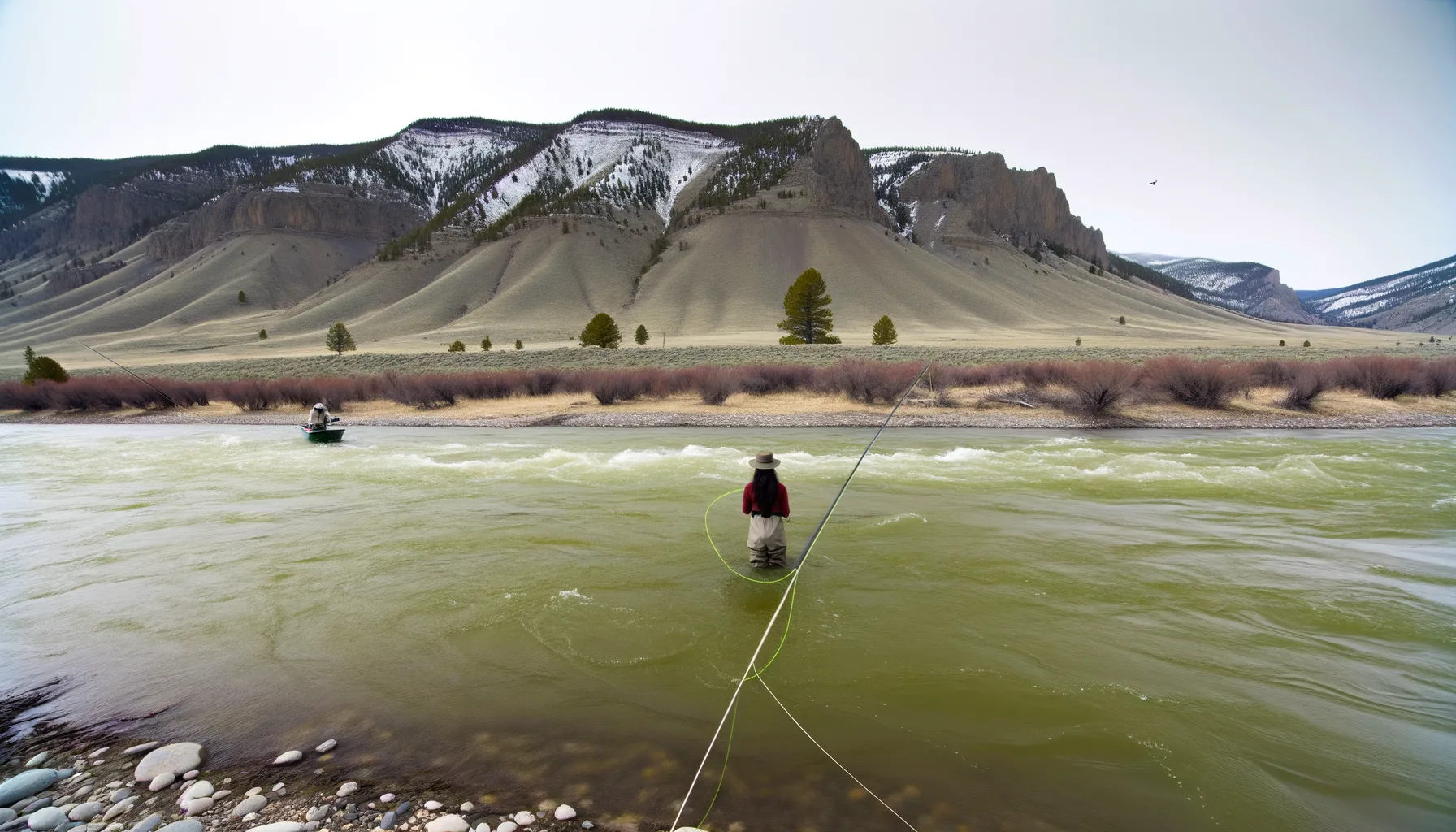
The snowpack is moving. Up in the Rattlesnake Wilderness, on the slopes above the Blackfoot corridor, and across the Sapphire Range draining into the Bitterroot, warm March temps are doing what they always do — turning six months of accumulated snow into fast, cold water. The Clark Fork gauge at Missoula is already running above seasonal average, and if you’ve driven past the Bitterroot this week, you’ve seen that telltale green-brown tint creeping into the current. This is the signal. Not the signal to hang up your waders — the signal to get in the water right now, before it’s too late.
Why This Window Matters More Than Most Anglers Realize
The pre-runoff nymphing bite is quietly one of the best trout fishing periods of the entire year in western Montana, and it gets almost no attention because it’s short, unpredictable, and requires you to actually pay attention to river conditions. Here’s what’s happening biologically: water temperatures are climbing out of the mid-30s into the low 40s, stonefly and early baetis nymphs are becoming active and dislodging from substrate, and big brown and rainbow trout that have been sluggish all winter are suddenly feeding aggressively. They’re not up top — they’re tight to the bottom in deep runs — but they are eating.
That window typically lasts somewhere between one and three weeks in mid-March. Right now, we’re in it. Flows are elevated but still clear enough to fish effectively. In a few days, when the next warm front rolls through and overnight temps stop dipping below freezing, that clarity disappears fast. Once visibility drops below 18 inches and flows blow past 2,000 CFS on the Clark Fork at Missoula, the game changes entirely. Don’t wait for the weekend.
Which River Sections to Target Right Now
Clark Fork — Milltown to Turah
The stretch from the confluence at Milltown downstream through Turah holds some of the best deep-run nymphing access in the region. Fish the outside bends where current slows slightly and depth stays in the four-to-six-foot range. Browns stack here during this transition period. Wade carefully — flows are up and the gravel is slick with early algae. Access via the Milltown State Park boat launch or the Turah fishing access site off Highway 200.
Bitterroot — Florence to Stevensville
The Bitterroot is your best bet if the Clark Fork goes off color first. The middle Bitterroot between Florence and Stevensville tends to clear faster and stay fishable a day or two longer thanks to its gravel-dominated bottom and slightly smaller drainage. Focus on the deeper slots along the east bank in this stretch. Rainbows are the primary target here, and they’ll be stacked in current seams adjacent to faster water.
Blackfoot — Johnsrud Park to Roundup Bar
The lower Blackfoot from Johnsrud Park down toward the confluence with the Clark Fork is a strong choice when conditions allow. This section has some of the most productive deep nymphing water in western Montana — long, sweeping runs with rock structure that holds trout throughout the season. It also tends to blow out earlier than the Bitterroot, so check conditions before you make the drive out Highway 200.
What to Tie On
This is not the time for subtlety. You’re fishing deep, in higher-than-normal flows, to trout that are actively looking for caloric payoff. Go heavy and go big.
- Pat’s Rubber Legs, #6-8: Your anchor fly. Weighted heavily, this gets you to the bottom fast and mimics the large stonefly nymphs that are tumbling in the current right now.
- Hare’s Ear Nymph, #12-14: Dropper fly. A classic for a reason — it suggests everything from baetis nymphs to caddis larvae and catches fish consistently during this transition.
- Copper John, #14-16: Second dropper if you’re running a three-fly rig. The added weight helps and the flash draws strikes in slightly off-color water.
- Tungsten beadheads throughout: Non-negotiable right now. You need to get to the bottom quickly or you’re not in the zone.
Run your indicator deeper than you think you need to — generally 1.5 times the water depth. If you’re not occasionally ticking bottom, you’re not deep enough. Add split shot without hesitation. Trout are not rising off the bottom to eat a nymph drifting six inches above them in 44-degree water.
A Few Practical Notes Before You Go
Check the USGS streamflow gauges for the Clark Fork at Missoula and the Bitterroot at Bell Crossing before every trip right now — conditions are changing daily. Montana Fish, Wildlife & Parks Region 2 out of Missoula is your contact for any regulation questions specific to these waters. Standard Clark Fork drainage regulations apply: check your 2026 fishing regulations for species-specific slot limits on the Bitterroot.
Dress for the possibility of getting wet in 40-degree water. Wading staff is mandatory in elevated spring flows — this isn’t the time to go light. And tell someone where you’re going. Pre-runoff rivers are beautiful and productive, but they’re not forgiving.
You’ve got a narrow lane here. The fish are eating, the water is still fishable, and most of your competition is waiting for summer. Get out there before the mountain makes the decision for you.