
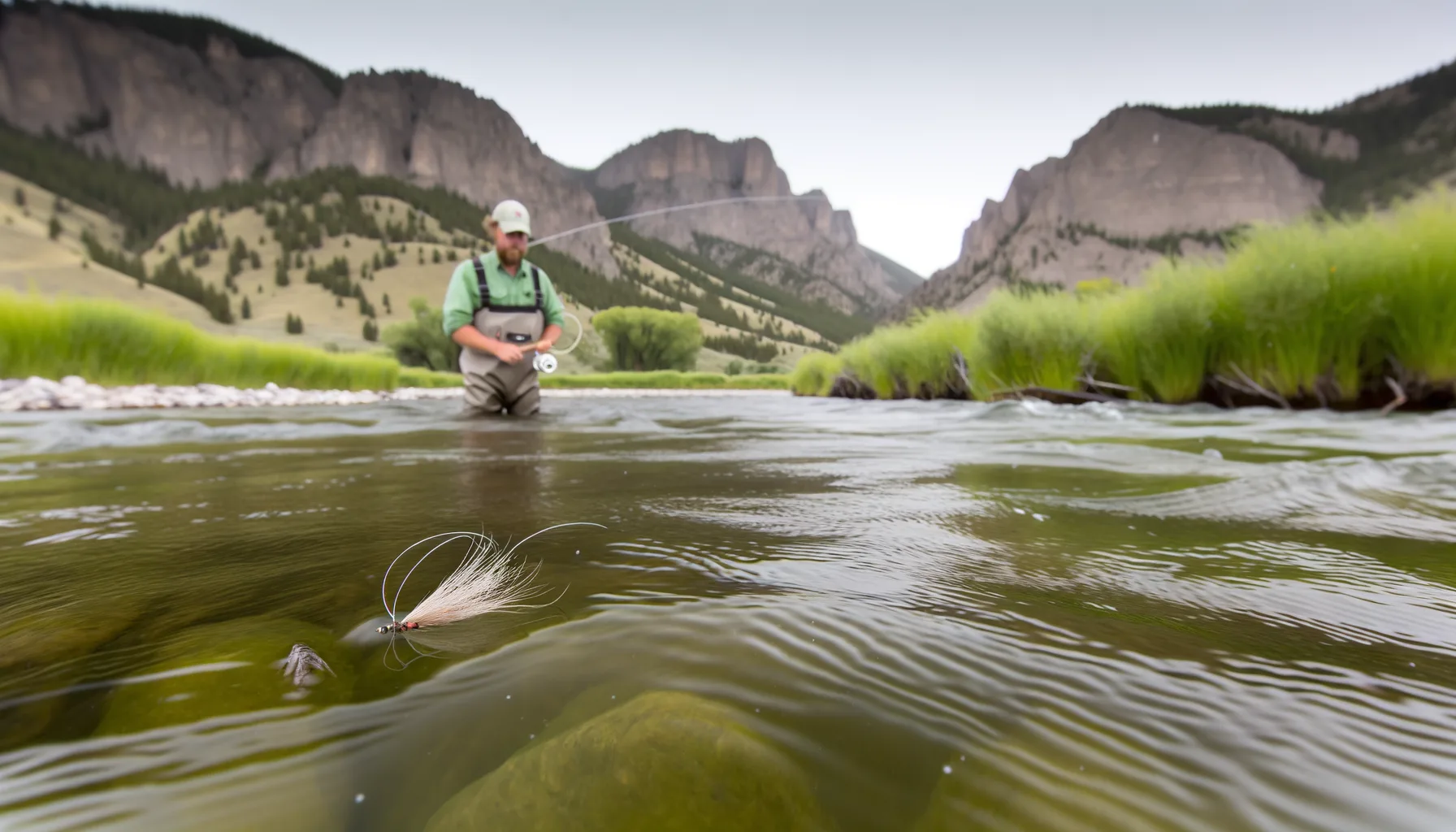
Walk along any Montana trout stream during peak season and you’ll see the same setups repeated endlessly: nymph rigs with split shot and indicators, dry-droppers with a hopper trailing a pheasant tail, maybe the occasional streamer enthusiast working the banks. These techniques catch fish—no question about it. But there’s an elegant, deadly effective approach that’s been collecting dust in most anglers’ tactical arsenals: the double dry fly rig.
I’ve guided clients on the Madison, fished the spring creeks around Livingston, and chased cutthroats in the Bob Marshall Wilderness, and I can tell you with certainty that the double dry setup deserves more respect than it gets. When conditions align, it’s not just effective—it’s devastatingly productive.
Why Two Dries Outfish One
The logic behind running two dry flies is simple but powerful. First, you’re covering twice as much water with each drift. Your lead fly might drift over a trout that’s keyed in on larger mayflies, while your trailing fly passes right over a fish sipping smaller PMDs or midges. You’re essentially doubling your chances without adding weight or complicated rigging.
Second—and this is where it gets interesting—trout often become more aggressive when they see multiple insects. It triggers a feeding response that a single fly sometimes can’t replicate. I’ve watched rainbows on the Yellowstone rise to inspect the lead fly, refuse it, then absolutely crush the trailer a foot behind it. That reaction tells you everything you need about how trout perceive opportunity.
When Montana Conditions Are Perfect
The double dry rig shines during our prolific summer hatches. When the Bitterroot is throwing PMDs and caddis simultaneously in July, or when the Missouri has overlapping mayfly and terrestrial activity in August, you want the ability to match multiple food sources at once.
I particularly love this setup during those magical Montana evenings when multiple hatches occur within an hour. Pair a size 14 Parachute Adams with a size 18 Sparkle Dun behind it, and you’re covering your bases as the hatch transitions from one species to another.
Calm water makes this technique truly deadly. The spring creeks near Ennis, Armstrong, and DePuy—where trout have all day to scrutinize your presentation—are perfect proving grounds. The subtle wake of two naturals drifting in tandem looks more convincing than a single fly, especially to educated fish that have seen every pattern in every fly shop within fifty miles.
Rigging It Right
Keep your setup simple. Tie your lead fly to your tippet as you normally would—this should be your larger, more visible pattern. Then attach 12 to 18 inches of tippet to the bend of that front hook (not the eye), and tie on your smaller trailing fly. The length between flies matters: too short and they interfere with each other; too long and your presentation gets sloppy.
For most Montana situations, I recommend a size 12-16 attractor or high-riding pattern up front—Stimulators, Elk Hair Caddis, or Parachute Adams work beautifully. Your trailer should be smaller and more imitative: Griffith’s Gnats, CDC emergers, or small Blue-Winged Olives in sizes 18-22.
Presentation Tips for Montana Waters
The double dry rig demands clean casting. You’re working with more air resistance and a longer leader system, so practice your accuracy before you hit prime water. False casting increases exponentially with two flies, so work on making fewer, more purposeful casts.
Watch your lead fly like a hawk—it becomes your strike indicator. When it pauses, twitches, or disappears, set the hook. Half the time, fish will take the trailer fly without creating an obvious surface disturbance, and your front fly telegraphs the take.
Current seams, foam lines, and feeding lanes become twice as productive when you’re running two patterns. Position yourself to drift both flies through the strike zone, and don’t be surprised when you start hooking up with regularity that makes your nymphing buddies jealous.
Break From the Crowd
Montana’s trout streams can feel crowded with anglers running identical setups. The double dry rig offers a refreshing alternative that keeps you in touch with what fly fishing should be: watching trout rise to visible flies in beautiful places. It’s technical enough to stay interesting, simple enough to not bog you down with gear, and effective enough to put native cutthroats, browns, and rainbows in your net.
Next time you’re standing streamside watching overlapping hatches or fishing calm water with selective trout, tie on two dries and give those fish something different to think about. Your catch rate might surprise you.
Source inspiration: https://www.msn.com/en-us/sports/general/how-to-fly-fish-the-double-dry-fly-rig-an-oft-forgotten-trout-magnet/ar-AA1EdSxd