
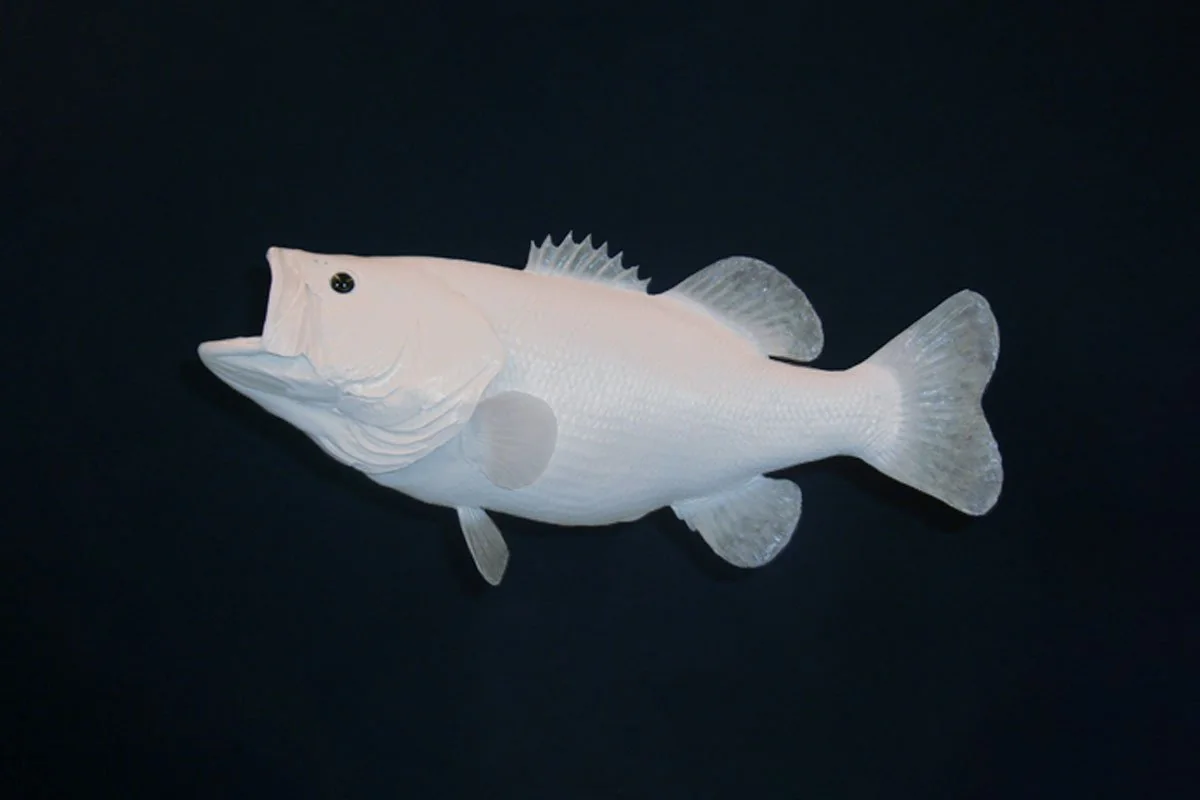
Albino and leucistic bass are genuinely rare, but they exist — and Montana’s bass fisheries are as likely as anywhere in the country to eventually throw one at you. Here’s what’s actually happening inside that fish, how it ends up that way, and what you should do if one ends up in your net.
Albinism vs. Leucism: What’s Actually Going On With That White Bass
People use “albino bass” as a catch-all term, but there’s a real distinction between the two conditions. True albinism is a genetic mutation that completely shuts down melanin production — the pigment responsible for dark coloration. A truly albino bass will show pale or white skin and pink or red eyes, because without pigment, the blood vessels in the eye become visible. It’s a recessive trait, meaning both parents have to carry the gene for it to express in offspring.
Leucism is what most anglers are actually looking at. A leucistic bass has reduced pigmentation across part or all of its body but retains normal eye color. You might see a fish that’s largely white or washed-out silver with faint patterning still ghosted in. Leucism affects pigment cells differently than albinism — the cells are present, they just aren’t functioning correctly.
Both conditions come down to genetic chance, not environmental contamination or disease. If you pull a white bass out of Fresno Reservoir, don’t assume something is wrong with the water. The fish just drew a rare hand at conception.
How rare? True albinism in wild fish populations is generally estimated at fewer than one in 100,000 individuals. Leucism is somewhat more common but still exceptional. If you’ve been fishing Montana reservoirs for twenty years and never seen one, that’s completely normal. So is the fact that your hands might shake a little when you do.
Do Albino Bass Actually Survive in Montana’s Wild Reservoirs?
Honestly, it’s a tough road. The same lack of pigmentation that makes these fish so striking is a genuine liability in the wild. Bass are ambush predators — they depend on blending into dark substrate, shadows, and structure. A ghostly white largemouth sticking out against the bottom of a Fort Peck cove isn’t running an efficient ambush operation. Beyond the hunting disadvantage, reduced melanin means reduced UV protection. Fish living in shallow, sun-hammered water like Nelson or Fresno face real sun exposure, and heavily albino individuals can suffer cellular damage that chips away at their health over time.
Predation is the other piece. A white bass is a highly visible target for osprey, herons, and bigger predatory fish. Most albino individuals that hatch never reach catchable size — they get picked off early. The ones that do make it tend to be using depth, heavy structure, or turbid water to compensate for what they’re missing in camouflage. Fort Peck, given its sheer size and significant depth gradients, probably gives a pale bass a better survival window than a smaller, shallower impoundment would.
That said, anglers have pulled in albino and leucistic bass that were full-sized, healthy, and fat. Bass are adaptable fish. Some individuals figure it out. Don’t assume a white bass is a sick bass — assess it the same way you’d assess any fish you handle.
If You Catch an Albino Bass in Montana, Do This
First: don’t keep it. Montana FWP doesn’t have a specific protected status for albino or leucistic fish, but from a conservation standpoint, these fish are scientific curiosities worth putting back. They almost certainly carry the recessive genes that produced their coloration, so releasing them keeps that genetic thread alive in the population. In my experience, the anglers who’ve stumbled onto rare fish and released them are the ones who feel good about it a week later.
Photograph it thoroughly — both sides, a top-down view, and a close-up of the eye color, since that’s what helps confirm albinism versus leucism. Keep the fish in or just above the water the whole time. These fish have reduced UV protection, so keep your photo session under a minute and get it back in the water fast.
Then report it to Montana FWP. Contact your regional office or submit through the FWP website. Biologists genuinely want this data — a confirmed albino bass at Fresno or Nelson is a real data point for population monitoring, not just a cool story. Share the photo online if you want, tell people which reservoir you were on, but you don’t need to burn a specific cove to tell a good story.
- Photograph both sides, top-down, and the eyes. Eye color is what separates true albinism from leucism.
- Report it to Montana FWP. Regional offices or the FWP website — either works. They want to know.
Montana’s bass fisheries — Fort Peck, Fresno, Nelson, and a handful of others — don’t get the national attention our trout rivers do, and that’s fine by most of us who fish them. But they hold fish that will surprise you. An albino bass is proof that even in water you think you know inside and out, something completely unexpected is always sitting down there waiting. Keep your net wet, get your photos fast, and put that ghost fish back.
Montana's outdoor week, in your inbox at 7am Friday.