
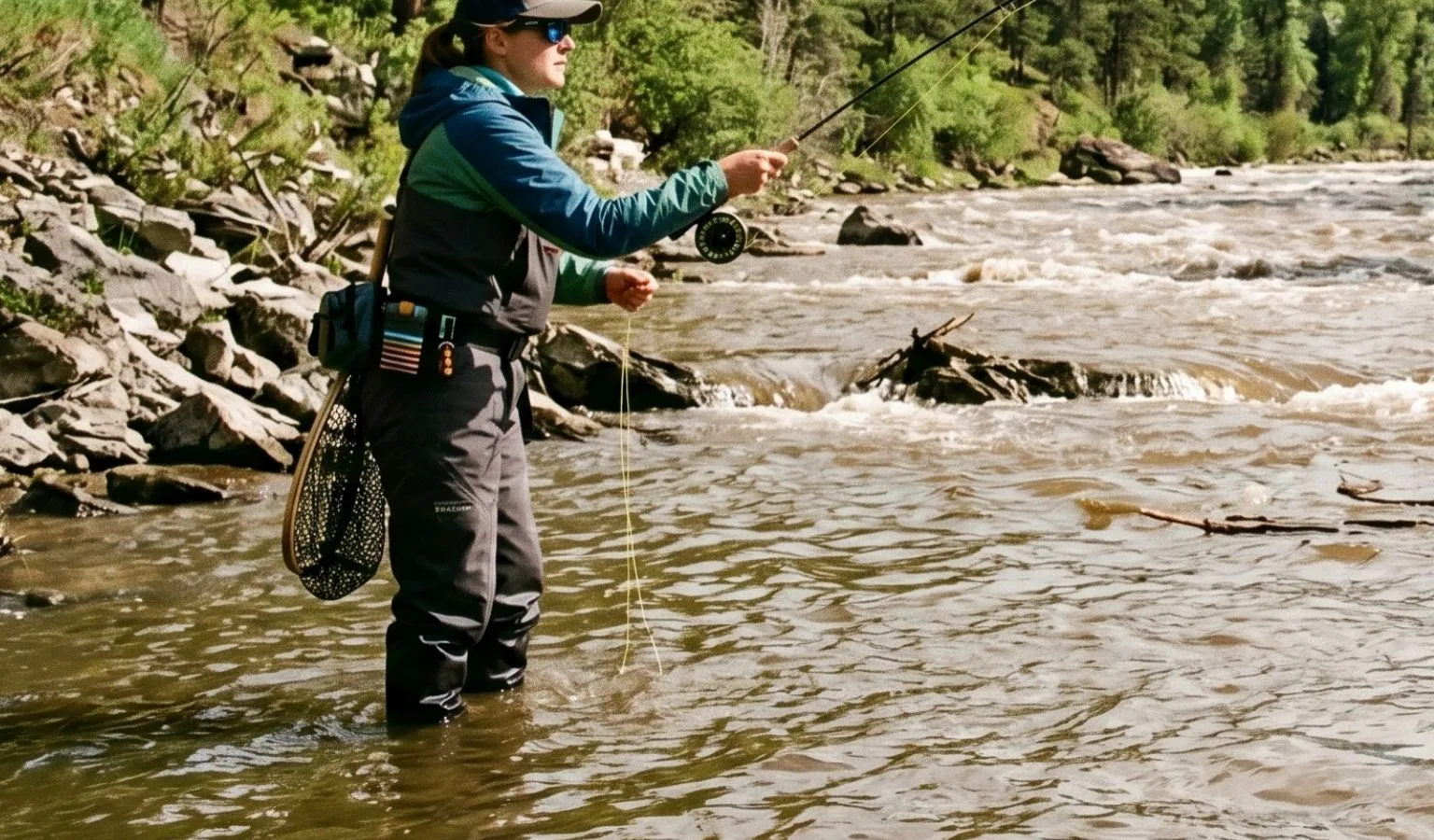
Forget the tranquil, postcard-perfect Montana scenes you’ve been dreaming about; right now, the Bitterroot River is a churning, chocolate-milk powerhouse that demands respect and a very specific set of skills. While the Missoula stretch is currently a murky mess of high water, the river is teasing us with the promise of legendary hatches and aggressive feeders for those willing to venture into its upper reaches. Whether you’re a dry-fly purist waiting for that evening window or a nymph-slinger ready to dredge the depths with a worm, this week’s conditions are all about timing, grit, and knowing exactly where the “soft water” hides.
Here’s the latest from Kingfisher Fly Shop (926 East Broadway
in Missoula) for May 13, 2026 if you’re planning on fishing the Bitterroot River:
And here I was last week, saying the mud is back… here comes the mud… Well, the mud has persisted. The Root is sitting at 9400 near missoula, and slowly dropping back down. Much like the Clark, if you want to find better clarity you’re gonna have to reach the upper parts of the river in Hamilton or Darby way. CFS has been fluctuating between 3500-3900 up by Darby, which is historically higher than usual “good” fishing flows. The Bitteroot might be out of the play for the next few days, but there are always fish in tha system that will eat a worm!
Warmer weather is driving more consistent bug activity across the system. BWO’s and midges are present throughout the day, with some Mothers Day Caddis showing up, and increasingly strong hatches of March Browns, BWO’s, and even some golden stones barely beggining to emerge. (I saw a single Golden). These improving conditions are pushing fish to feed more actively, and the Bitterroot is currently offering more reliable dry fly action than neighboring rivers, especially in the upper sections.
Fish are beginning to look up with more consistency, particularly during evening windows when hatch activity peaks. BWO’s, March Browns, and maybe even a cheeky midge cluster. While mornings can still be hit-or-miss, the evening dry fly bite has been the highlight—making it well worth keeping a dry box handy if you’re out there.
Subsurface, nymphing continues to produce solid numbers. Focus on deeper runs, seams, and transition water where fish are still holding and feeding. As water temps climb, activity below the surface is picking up—stonefly nymphs, Pat’s Rubber Legs, TJ Hookers, and smaller mayfly patterns like Perdigons, Pheasant Tails, Frenchies, Blowtorches, and Duracells are all getting it done. Focus of soft water pockets on the bank, get your bugs down quick… yadda yadda yadda.
Streamers are still very much in play as well. Fishing larger, darker, high-contrast patterns slowly through structure and deeper buckets has been effective for moving fish. Sparkle minnow, goldie, kreelex, mini dungeons, masked avengers, two tones… Anything that is small-medium, flashy and can get down quick.
As always this time of year, conditions can change quickly. Keep an eye on flows, watch for debris, and be cautious wading—especially around known hazards like the obstruction near Poker Joe.
Montana's outdoor week, in your inbox at 7am Friday.