
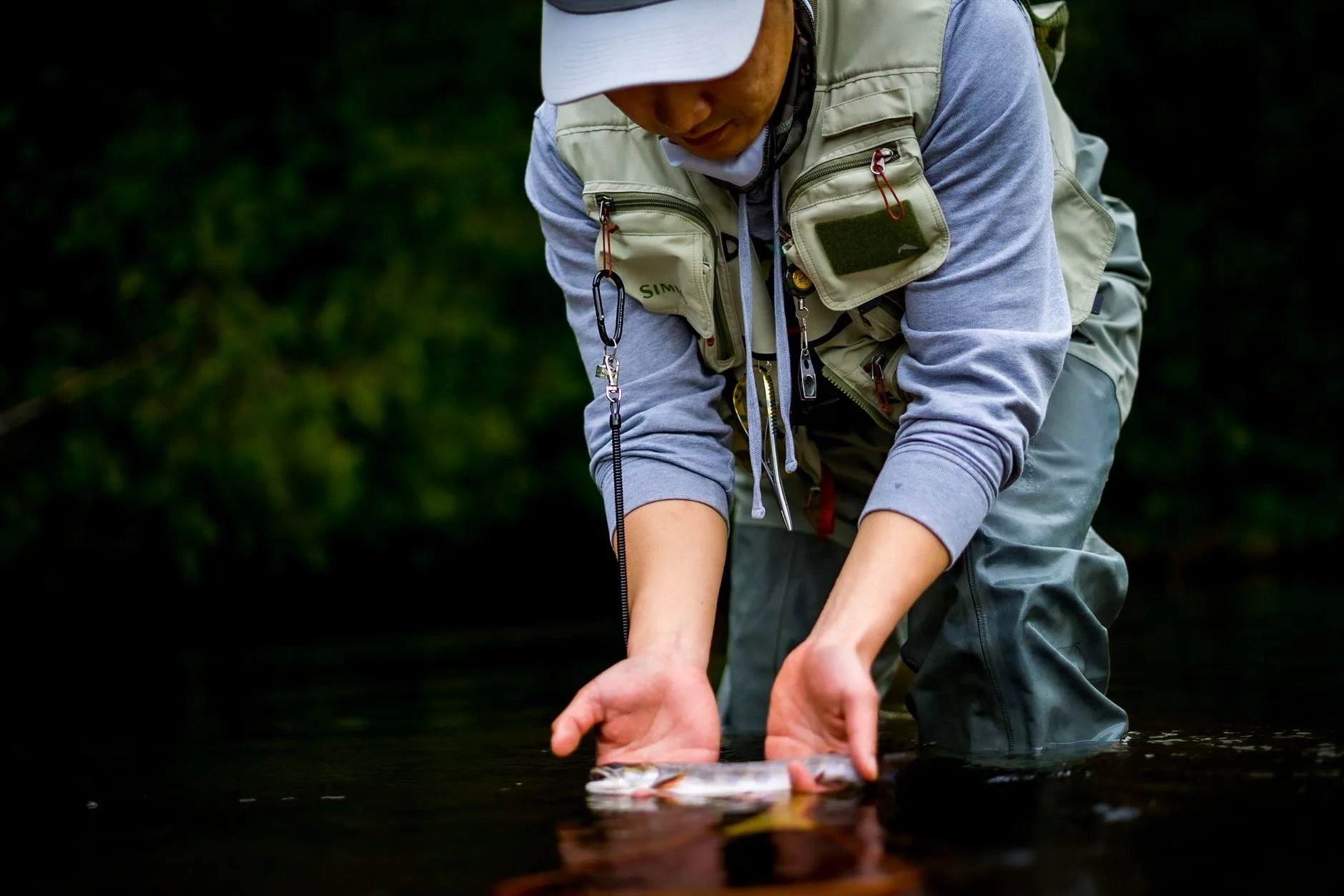
Every Montana angler knows the feeling — you’ve had a trip on the calendar for months, and then the fire weather index starts climbing and the smoke reports start rolling in. It’s one of the ugliest realities of fishing this state in August, when the rivers are low, the air can turn orange by noon, and the best trout water in the country is sometimes buried under a haze thick enough to make you question every decision you made getting there. Tammy Cody found herself in exactly that spot, and she documented the whole anxious experience in her latest video.
What makes this video worth your time isn’t just the scenery or the gear rundown — though she’s fishing an Orvis Clearwater 9-foot 5-weight and wearing Patagonia Swiftcurrent Women’s Waders, both solid choices for Montana’s bigger freestone rivers. It’s the honest reckoning with something guides and DIY anglers out here deal with every single summer: do you pull the plug, reroute, or roll the dice?
Wildfire Closures Move Fast — Faster Than Your Trip Plans
Montana wildfire closures can hit fast. The U.S. Forest Service and Bureau of Land Management can issue emergency closure orders on public lands with as little as 24 hours’ notice, which means access to some of the most productive wade-fishing reaches on rivers like the Blackfoot, Clark Fork, Rock Creek, or the upper Bitterroot can evaporate before you’ve even gassed up the truck. There’s no refund on a nonrefundable motel in Missoula.
The closure orders themselves vary in scope. Some shut down entire drainages to all public entry. Others close specific trailheads or campgrounds while leaving adjacent river access open — which means you can still fish if you know where the boundaries fall and you’ve done your homework ahead of time. That distinction matters enormously when you’re two states away trying to decide whether to leave Thursday night or cancel the whole thing.
Before any late-summer Montana trip, bookmark these resources and check them the week of, the day before, and the morning you leave:
- InciWeb (inciweb.nwcg.gov) — the national incident information system for active wildfires, with maps showing closure perimeters
- Montana DNRC Fire Restrictions (dnrc.mt.gov) — state-level fire restrictions by county and zone
- AirNow.gov — real-time air quality index by location, useful for evaluating smoke conditions at your specific destination
- Montana FWP Fishing Closure Page (fwp.mt.gov) — current hoot owl restrictions and emergency fishing closures statewide
Hoot Owl Restrictions: The Other August Variable
August is also when Montana Fish, Wildlife & Parks’ hoot owl restrictions tend to hit hardest. When water temps push above 73 degrees Fahrenheit, wild trout — especially cutthroats and browns already stressed by low flows — can’t effectively recover from the exertion of being caught and released. FWP responds by issuing mandatory fishing closures during afternoon hours, typically from 2 p.m. to midnight, on affected stretches. That’s not a small detail when you’ve driven two days to get here and were counting on an evening PMX hatch.
The rivers that tend to hit closure thresholds first in a hot summer are the lower Clark Fork, portions of the Bitterroot below Hamilton, and some reaches of the lower Blackfoot. Rivers with significant cold-water tributaries or canyon shade — think the upper Madison, the Gallatin through the canyon, or Rock Creek in its tighter upper sections — often hold fishable temps later into the day. Thermal refugia matter, and knowing which drainages hold cold enough water to fish all day is exactly the kind of intel worth researching before you commit to a destination.
What Tammy’s Experience Actually Teaches You
What Cody does well in this video is show the real-time decision-making process without romanticizing it. She’s not pretending the smoke isn’t there or that conditions were ideal. She’s checking air quality on her phone, watching the ridgelines, adjusting her timing, and ultimately fishing anyway — thoughtfully, with an eye on fish welfare and her own comfort. That’s the honest version of late-summer Montana fishing that the travel brochures never show you.
Her approach to gear is practical too. The Orvis Clearwater is a workhorse rod that doesn’t require you to mortgage anything, and Patagonia’s Swiftcurrent waders have earned their reputation on exactly these kinds of western freestone rivers. Neither piece of gear is the point — the mindset is.
The Bottom Line for Late-Summer Montana Trip Planning
Fire season isn’t going anywhere. If anything, the window of reliable August conditions on Montana’s most celebrated rivers has compressed over the past decade, and anglers who come out here with rigid itineraries tend to go home frustrated. The ones who do well are the ones who’ve identified backup rivers, checked air quality before they leave, know which reaches stay cool, and can pivot from the Blackfoot to a lesser-known drainage without feeling like the trip is ruined.
Keep your plans flexible, monitor InciWeb and FWP closures in the days leading up to your trip, and go in knowing that the best day of fishing you’ll ever have in Montana might be on a river you’d never heard of three days earlier. That adaptability — more than any rod or wader brand — is what separates a busted fire-season trip from a great one.
Montana's outdoor week, in your inbox at 7am Friday.