
Ever wonder which animals are hanging onto existence by a thread? Meet some of North America’s most dramatic comeback kids—and a few still fighting for their lives. From a two-pound “masked bandit” ferret once thought completely extinct, to bats wiped out by a mysterious fungus, to ancient sturgeon older than written history, these species are living proof that reality is way crazier than any nature documentary. Here’s a quick dive into the rare, the resilient, and the ridiculously fascinating creatures on the brink.:
Endangered Species
Black-footed Ferret
29 years after listing, this two-pound weasel remains the rarest mammal in North America. Introduced diseases and a century of prairie dog control have brought it to the brink of extinction. With the death of the last of nine captive ferrets at Patuxent Wildlife Research Center in 1978, most people feared the species had become extinct.
Least Tern
The interior population of least tern was listed as endangered in 1985. Populations along the East and West coasts are not endangered. The interior population, which once inhabited all the major river systems in the middle of the country, evolved to take advantage of constantly changing rivers.
Northern Long-eared Bat
The northern long-eared bat (Myotis septentrionalis) is one of Montana’s 15 bat species. Populations across North America have suffered declines greater than 90 percent due to impacts from white-nose syndrome, a disease caused by a cold-adapted fungus that primarily affects hibernating bats. This species was listed as Threatened under the ESA in 2015 and as Endangered in 2023.
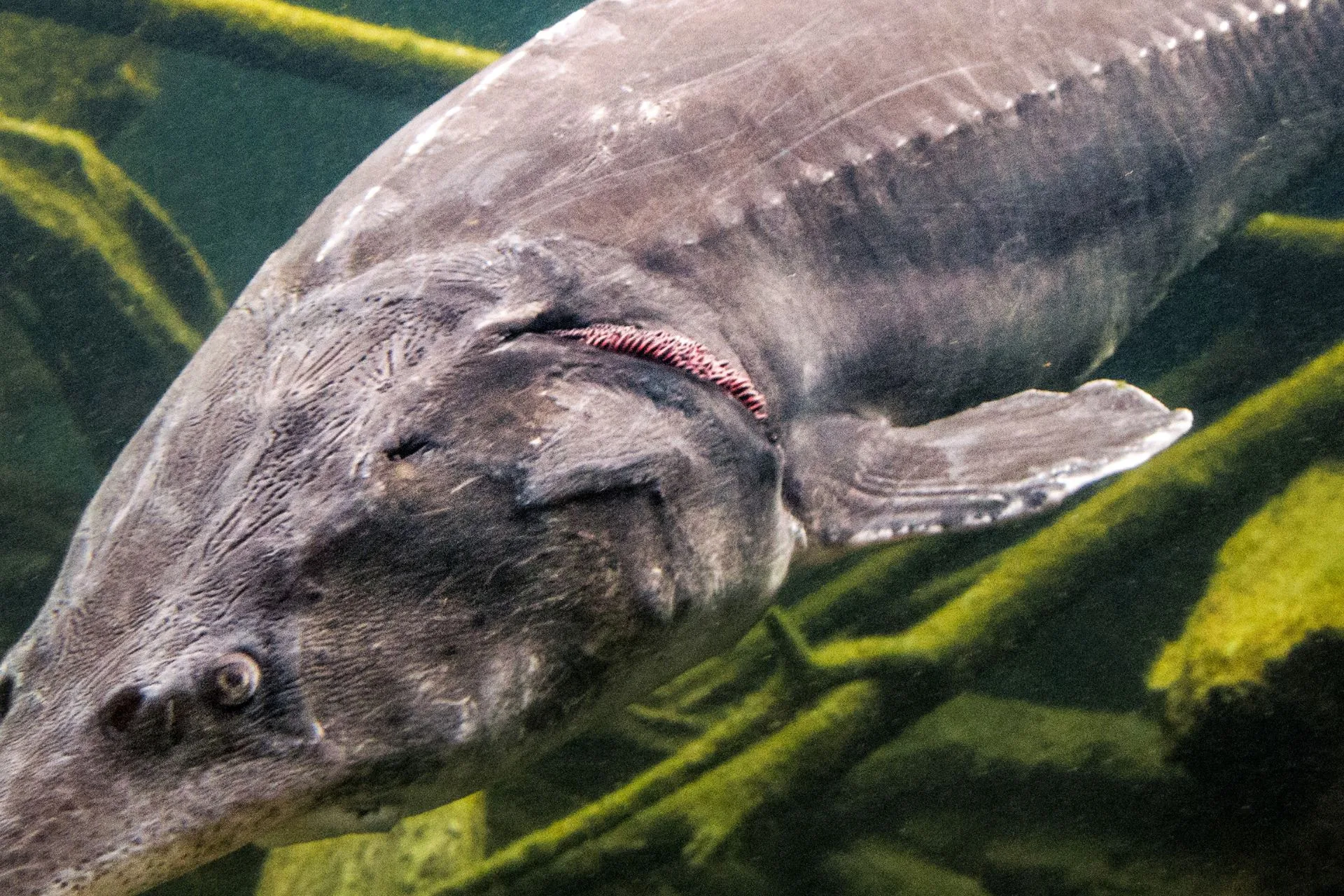
Pallid Sturgeon
The pallid sturgeon is the larger of two sturgeons historically found in the upper Missouri River. The other is the more common shovelnose sturgeon. The pallid sturgeon was not recognized as a species until 1905 and that classification is still being debated. Three genetic studies conducted to assess the relationship of the two species have been inconclusive.
White Sturgeon
The Kootenai River white sturgeon was listed as endangered in 1994. This population had been declining for at least forty years and natural reproduction has been insignificant since 1974. Kootenai sturgeon began declining in the 1950s and 1960s as water quality deteriorated due to pollution.
Whooping Crane
The world whooping crane population now stands at 319, the highest level of the century. Last summer 47 pairs nested in and around Wood Buffalo National Park in the Northwest Territories and adjacent Alberta. This population of 190 whoopers-the only self-sustaining, wild population-winters at Aransas National Wildlife Refuge on the Texas coast.
Source credit: FWP.MT.GOV | Photo credit: Zocha_K from Getty Images Signature
Montana's outdoor week, in your inbox at 7am Friday.