
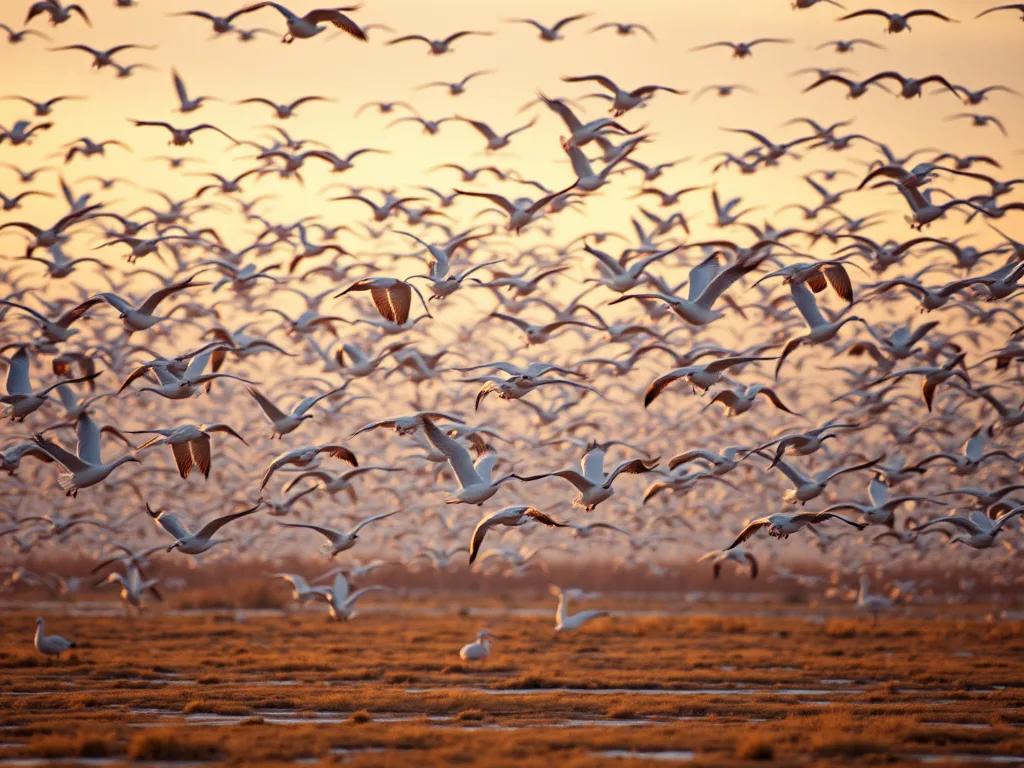
Most Montana sportsmen know Freezout Lake as premium waterfowl hunting ground come fall. But if you’ve never made the drive to this Wildlife Management Area in March, you’re missing one of the most spectacular wildlife events in North America—and one that offers surprising value beyond the visual spectacle.
Key Takeaways
- Freezout Lake’s March migration can stage hundreds of thousands of snow geese and tundra swans on a 12,000-acre prairie wetland.
- Beyond the “snowstorm of wings,” this is one of the best real-world scouting windows before next fall’s waterfowl season.
- Watch roosting basins, preferred grain fields, and how wind shifts flight lines at dawn and dusk—then bank that knowledge for September.
- Access is straightforward: gravel roads and pullouts circle the wetland units, and you can view from your vehicle or on foot.
- Low-impact viewing matters: stay on designated roads and areas to avoid flushing birds when they need energy for the push north.
Right now, as you read this, hundreds of thousands of snow geese and tundra swans are staging at Freezout Lake between Great Falls and Choteau. We’re talking upwards of 300,000 birds transforming 12,000 acres of prairie wetland into what locals accurately describe as a “snowstorm of wings.”
But here’s what the tourism articles won’t tell you: this migration window is also the single best scouting opportunity you’ll get before next season.
Understanding the Pacific Flyway From the Ground
These birds are traveling the Pacific Flyway from wintering grounds in the southern U.S. toward breeding areas in Alberta and Saskatchewan. Freezout sits at a critical juncture where they refuel on surrounding barley and wheat fields before pushing north.
The numbers arrived early this month—5,400 light geese on March 9, followed by 11,400 more just days later. If history holds, we’ll see peak concentrations between March 23-26, with individual days bringing 45,000 to 52,000 new arrivals. By month’s end, the entire congregation will lift off and disappear north almost as suddenly as they arrived.
For waterfowl hunters, watching this natural staging behavior is like getting a masterclass in how birds use this landscape:
- Roosting: Pay attention to which wetland units they prefer for roosting.
- Feeding: Note the grain fields they’re hitting hardest.
- Flight lines: Watch how wind direction affects their flight patterns at dawn and dusk.
This is intelligence you can bank for September—and it fits the same mindset as finding access and learning landscapes ahead of season (see The Hunt for Access in Montana for more on how preparation pays off).
What You’ll Actually See (And When to Be There)
The dawn departure is the main event. Snow geese roost on the water overnight for safety from predators, then lift off in massive, coordinated waves at first light to feed. The sound alone—300,000 birds taking flight—is something you feel in your chest.
Sunset reverses the process as flocks stream back to the lake. The light at that hour, with the Rocky Mountain Front as backdrop, turns the whole scene into something worth the drive regardless of your hunting interest.
How to Watch Without Complicating It
The beauty of Freezout in March is that you don’t need specialized gear or knowledge. Six miles of gravel roads circle the wetland units with multiple pullouts. You can stay in your truck if weather’s rough, or walk the shoreline for closer viewing.
Birds spread across different basins throughout the day, so moving around increases your chances of catching concentrated flocks. And if you’re the type who appreciates bird behavior as much as bird numbers, you might also enjoy Shadows of Montana’s Ringnecks for a deeper look at another classic upland species.
The Practical Details
- License: You’ll need a Montana Conservation License—$8 for residents, $10 for non-residents. It’s valid March 1 through the following February, so you’re essentially getting your WMA access for the year.
- When to go: Sunrise and sunset are the peak action windows, with dawn typically delivering the biggest “blast-off.”
- Dress: Dress for early morning prairie cold. March in this part of Montana can swing wildly, and you’ll want to be out there at sunrise when it matters.
- Optics: Binoculars are worth bringing, though frankly the spectacle is visible to the naked eye from considerable distance.
- Location: The WMA is about 45 minutes northwest of Great Falls along Highway 89.
- Connectivity: Cell service is spotty, so download offline maps beforehand.
Critical note for hunters and outdoor ethics: Stay on designated roads and viewing areas. Flushing birds unnecessarily burns their energy reserves when they need every calorie for the journey north. The same low-impact principles that make you a better hunter apply here.
Beyond the Birds: Make a Day (or Weekend) of It
Choteau’s Wild Wings Festival runs March 20-22 with free guided tours, photography workshops, and talks from wildlife experts including Rob Domenech from Raptor View Research Institute. The early morning tours get you on-site for the blast-off with people who know the area intimately.
If you’re making the trip, Great Falls offers the Lewis and Clark Interpretive Center and C.M. Russell Museum—both worthwhile stops that add context to this landscape we hunt and fish. The River’s Edge Trail provides easy access to the Missouri River waterfalls that named the city.
For those willing to explore further, Choteau sits at the gateway to the Rocky Mountain Front. The Old Trail Museum covers dinosaur paleontology and geology that shaped the terrain we now pursue elk and mule deer across.
The Bigger Picture
Montana’s hunting and fishing traditions depend on habitat that supports migration corridors like the Pacific Flyway. Freezout Lake demonstrates what’s possible when wetland conservation and agricultural landscapes coexist. The same barley fields that feed these geese in March support our waterfowl populations come fall.
Every Montana sportsman should witness this migration at least once, both for the raw spectacle and for the deeper understanding it provides of the ecosystems we depend on. The season’s winding down, but spring migration is just hitting stride. Make the drive.
Related Reading
- The Hunt for Access in Montana
- Shadows of Montana’s Ringnecks
- Half of successful Montana elk hunters fill their tags on public land
- Deer Everywhere, Elk… Not So Much; Northwest Montana’s Region 1 Hunting Hits Mid-Season
- Bobcat hunting and trapping licenses need to be purchased by Nov. 30
FAQ
When is the best time of day to see the biggest flights at Freezout Lake?
Dawn is the main event, when snow geese lift off from their overnight roost on the water. Sunset can be excellent too as flocks stream back to the lake.
How many birds can show up during the Freezout Lake spring migration?
The staging can reach upwards of 300,000 birds, turning the wetland into what locals call a “snowstorm of wings.”
Where is Freezout Lake, and how do you get there?
Freezout Lake WMA is between Great Falls and Choteau, about 45 minutes northwest of Great Falls along Highway 89.
Do you need a license to access the Wildlife Management Area?
Yes. You’ll need a Montana Conservation License ($8 for residents, $10 for non-residents). It’s valid March 1 through the following February.
Is this trip useful for hunters, or is it just sightseeing?
It can be one of the best scouting opportunities before next season. Watching where birds roost, which fields they feed in, and how wind affects flight patterns can pay off in September.
What should you bring for a March visit?
Dress for early morning prairie cold and changing conditions. Binoculars help, though the spectacle is often visible from far away. Download offline maps because cell service can be spotty.
How can visitors avoid disturbing the birds?
Stay on designated roads and viewing areas. Avoid flushing birds, since unnecessary flights burn energy reserves they need for the journey north.
Are there any events tied to the migration?
Yes. Choteau’s Wild Wings Festival runs March 20–22 and includes free guided tours, photography workshops, and talks from wildlife experts (including Rob Domenech from Raptor View Research Institute).
Source inspiration: Wyoming News
Montana's outdoor week, in your inbox at 7am Friday.