
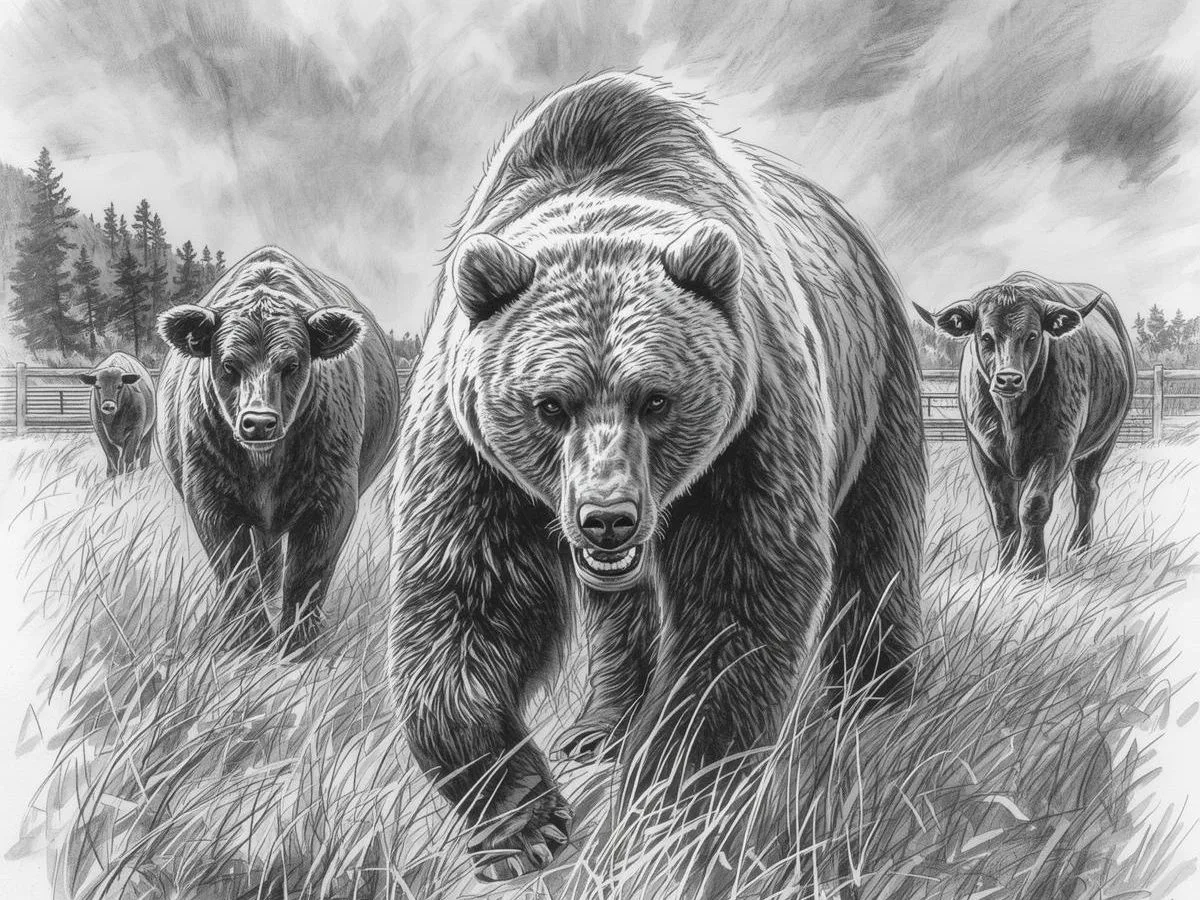
Picture this: you step outside with your morning coffee, ready to enjoy the peaceful countryside… and there’s a grizzly bear rummaging through your stuff like it owns the place. Awkward.
Before you start imagining yourself as the star of an action movie, there’s an important reality check: grizzly bears are protected under the Endangered Species Act (ESA). That means harming, hunting, trapping, or otherwise messing with them is a big legal no-no.
However, if a grizzly is caught in the act—attacking livestock, threatening pets, grabbing snacks it definitely shouldn’t have, or generally causing trouble near homes or campsites—you’re allowed to politely encourage it to leave using non-injurious deterrence.
In other words: scare it off, don’t start a wrestling match.
Let’s review the approved ways to tell a grizzly bear, “Sir, this is a Wendy’s.”
1. The Classic “HEY BEAR!” Strategy
Sometimes the simplest solution is the best one.
Bears often decide they’d rather be somewhere else if humans start making a lot of noise. Approved noisemaking techniques include:
- Yelling
- Clapping
- Banging pots, pans, or anything loud
- Air horns
- Vehicle horns
- Sirens
- Portable P.A. systems
Basically, if it sounds like the start of a very chaotic marching band, you’re doing it right.
Often that’s enough to convince a bear to relocate a short distance away and reconsider its life choices.
2. The “Bright Lights, Big Nope” Method
Bears aren’t big fans of sudden lighting effects.
Things like:
- Spotlights
- Flashing lights
can sometimes spook a bear into leaving.
Pro tip: pair lights with yelling so the bear associates the experience with humans and not just a mysterious forest rave.
3. Vehicle Intimidation (a.k.a. The Bear Eviction Parade)
Your vehicle can actually be a useful hazing tool.
Driving toward the bear—without touching it—can apply enough pressure to make it move along. Add horns or sirens and you’ve got a convincing “time to leave” message.
Important rule:
Do not hit the bear. This is a deterrence strategy, not a demolition derby.
Once the bear clears out, stop the pressure and noise so it can continue its journey back to the wilderness.
4. The Garden Hose of Justice
Water works surprisingly well as a temporary bear repellent.
A strong, steady stream from a high-pressure hose (think fire-hose style nozzle) can persuade a bear that your yard is not the relaxing spa it hoped for.
As with other deterrents, add yelling so the bear learns:
“Humans + this place = unpleasant experience.”
That lesson tends to stick.
5. Calling in the Dogs
Certain dogs are excellent bear deterrents.
Examples include:
- Karelian Bear Dogs
- Guard dogs used on a leash
These dogs are trained to harass bears safely and convince them that sticking around is a bad idea.
Just remember: this isn’t a free-for-all dog-vs-bear showdown. Controlled, trained use is the key.
Preventing the Bear From Coming Back
Scaring a bear away is great, but not attracting it in the first place is even better.
Livestock owners can reduce problems through good husbandry practices such as:
- Electric fencing
- Guard animals
- Regular human presence
- Removing attractants (food, carcasses, unsecured feed)
Essentially, the goal is to make your property the least interesting restaurant in the neighborhood.
One Very Important Safety Note
If a grizzly bear poses an immediate danger to a person, the law allows someone to kill the bear in self-defense or defense of another human.
But that’s a last-resort situation. In most cases, the goal is simple:
Make enough noise and fuss that the bear decides your place isn’t worth the trouble.
The Synopsis
When it comes to grizzlies, the strategy is surprisingly straightforward:
- Be loud
- Be visible
- Be annoying
- Do not harm the bear
Think of it less like fighting wildlife and more like politely but firmly evicting a very large, very furry trespasser.
Because when a grizzly wanders into your space, the ideal ending to the story is:
The bear leaves.
Your livestock stay safe.
And everyone gets to keep all their limbs….and lives.
For more information, click here for Montana Livestock Loss Board information.

Montana's outdoor week, in your inbox at 7am Friday.