
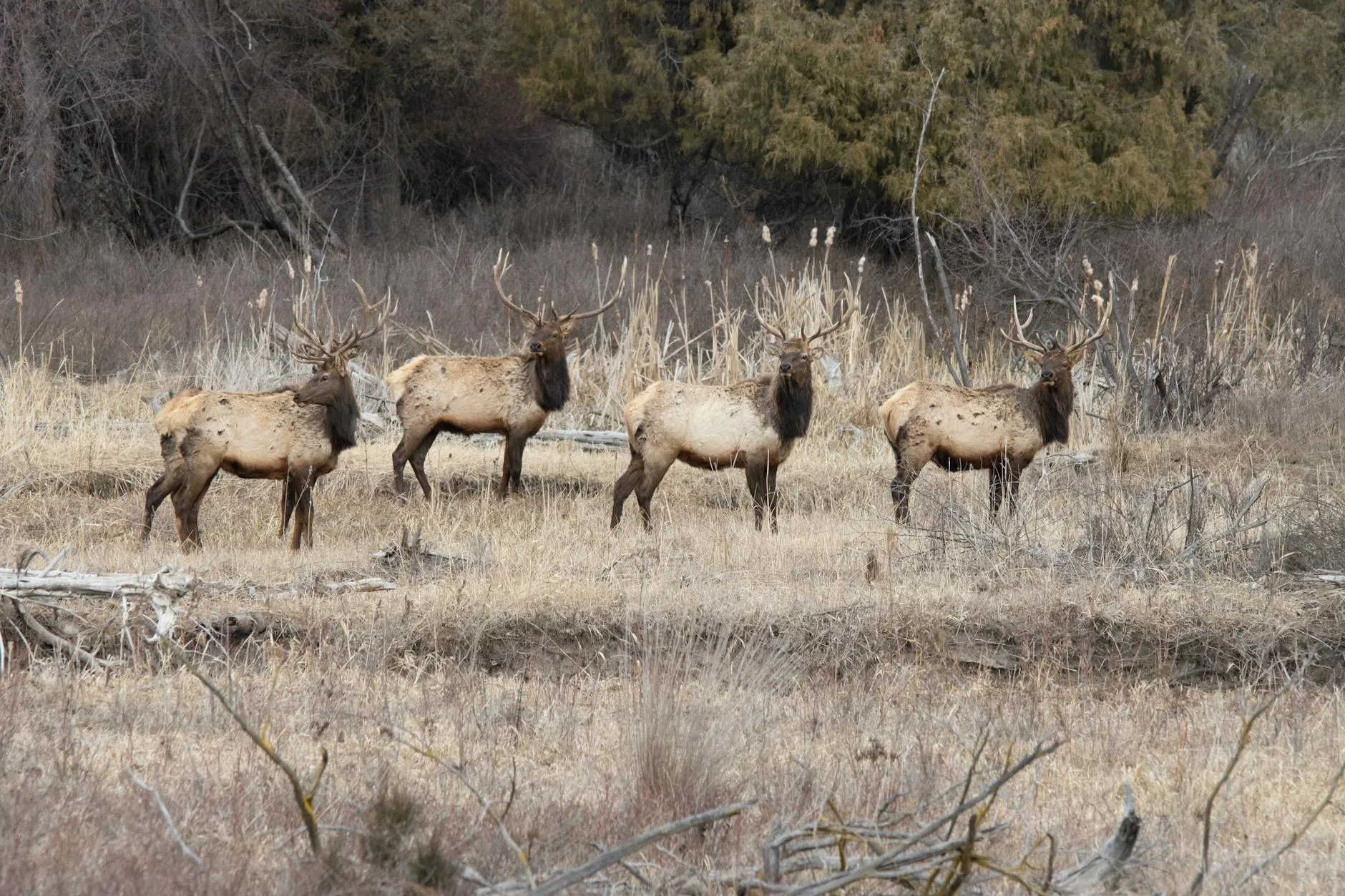
You’ve got maybe four or five days. Right now, late March 2026, the Blackfoot-Clearwater Wildlife Management Area is still closed — and the moment it opens April 1, every shed hunter in western Montana will be lined up at the same trailheads, gassing up in Ovando and jockeying for the same benches. The hunters who put in miles on the quieter foothills units before that date are the ones pulling bone out of the snow while everyone else is still arguing about parking.
Here’s a drainage-by-drainage breakdown of where elk and mule deer are dropping right now, and how to read late-winter travel corridors before the crowds beat you to them.
Why Late March Is the Sweet Spot
Elk and mule deer in Montana’s foothills units are in transition right now. Bulls and bucks have been wintering hard in the low-elevation river bottoms and south-facing benches — roughly 3,500 to 5,500 feet — since November. By late March, warming daytime temps trigger a hormonal shift that accelerates antler drop. In a typical year, afternoon highs across central and western Montana push into the upper 40s and that’s all it takes. Most mature bull elk shed between mid-February and late March. Mule deer bucks follow close behind.
Snow changes the equation. A wet March snowpack pushes deer and elk lower and keeps them concentrated longer, which is actually good news — concentrated animals mean concentrated sheds. In a year like this one, the foothills can be genuinely stacked if you’re willing to walk.
Drainages to Hit This Weekend
Elk Creek and the Helmville Valley (Powell County)
The upper Blackfoot drainage around Helmville and the Elk Creek corridor holds one of the highest winter elk densities in the state. Bulls that spent the winter feeding on private ag ground are starting to drift toward the WMA boundary, and the public land fingers along the Garnet Range foothills east of the valley are worth every step. South-facing benches with exposed bunchgrass are dropping sheds right now. You don’t need to be on the WMA to find bone. The BLM ground and state land between Helmville and Ovando gets almost no pressure this time of year — and that’s exactly why you should be there.
Nevada Creek Drainage (Powell/Lewis & Clark County Line)
Honestly, this is one of the most underrated shed corridors in the state. The Nevada Creek Wildlife Management Area and the state land pushing north toward the Divide hold a solid mule deer population that winters on rocky south-facing ridges between 4,200 and 5,000 feet. People consistently underestimate how late the mule deer bucks shed in this unit — some mature bucks are still dropping in the final week of March. Focus on the transition zones where sagebrush gives way to the first timber. That’s where bucks stage before moving up in elevation, and that’s where you’ll find the antlers.
Sun River Game Preserve Perimeter (Lewis & Clark and Teton Counties)
You can’t shed hunt inside the Sun River Game Preserve, but you don’t need to. The elk that winter there spill out onto the adjacent Rocky Mountain Front BLM ground in the drainages along the eastern Front — including country near Gibson Reservoir and out toward Augusta, though access corridors vary and you should confirm local routes before you commit to a plan. The canyon country along the South Fork Sun River drainage sees elk shedding as they start working toward lower elevation winter range. Hit the benches above the river on BLM ground. Boot tracks in the remnant snow will tell you more than any map — find where the elk are moving and work downhill from there.
Musselshell River Breaks (Wheatland and Meagher Counties)
If you want mule deer sheds in volume, the Musselshell River breaks between Harlowton and Two Dot are as good as it gets in central Montana right now. These rimrock-and-coulee landscapes have been holding strong numbers of mule deer bucks on south-facing benches since November. Sheds here tend to cluster — you’ll find a bare 200-yard stretch of bench where bucks yarded up all winter, and there will be antlers on it. Access is a mix of BLM and state land, so pull the onX layer before you go and respect the private ground boundaries. Don’t be the guy who ruins it for everyone else.
How to Read Travel Corridors Before April
Stop thinking about where animals are and start thinking about where they’ve been moving. Late-winter travel corridors show up clearly in remnant snow — look for packed trails connecting south-facing feeding benches to water sources and north-facing timber. Sheds drop most often at fence crossings, where the jarring motion knocks a loose antler free. Watch the downhill transition points too, where animals trot off a bench toward water — that momentum does the work. Tight timber edges are money. Bulls brush through willows and conifers on their way to bedding cover, and sometimes a single branch is all it takes. Feed craters on south-facing slopes, those oval depressions where elk pawed through snow to reach grass, are worth a slow grid-walk every time you find them.
In my experience, the hunters who find the most bone aren’t the ones who cover the most ground — they’re the ones who slow down when the sign gets good. Find a packed trail, follow it, and grid the benches on both sides before you move on.
Regulations and Timing You Need to Know
Montana doesn’t require a license to collect shed antlers on most public land, but there are exceptions that matter. The Blackfoot-Clearwater WMA closes to shed hunting until April 1 — that’s the hard date driving all of this. Several other WMAs have similar seasonal closures, and some National Forest wilderness areas have their own rules. Check with Montana FWP and the relevant Forest Service district before you go. The Nevada Creek WMA has had varying access rules in recent years, so don’t assume last year’s rules still apply.
Timing within the day matters too. Elk and mule deer on late-winter range are stressed. Get in early, work the terrain efficiently, and give animals a wide berth if you bump into them. A shed antler isn’t worth pushing a wintering herd off their feed.
Gear Worth Having
Late March in Montana’s foothills means variable conditions — you can leave the truck in shirt sleeves and be in a whiteout by noon. Waterproof boots with aggressive soles are non-negotiable on wet, snow-patchy terrain. Trekking poles save knees on the steep bench descents where you’re doing most of your looking. Bring more water than you think you need; the dry air and the miles add up fast.
A good mapping app with offline capability — onX Hunt is the standard here — loaded with property boundaries is as important as anything else in your pack. The foothills units where shed hunting is best are almost always a patchwork of BLM, state, and private ground, and the last thing you need is a trespass situation in a county where everyone knows everyone.
Get out there this weekend. The window’s open and it won’t stay that way.