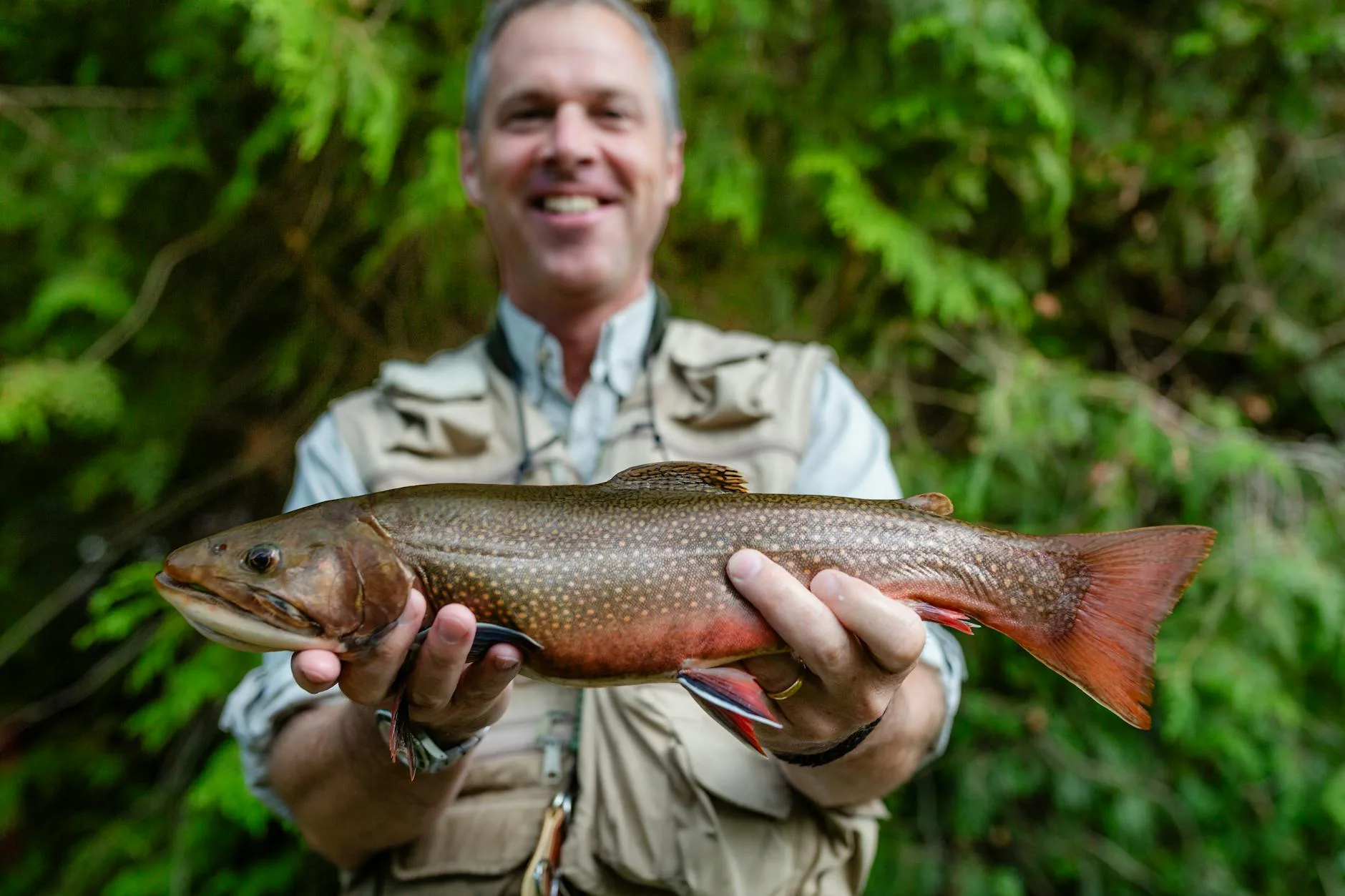
A post hit the fly fishing subreddit recently that stopped a lot of Montana anglers mid-scroll — a first-ever Yellowstone cutthroat, landed on a zebra midge. Simple caption, big moment. If you’ve been chasing that fish yourself, you already know exactly what that image triggers. And if you haven’t caught one yet, here’s your honest roadmap — because the window to do it before spring runoff blows everything out is measured in days right now, not weeks.
Why Yellowstone Cutthroat Hit Different
The Yellowstone cutthroat trout (Oncorhynchus clarkii bouvieri) is the native trout of the Yellowstone drainage — the fish that was here before every other species we introduced, stocked, or accidentally spread. Catching one on a fly rod in its home water connects you to something real about this landscape. That’s not sentimental nonsense. Guides on the upper Yellowstone between Gardiner and Livingston still talk about these fish the way their grandfathers did, and there’s a reason for that.
They’re also legitimately beautiful. Deep red slashes under the jaw, golden flanks, a black-spotted pattern unlike any rainbow or brown you’ll pull from the Madison or Missouri. First-timers are almost always surprised by how vivid they are in hand.
Where to Target Them Right Now
Your primary access points in mid-March 2026 break down into two zones.
The Upper Yellowstone — Gardiner to Livingston
The stretch of the Yellowstone River between Gardiner and Livingston is your most reliable shot right now. Public access through the Yankee Jim Canyon corridor and at Carbella Recreation Area gives wading anglers room to work without a drift boat. The river is still running relatively clear in the upper section — snowpack in the Absaroka-Beartooth above 9,000 feet hasn’t begun meaningful melt yet, but that changes fast once temperatures consistently hit the mid-40s during the day. Check the USGS gauge at Corwin Springs before you make the drive. Many guides use 2,500 CFS as a rough visibility threshold, though that number can shift depending on how much sediment is already moving.
Slough Creek and the Lamar Valley — Inside Yellowstone National Park
If you’re willing to make the push to the Northeast Entrance near Cooke City, Slough Creek is arguably the most iconic cutthroat water on the planet. In a typical year, the lower meadow sections open up by late April. In a heavy snowpack year like 2026 is shaping up to be, that timeline can slide well into May — check current trail and road conditions through the park before you commit to any specific date. The upper meadows require a 1.5-mile hike past the first campground regardless of snow. Fishing inside Yellowstone requires a park-specific permit, not your Montana license. Permit pricing for 2026 hadn’t been confirmed at time of writing, so verify current rates at nps.gov/yell before you go. The Lamar River itself holds cutthroat but gets blown out faster and earlier than Slough Creek. Honestly, if your time is limited, Slough Creek is the one worth waiting for.
Timing the Pre-Runoff Window — It’s Closing Now
Mid-March in a normal snowpack year gives you a narrow but productive window on the upper Yellowstone drainage. Water temps are hovering in the 38–44°F range, which means trout are metabolically active enough to eat but not yet pushed into the aggressive pre-spawn behavior you’ll see in May. The next two to three weeks — through the first week of April — are your best shot at clear-water nymphing before peak runoff arrives.
Watch the overnight lows. When Livingston stops dropping below 28°F at night, snowmelt accelerates fast. The Yellowstone has historically blown out somewhere between late April and mid-May depending on the year. With the snowpack building across the Absarokas the way it has this winter, expect that runoff to push earlier and harder than average. Don’t wait on this one.
Flies That Work — Start With What Actually Caught the Fish
The fish that started this whole conversation was caught on a zebra midge, and that’s no coincidence. In cold, clear water with low bug activity, midge patterns are the foundation of any productive nymph rig on the upper Yellowstone. Your anchor fly in a two-nymph setup should be a zebra midge in sizes 20–22 — black thread, silver wire rib, tungsten bead. When that gets ignored, reach for a Mercury Midge or Jujubee Midge in size 22; those clear-body variants have a way of triggering fish that won’t touch anything else. A Pheasant Tail Nymph in 16–18 deserves a spot in the rotation too — baetis nymphs are active on the Yellowstone in March, and people overlook that classic more than they should.
If you’re fishing a warm afternoon and you start seeing risers between noon and 3 p.m., tie on a Palomino Midge or Griffith’s Gnat in size 20 and cover the surface film. And don’t put away a Soft Hackle Hare’s Ear in 14–16 — swing that on the hang-down during midge hatches and hold on.
- Zebra Midge, sizes 20–22 — black thread, silver wire rib, tungsten bead. Anchor fly, full stop.
- Mercury Midge or Jujubee Midge, size 22 — clear-body variants for lockjaw fish.
- Pheasant Tail Nymph, size 16–18 — don’t sleep on baetis activity in March.
- Soft Hackle Hare’s Ear, size 14–16 — swing it on the hang-down during afternoon hatches.
- Palomino Midge or Griffith’s Gnat, size 20 — for rising fish in the surface film on warm afternoons.
Dead-drift your nymphs tight to the bottom in tailouts and behind midstream boulders. Use a 9-foot 4X or 5X fluorocarbon leader and keep your indicator depth dialed — cutthroat in cold water are holding within 6 inches of the substrate most of the time.
Don’t Leave Without Knowing the Rules
On the Montana portion of the upper Yellowstone, a standard Montana fishing license is what you need — pick one up at Parks’ Fly Shop in Gardiner or Dan Bailey’s in Livingston if you haven’t already. Slot limits and catch-and-release sections vary by reach, so pull the current FWP regulations for Fishing District 3 before you rig up. Inside Yellowstone National Park, your Montana license means nothing — you need that park-specific permit, full stop. Two different bureaucracies, two different pieces of paper. Get both sorted before you leave the driveway.