
Montana FWP leases water in fight for trout, river survival
BRETT FRENCH | bfrench@billingsgazette.com
For a Yellowstone cutthroat trout egg, or a newly hatched fry, a little bit of cold water can be a life saver.
Preserving even small streamflows is one way Montana Fish, Wildlife & Parks is helping rivers as they become more prone to heating up and running low in warmer summers.
“We’ve got some very acute problems turning into chronic problems in our rivers in southwest Montana in particular,” Bill Schenck, Land and Water Program manager for FWP told the Water Policy Interim Committee at its recent meeting.
Although leasing water in tributary streams is one way to build resiliency to such conditions, unfortunately it’s not a quick fix, he noted.
“It takes time to work with the landowners and the water users to find good projects,” he said. “It takes time to fund them. It takes time to work them through that change system.”
Saving a native fish
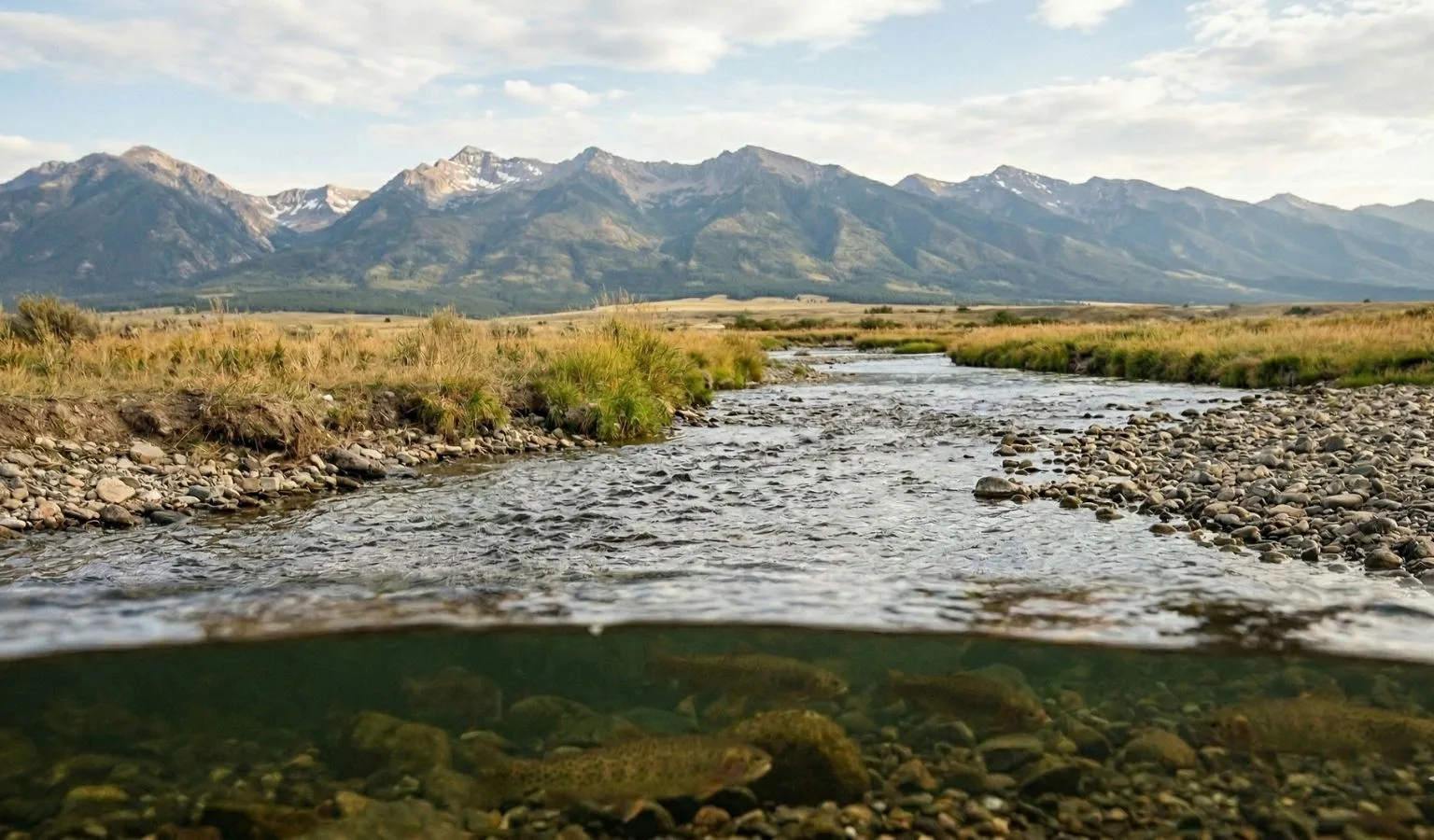
On the Yellowstone River in southwest Montana, once a stronghold of its namesake native trout, leasing water from small tributaries is helping preserve historic spawning waters as well as recharging the river with cooler flows.
One example is Big Creek, south of Emigrant on the west side of Paradise Valley.
“One current water right lessor has agreed to no longer irrigate at all from Big Creek and has leased the remainder of their water rights (1.58 cubic feet per second) to FWP,” according to a progress report on instream flow water right changes FWP submitted to the committee. “Prior to water leases and associated water conservation projects being implemented on Big Creek, this lower reach of Big Creek often went dry in later summer, resulting in greatly reduced Yellowstone cutthroat trout recruitment.”
This little bit of water adds to earlier water rights FWP has leased from users on Big Creek, going back almost 25 years. On the important spawning tributary, the “existing water leases protect 11 to 26 cfs, with 11 cfs being protected in the later summer low-flow season,” the report added.
“This is an example where we’ve been trying to layer different leases for the benefit of this particular creek,” Schenk said.
The new lease is “very targeted to a little bit of additional flow right when that hydrograph limb is falling and we’re concerned about up-migration into the stream for Yellowstone cutthroat trout,” he added.
The fish typically spawn from late May through mid-July, depending on the water temperature and the stream’s elevation, according to Trout Unlimited.
Series of sobering reports
FWP’s report to the water committee came on the heels of three panels telling the Environmental Quality Council that rivers in southwest Montana are facing health, recreation and nutrient pollution problems leading to algae blooms, fish disease and fishing closures.
Members of the water committee also heard Michael Downey, drought program director at the Montana Department of Natural Resources and Conservation, report his concerns predicting lower than normal streamflows in the Big Hole, Beaverhead, Gallatin, Madison and Ruby rivers this year.
And hydrologist Florence Miller, who works for the Natural Resources Conservation Service’s Snow Survey Program, said the Gallatin River’s snowpack had already peaked and begun falling more than a month earlier than normal and with 8 fewer inches of snow in the mountains.
Luckily, storms this week brought a rain and snow mix to portions of Montana’s valleys and 10 to 15 inches of snow at some higher elevations such Cooke City, which sits at the Yellowstone River’s headwaters. The question that haunts prognosticators like Downey is will it be enough? Despite the dire conditions, Montana is better off than most other western states going into the summer.
Legislators in the committee also heard a presentation from a Big Sky panel regarding water recycling as a way to reduce the impact to in-stream flows, as well as snowmaking as a way to bank water.
In complimenting FWP at approaching the state’s worsening water problem from several angles, Clayton Elliott of Montana Trout Unlimited also noted that right now the agency is the “only entity that can permanently change in-stream flow rights.”
For landowners, that means the FWP is the sole option for a landowner who wants to add water to streams.
“I’d love to see an opportunity for private water users to be able to permanently change their water rights as well,” Elliott said.
Funding headwinds
Also adding to this complicated water stew is that FWP’s budget is in what Director Christy Clark called a “cautionary state.”
As a result, the agency is examining what projects that haven’t been started could be cut or delayed, she told the EQC.
“And then, of course, we’re balancing … if a license increase would be warranted this session,” she added.
FWP draws no dollars from the state’s general fund, instead relying on license dollars — mostly from higher-priced nonresident fees — as well as federal grants to fund its work. Both sources have seen reductions.
Montana has cut licenses for species like mule deer amid the species decline and complaints of crowding, and federal funding from a tax on the sale of firearms, ammunition and archery equipment has fallen by $10 million in the past three years.
