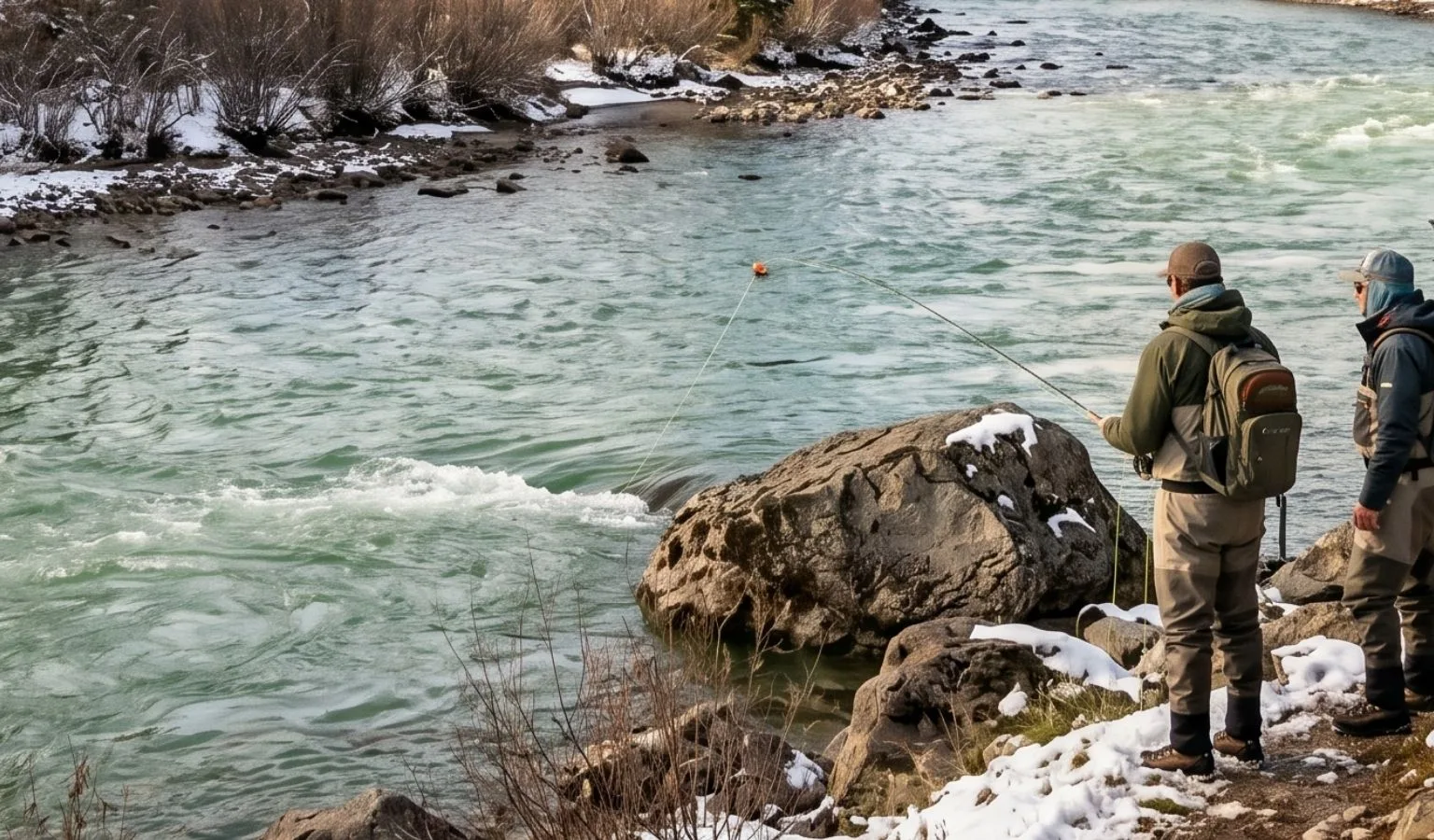
Finding the rhythm of the Middle Fork of the Flathead River requires a keen eye on the thermometer and the clouds. As of mid-April 2026, the local conditions near West Glacier have taken a dramatic turn, shifting from a late-season snow dump to a forecasted heat wave.
Here is your comprehensive fishing outlook and guide to navigating the “in-between” runoff times on the Middle Fork.
Middle Fork Flathead River Fishing Report: April 17, 2026
Current Conditions at a Glance
- Water Temperature: 38°F
- River Level: Above normal for mid-April
- Visibility: Currently clear, but expected to decrease rapidly
- Weather Forecast: Transitioning from 6+ inches of fresh snow to high 60s next week
The Glacier Anglers’ Tip of the Week
“Winter is back—for now! With a half-foot of snow lining the banks and river levels already high, the upcoming spike in temperature is the one to watch. When that snow melts, expect high, muddy water. The key right now is planning for the ‘in-between’ times—those short windows where clarity stabilizes before the next surge.”
5-Day Outlook: The Runoff Transition
The current weather pattern is a classic Montana “shoulder season” rollercoaster. While the fresh snow has temporarily cooled the valley, the jump to the high 60s will trigger a significant melt.
| Date | Weather Forecast | Fishing Impact |
| April 17-19 | Cold, lingering snow | Slow metabolism; focus on deep nymphing. |
| April 20-21 | Rapid warming (60°F+) | Snowmelt begins. Visibility will drop. |
| April 22-23 | Sustained high temps | High, muddy “chocolate milk” conditions likely. |
Techniques & Strategic Tips
Fishing the Middle Fork during pre-runoff requires a change in tactics. When the water is 38°F and rising, fish are moving out of winter holes but aren’t yet aggressively chasing in fast water.
1. Master the “In-Between” Windows
Runoff isn’t a single event; it’s a series of pulses. Look for days after a cold night when the melt slows down. Even if the water is high, if you have 2 feet of visibility, the fish will bite.
2. Go Big and Bright
When the water turns “off-color” (milky or muddy), trout rely on their lateral lines and silhouette recognition.
- Fly Selection: Use large Stonefly nymphs (size 8-10), San Juan Worms, or flashy streamers like Buggers and Sparkle Minnows.
- Color Palette: Black, olive, and fluorescent orange/pink are your best friends in low visibility.
3. Seek the Slower Seams
As the Middle Fork rises, trout move toward the banks to escape the heavy mid-river current. Look for:
- Inside bends with soft water.
- Behind large boulders or log jams.
- Flooded grassy edges where worms and larvae are being washed into the system.
Planning Your Trip
If you are heading to West Glacier, keep a close watch on the USGS Water Flow Data for the Middle Fork at West Glacier. A sharp vertical spike in the graph usually indicates a “blow out” where fishing becomes dangerous and unproductive.
Looking for expert help?
If the river looks daunting, local Orvis-Endorsed guides at Glacier Anglers are available for real-time updates and float trips that prioritize safety and finding the clearest water available in the drainage.
Tip for Next Week:
With the water expected to turn muddy, this is the perfect time to organize your gear or head to local stillwaters (low-elevation lakes) that won’t be as affected by the river’s turbidity.
Stay safe, watch the banks, and keep your flies deep!
Montana's outdoor week, in your inbox at 7am Friday.