
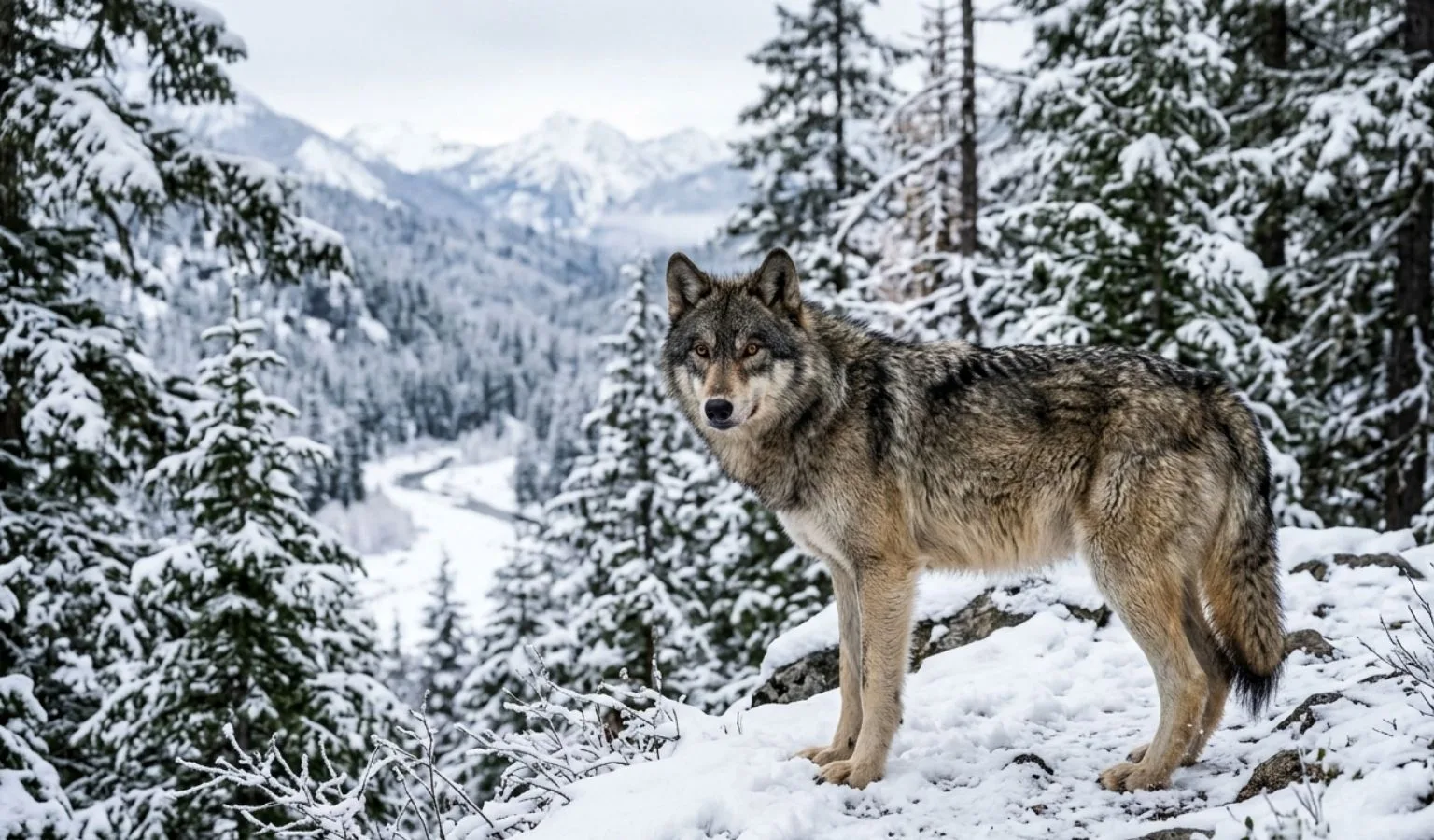
Washington’s gray wolf population just hit a record high, jumping 17% in 2025 to a minimum of 270 wolves across 49 packs. While things are booming in the north and east, the state still has a “stark divide” at I-90; between the highway traffic and the Columbia River, the wolves are having a tough time moving into the South Cascades. It’s different than in Montana, where the population has long topped 1,000. In fact, many of Washington’s wolves actually trace their roots back to Montana “pioneers” who trekked hundreds of miles to settle in the Evergreen State.
The data also busts some myths about “the big bad wolf.” Despite their territories overlapping with farms and ranches, 90% of Washington’s packs didn’t touch a single head of livestock last year. Management in Washington is also a bit more laid-back than in Montana, where officials have recently debated much higher harvest quotas to trim their massive population. In Washington, only 28 wolf deaths were reported in 2025—mostly from legal tribal harvests and a few state removals—proving o some that coexistence is working better than most people think.
Keeping tabs on these packs is what local biologists call a “logistical treadmill.” They’re currently tracking 50 collared wolves just to keep up with the growth, focusing on the “recolonization fronts” where wolves are trying to push into new territory. As Washington’s numbers climb, the big question is whether the state will eventually reach the high-density levels seen in Montana, or if the geography of the South will keep the population concentrated in the north.
Sources: Summarized from FOX 13 Seattle, the Washington Department of Fish and Wildlife (WDFW) 2025 Annual Report, and Montana Fish, Wildlife and Parks (FWP).
Montana's outdoor week, in your inbox at 7am Friday.