
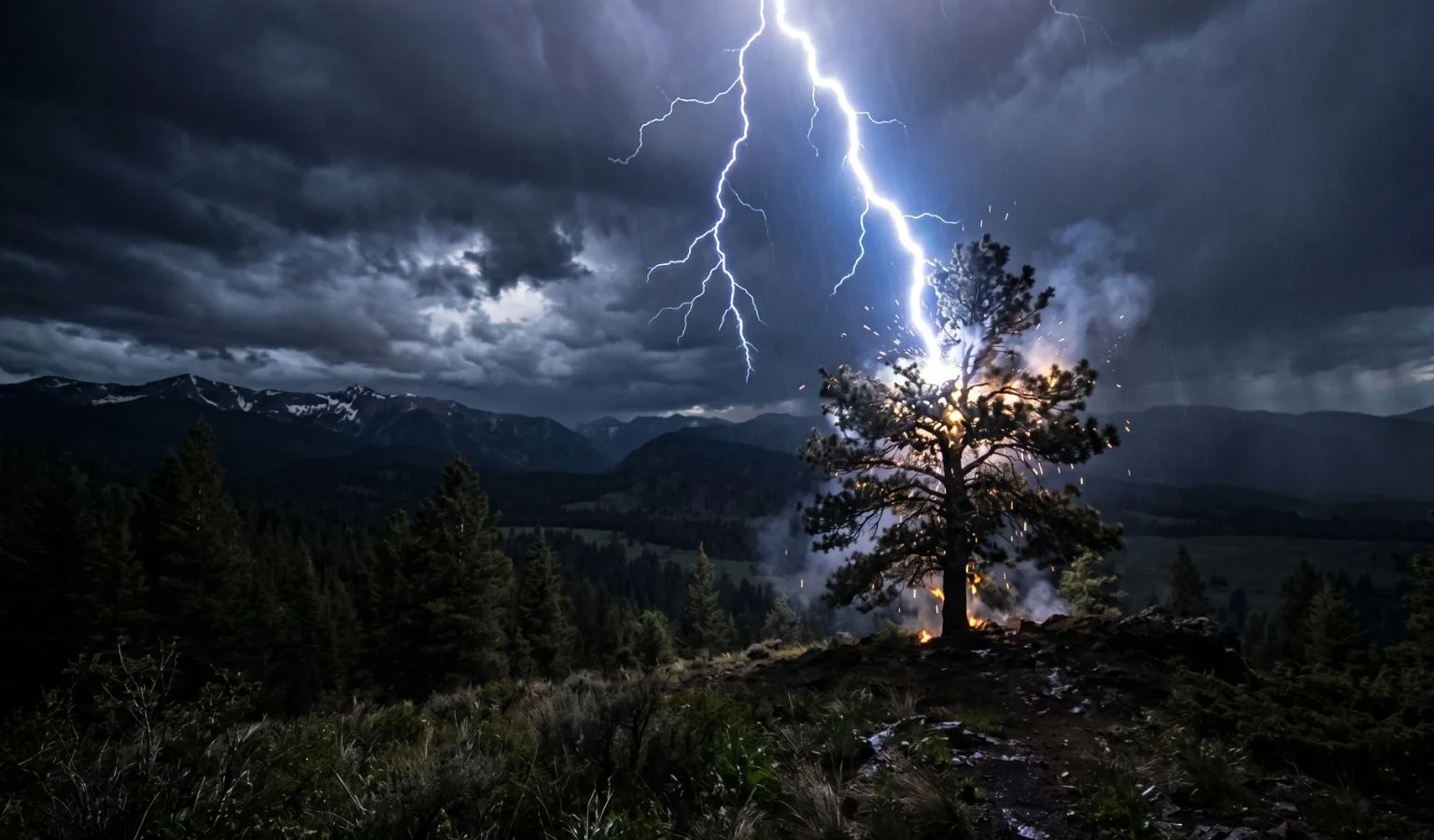
There is a maybe-not-so-common misconception that lightning is just a flashy light show or a cinematic backdrop for a dramatic movie scene. In reality, lightning is a massive, untamed column of actual electricity shot straight from the sky.
When a storm decides to ground its voltage, it doesn’t just pass through the environment—it alters it. Packing up to 200 million volts of electricity and reaching temperatures of 50,000 degrees Fahrenheit (which is five times hotter than the surface of the sun), lightning is nature’s ultimate high-voltage weapon.
The Danger of Dry Lightning
While lightning can happen anywhere, Big Sky Country gets a disproportionate taste of its destructive power. Montana’s vast landscapes and high elevations make it a prime target for severe summer storms. One of the most dangerous phenomena the state faces is “dry thunderstorms.” These are storms that produce plenty of lightning but little to no rain because the precipitation evaporates before hitting the ground.
- Igniting Wildfires: According to wildfire risk assessments from predictive meteorologists, dry lightning strikes from a single storm cell can ignite dozens of forest fires simultaneously. This completely overwhelms local firefighting resources before they even know what hit them.
- Massive Lightning Counts: Montana is no stranger to serious voltage. Historical data from the National Weather Service shows the state averaging well over 3 million total lightning events annually. That is a lot of cosmic electricity searching for a place to land.
The Human and Animal Toll
When that kind of raw power connects with living tissue, the results are devastating. Lightning doesn’t just cause external burns; it travels through the nervous and cardiovascular systems.
- Wildlife and Livestock: Because animals often seek shelter under trees or bunch together in open fields, a single strike can travel through the ground and kill entire herds of cattle or wildlife instantly.
- Human Cost: For people, the danger is equally real. While modern medicine and better education have reduced fatalities over the decades, outdoor enthusiasts remain highly vulnerable. According to data tracked by the National Lightning Safety Council, Montana lightning strikes have tragically claimed the lives of everyday folks doing ordinary things—like walking along a road in Glendive, rounding up cattle on horseback in Bridger, or fishing in a reservoir near Helena.
The “Chimney Effect”: Burning from the Inside Out
If you want a truly bizarre visual of what millions of volts can do, look no further than a viral phenomenon caught on video in Australia.
When lightning strikes a living tree, the electricity takes the path of least resistance. It travels down the inside of the trunk, boiling the moisture and sap within the tree instantly. This creates a massive amount of pressurized steam and heat, essentially hollowing out the core of the tree. The result is a terrifyingly beautiful “chimney tree”—a trunk that remains perfectly upright, completely intact on the outside, while a roaring fire blazes out of its center like a demonic furnace.
Whether it is sparking a massive forest fire in the mountains of Montana or turning an Australian eucalyptus tree into a backyard chimney, lightning reminds us that the sky holds a live wire. When thunder roars, it’s best to stay indoors.
Montana's outdoor week, in your inbox at 7am Friday.