
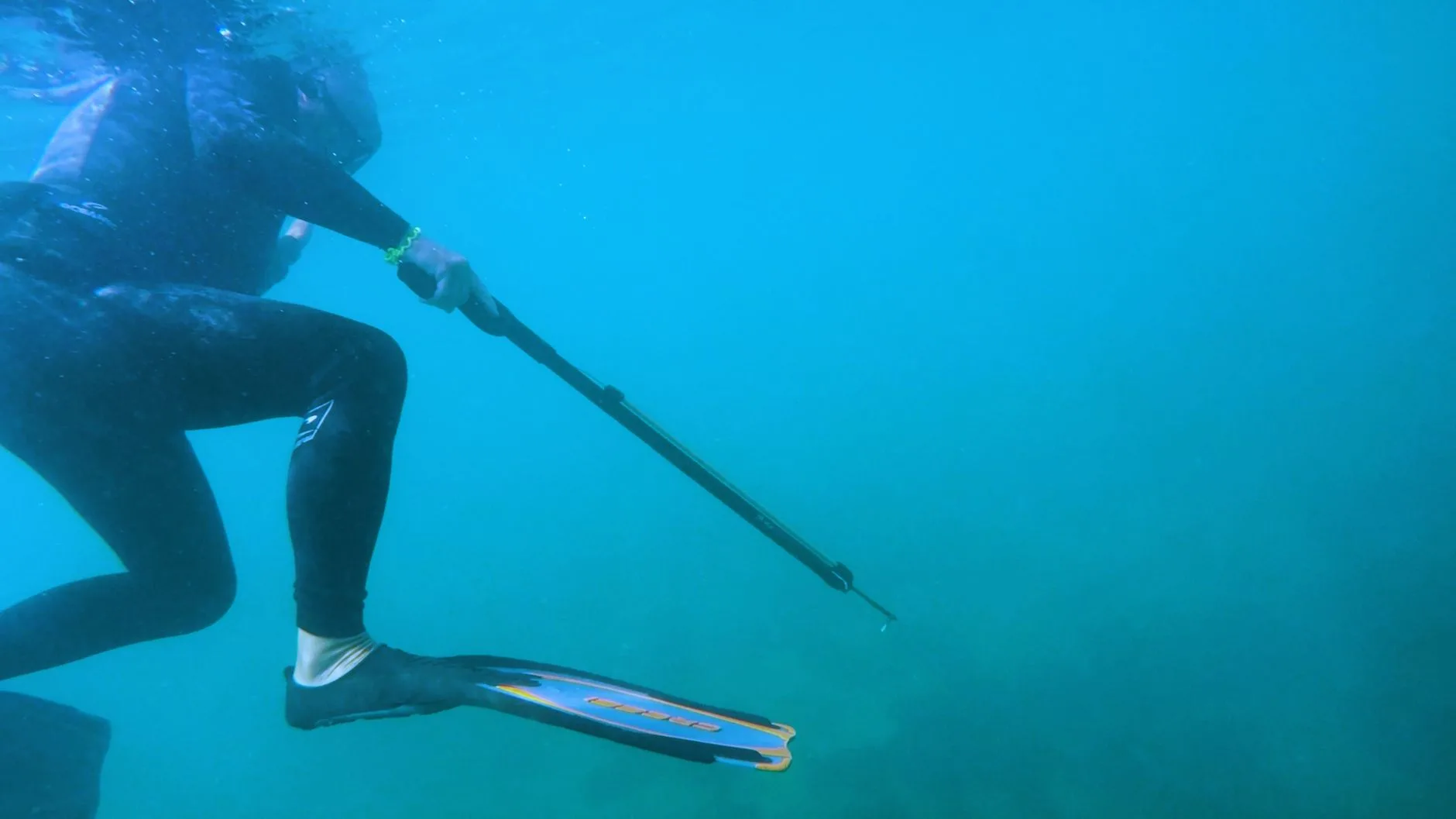
Northern pike don’t get nearly the respect they deserve in Montana — or maybe they get exactly the kind of respect you give something with a mouth full of teeth and a bad attitude. Either way, the crew at Deep State Spearo decided to kick off their early summer spearfishing season by slipping beneath the surface of northwest Montana’s notoriously stained, low-visibility water to hunt one of freshwater’s most aggressive predators. What they found wasn’t exactly what they expected.
Pike Country: Northwest Montana’s Apex Predator
If you’ve spent any time fishing the lakes and reservoirs of the Flathead Valley, the Kootenai drainage, or the slower river backwaters of northwest Montana, you already know pike country. These fish have expanded their range considerably over the decades — some through legal stocking, some through illegal bucket biology — and they’ve firmly established themselves as one of the region’s apex freshwater predators. Visibility in those waters is often measured in inches, not feet, especially early in the season when snowmelt is still churning things up. That makes spearfishing for them a completely different animal than chasing pike with a rod. You’re in their world, operating on their terms, and you often don’t see the fish until it’s almost on top of you.
Northern pike are built for exactly this kind of habitat. They thrive in the weedy shallows, backwater sloughs, and murky bays that other predators avoid. Their ambush hunting style — lying motionless in cover until prey drifts within striking range — makes them simultaneously one of the most thrilling and one of the most infuriating fish to target underwater. Unlike a trout, which will bolt at the first sign of a diver, pike are often curious. They’ll hold their position, study you, and occasionally move toward you rather than away. That behavior, fascinating from a biology standpoint, can be genuinely unnerving when you’re three feet underwater and a thirty-inch fish with a mouthful of backward-angled teeth starts swimming in your direction.
What Early-Season Spearfishing in Montana Actually Looks Like
From a regulatory standpoint, Montana does allow freshwater spearfishing in certain waters, but the rules are specific and worth knowing before you suit up. Montana Fish, Wildlife & Parks currently permits spearfishing for rough fish and certain nongame species in designated waters, and pike management regulations can vary by drainage — particularly in areas where FWP is actively trying to control pike populations to protect native bull trout and westslope cutthroat. In some drainages, there’s actually strong conservation incentive to take pike by any legal means available, spear included. If you’re thinking about trying this yourself, pull the current FWP regulations for your specific waters before you get in the water.
Early summer is when conditions are at their most challenging — and, arguably, their most honest. Snowmelt from the Cabinet Mountains and the Whitefish Range is still working its way into the system well into June in many years, pushing visibility down and water temperatures up just enough to get pike active in the shallows. The fish are post-spawn and hungry, staging along weed edges and submerged structure in water that may be anywhere from four to twelve feet deep. That’s a workable depth range for freedivers, but the visibility window can be brutal. On a good day you might have four or five feet of sight distance. On a tough day, you’re navigating by feel as much as by sight.
Gear Considerations for Low-Visibility Freshwater Diving
Hunting pike in stained water requires a different approach than the clear-water spearfishing most online content covers. A few things worth considering if you’re gearing up for northwest Montana conditions:
- Shorter spear guns or polespears: In low visibility, a long gun becomes a liability. You won’t have the range to make it matter, and maneuvering in heavy vegetation with a long shaft is a quick way to spook fish and tangle gear. Many freshwater spearfishers in weedy pike habitat favor a compact band-powered gun or even a polespear for the control it offers at close range.
- A good wetsuit: Even in midsummer, northwest Montana’s lakes and reservoirs run cold below the surface thermocline. A 5mm wetsuit is reasonable baseline protection; some divers go heavier early in the season. Hypothermia is a genuine concern when you’re doing repeated dives over several hours.
- Floats and dive flags: Montana law requires dive flags when spearfishing in navigable waters. Beyond the legal requirement, a surface float keeps your catch out of the water column and helps you stay oriented in murky conditions where bottom features can look identical in every direction.
- Gloves: This one isn’t just about warmth. Pike have sharp gill plates and a whole lot of attitude. Handling a freshly speared fish in the water without gloves is a good way to come home with a story and a tetanus shot.
The Conservation Angle: Pike as a Management Problem
It’s worth understanding the broader ecological picture here, because it shapes how FWP manages pike and why spearfishing them is viewed differently than spearfishing native species. Northern pike were not historically present throughout much of western Montana. In drainages where they’ve been illegally introduced — or where they’ve expanded beyond their original range — they pose a serious threat to native bull trout and westslope cutthroat trout, both of which are conservation priorities for FWP and federal agencies alike.
Pike are voracious, opportunistic feeders with the size and aggression to target juvenile salmonids. In some western Montana drainages, FWP has implemented aggressive removal programs, including netting, electrofishing, and targeted angling efforts. Spearfishing, where legal, fits naturally into that removal toolkit — it’s selective, it’s targeted, and it removes individual fish efficiently. For divers who want to contribute something tangible to native fish conservation while pursuing an exciting hunting experience, going after pike in designated waters is genuinely a conservation-positive activity. Check with your local FWP region office to find out where removal efforts are most needed and whether your target water is a priority drainage.
What Pike Look Like From Below
One thing this video does particularly well is show non-divers what pike actually look like in their natural environment — and it’s not what most anglers picture. From above the water, pike are olive-green torpedoes. From below, they’re something else entirely. The light filters through the surface and catches the lateral markings differently. A big fish hovering in the weeds looks almost prehistoric, the pattern of light and shadow breaking up its outline the same way camouflage breaks up a hunter’s silhouette in the timber. It’s a genuinely striking thing to see, and it gives pike anglers a new appreciation for why these fish are so hard to spot until they decide to move.
Understanding how pike position themselves underwater also makes you a better angler when you’re back on the surface. They favor the edges where open water meets structure — the outside bend of a weed bed, the shadow line along a submerged log, the drop-off where a shallow flat transitions to deeper water. Seeing those positions from the fish’s perspective, rather than inferring them from a depth finder, changes how you think about where to cast and how to present a lure.
Is Freshwater Spearfishing Right for You?
What makes this video worth your time isn’t just the novelty of watching someone hunt pike underwater — it’s the honest look at what early-season spearfishing in real Montana conditions actually looks like. No crystal-clear tropical water here. This is brown, cold, and humbling, the kind of diving that separates people who like the idea of spearfishing from people who actually do it. Whether you’re a pike angler curious about what these fish look like from below, or an experienced freediver scouting new opportunities in Big Sky Country, there’s something in here for you.
If the video sparks genuine interest in trying it yourself, the learning curve is real but manageable. Basic freediving instruction — breath-hold technique, equalization, and safety protocols — is a smart starting point before you add a spear to the equation. Spearfishing without a buddy is a bad idea in any water; in cold, low-visibility freshwater, it’s a genuinely dangerous one. Find a local dive shop or spearfishing community, get some time in the water with experienced divers, and work up to hunting conditions gradually. Montana’s pike waters will be there when you’re ready, and they’re worth the preparation it takes to do it right.
Give it a watch.
Montana's outdoor week, in your inbox at 7am Friday.