
14 Black Bears Removed During Investigation at Residence Near Bozeman
Sep 29, 2026 11:23 AM
Bears were heavily food conditioned and habituated to humans
BOZEMAN – Game wardens and wildlife staff with Montana Fish, Wildlife & Parks responded recently to a report of alleged supplemental feeding of wild black bears at a residence north of Bozeman.
On Sept. 24 and 25, investigators found bears on the property that were extremely food conditioned and habituated to human presence. Due to human safety concerns from the bears’ behavior, 14 bears were captured and humanely euthanized. One cub was taken to FWP’s Montana WILD facility in Helena for possible placement at an accredited zoo.
“These bears were unafraid of humans and stopped relying on natural foods, which created a human safety risk. It’s very unfortunate they had to be euthanized,” said game warden Captain Josh Leonard. “An investigation into why the bears were on this property is ongoing.”
State law prohibits providing supplemental feed to game animals, including bears (MCA 87-6-216). When bears become accustomed to finding or receiving food from urban and residential areas, they lose the desire and ability to forage in natural, healthy ways. This behavior cannot be corrected through rehabilitation or relocation, and it creates human safety risks from bears that continue seeking food near or inside homes. Zoo placement is a very limited option that’s not always possible.
Euthanizing habituated, food-conditioned bears is an unfortunate action of last resort that becomes necessary because of threats to human safety and property at conflict sites and elsewhere.
Why Food Conditioning Is a Death Sentence for Bears
The phrase wildlife managers use most often — “a fed bear is a dead bear” — is not a cliché. It is an operational reality, and this Bozeman-area incident is a stark illustration of why. Once a black bear learns to associate human structures, vehicles, or people themselves with an easy meal, that mental connection becomes nearly impossible to break. Unlike some other learned behaviors in wildlife, food conditioning runs deep. It overrides the bear’s natural wariness and triggers a reward-seeking loop that grows stronger with every successful visit to a garbage can, bird feeder, or — in cases like this — a direct food source.
Relocation is frequently proposed by the public as an obvious solution, but wildlife managers will tell you it rarely works for truly conditioned animals. A bear that has lost its fear of humans and learned to seek out residential food sources will simply repeat the behavior at a new location, often traveling remarkable distances to do so. Rehabilitation is similarly limited — there is no established protocol that reliably reverses deep food conditioning in adult bears. The result is that managers are left with an animal that poses a genuine danger to people and cannot safely coexist in wild or wild-adjacent landscapes. Euthanasia, as painful as it is, becomes the only responsible course of action.
The loss of 14 bears at a single property underscores how quickly a localized feeding situation can spiral. Bears are social learners. Cubs observe their mothers. Juveniles watch other bears. When one animal discovers a reliable food source, others follow. A problem that might have been manageable with early intervention becomes a crisis requiring the removal of an entire local population.
The Gallatin Valley Bear Situation: Context Matters
The area north of Bozeman sits within some of the most dynamic wildlife habitat in the northern Rockies. The Gallatin Valley and surrounding foothills provide connectivity between mountain ranges that support robust populations of black bears, and increasingly, grizzly bears pushing into new territory. Rapid residential growth along the valley’s edges has placed more homes — and more human food sources — directly in the path of bears moving through traditional corridors.
Fall is the most critical season for bear-human conflicts in Montana. In late summer and early autumn, bears enter a physiological state called hyperphagia — an intense feeding drive that compels them to consume as many calories as possible before hibernation. A bear in hyperphagia may forage for 18 to 20 hours a day, dramatically increasing the odds of contact with human attractants. This is the time of year when unsecured garbage cans, fruit trees, beehives, livestock feed, and bird feeders pose the greatest risk of conditioning bears to residential areas. It is also, not coincidentally, when FWP receives the highest volume of bear conflict reports statewide.
The Bozeman area has seen a steady increase in bear activity as the valley’s human footprint has grown. FWP staff and local bear educators have worked hard to promote coexistence tools — bear-resistant containers, electric fencing, proper food storage — but enforcement and education can only accomplish so much when individuals actively feed bears, whether intentionally or through negligence.
What Montana Law Says About Feeding Wildlife
Montana Code Annotated 87-6-216 makes it unlawful to place, distribute, or allow supplemental feed that attracts game animals, including black bears, in a manner that creates a threat to human safety or property. Violations can result in significant fines and other legal consequences. Beyond the statute, FWP has the authority to manage bears — and the people responsible for conditioning them — when public safety is at stake.
It is worth noting that feeding bears does not have to be intentional to cause serious harm. Leaving garbage cans unsecured, storing pet food outdoors, maintaining poorly managed compost piles, or hanging bird feeders during the active season can all condition bears just as effectively as deliberately placing food. The law and common sense both point in the same direction: if it smells like food and a bear can reach it, it needs to be secured.
Residents in bear country should check current FWP regulations and local ordinances regarding wildlife attractants, as requirements can vary by area and are updated periodically. Some communities in Montana have adopted local ordinances that go beyond state minimums, particularly in areas with documented bear activity.
What Hunters and Outdoor Recreationists Should Know
For hunters and backcountry users in the Bozeman area, incidents like this one carry practical implications. When bears in a local area become food conditioned and lose their wariness of humans, it changes the behavioral baseline for the entire population. Bears that might otherwise avoid human contact become bolder, and that boldness can manifest in unexpected places — including hunting camps, trailheads, and remote campsites.
Hunters pursuing elk, deer, and other game in the Gallatin drainage and surrounding ranges should be especially diligent about camp hygiene and attractant management during fall seasons. Meat care and storage in the field is both a legal requirement in grizzly country and a critical safety practice. Hanging meat properly, keeping cooking areas clean, and storing food in bear-resistant containers are habits that protect both hunters and bears.
Bear spray remains one of the most effective tools available for close-encounter situations. FWP regularly offers hands-on bear spray training events across the state — a worthwhile investment of time for anyone spending significant hours in Montana’s bear country. Carrying bear spray and knowing how to deploy it quickly can make a decisive difference in a surprise encounter.
How to Help Prevent the Next Tragedy
FWP and other organizations work extensively to provide educational programs and resources to prevent conflicts between people and bears. This includes demonstrating how to use bear-resistant garbage cans, electric fencing and other tools to secure attractants. FWP also provides hands-on training for using bear spray. Educational information, resources and events on bear safety can be found on FWP’s website.
Montana is bear country. Residents can help prevent conflicts with bears by not feeding them and by keeping garbage, bird feeders, pet food and other attractants secured at all times. Bear-resistant garbage containers are available in many areas. These steps help encourage healthy bear behavior and safer conditions for communities.
If you see a bear attempting to access garbage or other attractants near homes, vehicles or businesses, contact FWP as soon as possible. Reporting these cases early may allow some corrective management actions to happen before the behavior becomes habitual. When such events go unreported and bears become food conditioned, this results in risks to human safety and property that may require bears to be killed.
Early reporting is genuinely one of the most powerful tools available to communities. FWP staff have options at their disposal in the early stages of a conflict — hazing, targeted trapping, public outreach, enforcement action — that disappear once bears reach the level of conditioning seen at this Bozeman-area property. A single phone call to FWP when a bear first shows up on a porch or in a garbage can may be the difference between a bear that is successfully redirected to wild behaviors and one that eventually has to be destroyed.
Neighbors also play a role. If you know or suspect someone near you is intentionally feeding wildlife, reporting it to FWP is not overstepping — it may save lives, both human and bear. The 14 bears lost near Bozeman represent a loss for wildlife, for local hunters, and for the broader community that values having healthy black bear populations in Montana’s hills. That outcome was almost certainly preventable.
Source: Montana FWP
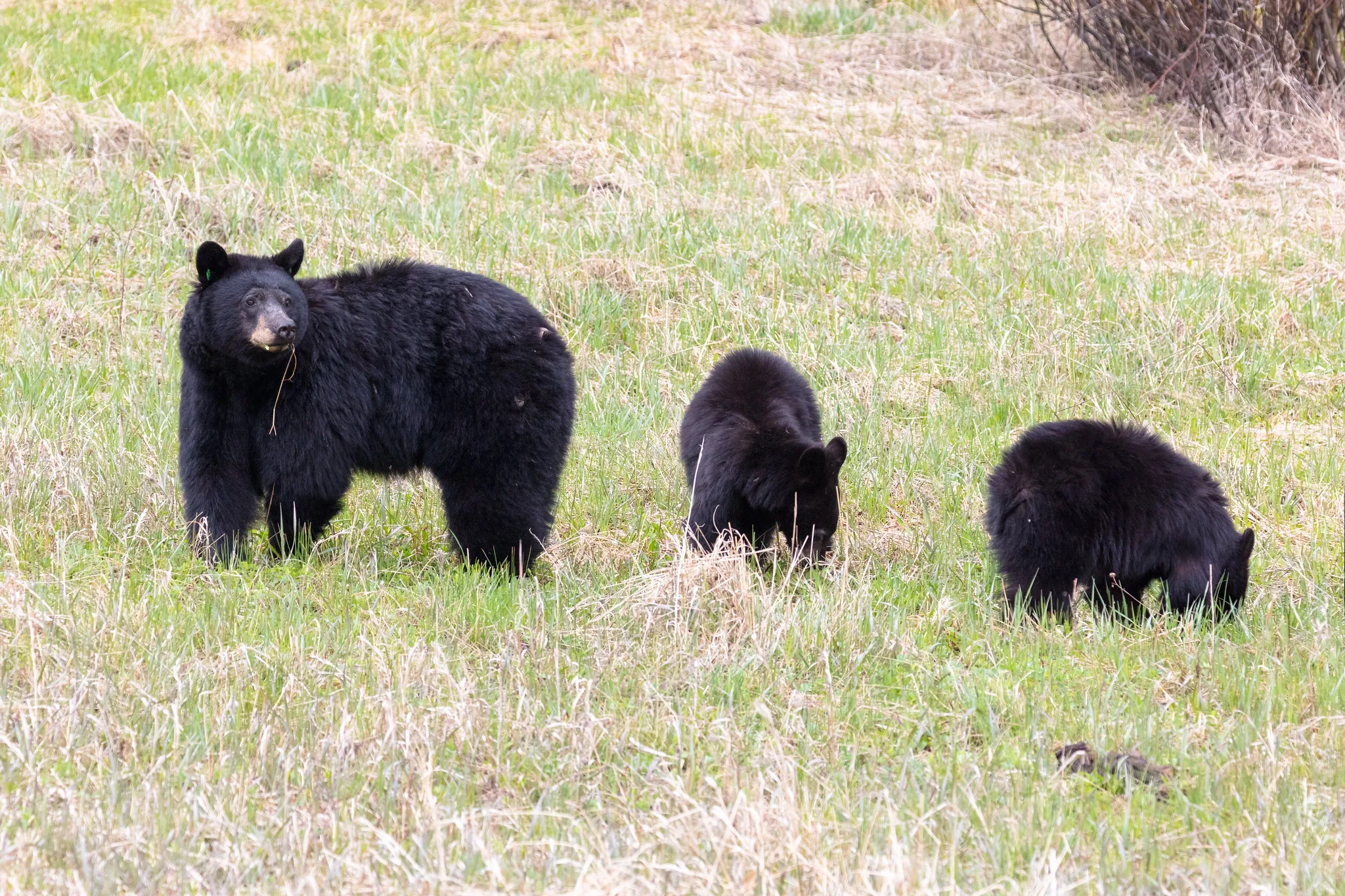
Photo: Black Bear Sow and Cubs — NPS / Corrie Frank
Montana's outdoor week, in your inbox at 7am Friday.