
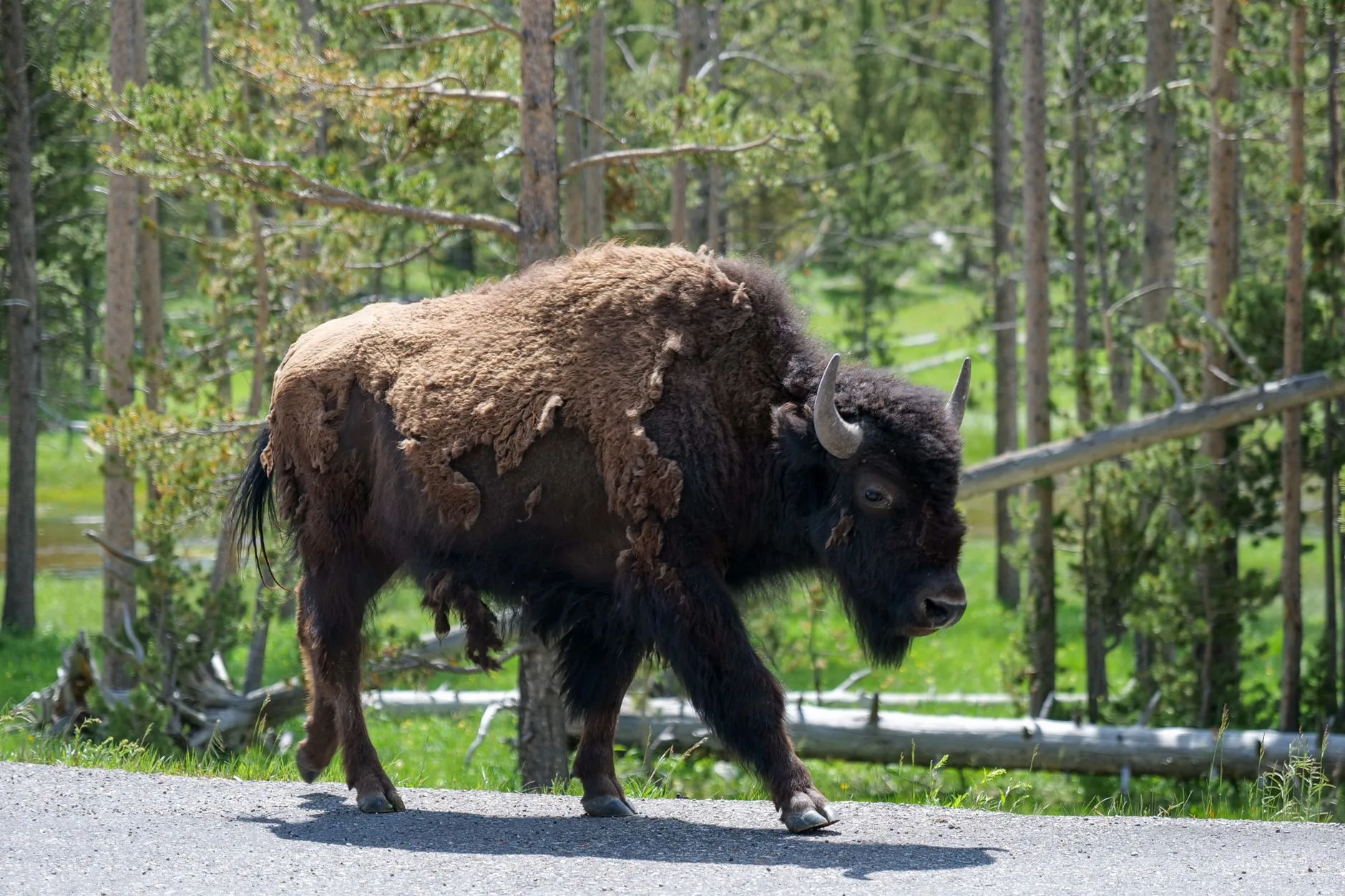
If you’ve spent any time paying attention to wildlife politics in the Greater Yellowstone Ecosystem, you already know that bison have been the scapegoat of the northern Rockies for decades. The argument has gone something like this: bison carry brucellosis, brucellosis causes cattle to abort their calves, therefore bison need to be kept away from livestock — hazed back into the park, culled at the boundary near Gardiner, or shipped to slaughter when herd numbers climb past what the Interagency Bison Management Plan will tolerate. It’s a policy that’s cost Montana taxpayers real money, fueled bitter fights between ranchers and conservationists, and kept Yellowstone’s bison population under near-constant management pressure.
But a new video from the Cryptic Range channel raises a question that a growing number of wildlife researchers have been asking for years: if bison are really the primary transmission risk, why do documented livestock outbreaks keep tracing back to elk?
It’s worth being clear about what the science actually says before going further. Brucellosis — caused by the bacterium Brucella abortus — is well-documented in both bison and elk across the Greater Yellowstone Ecosystem. The USDA APHIS has confirmed seropositive animals in both species for years, and peer-reviewed research published in journals including the Journal of Wildlife Diseases has identified elk as a demonstrated transmission vector to livestock. A 2020 study out of Wyoming found that the majority of documented cattle exposures in recent decades were geographically and temporally consistent with elk contact rather than bison. Montana FWP’s own surveillance data shows brucellosis seroprevalence in elk herds in the Paradise Valley and upper Madison drainage — areas where cattle graze on both private and public land throughout the spring and fall. The science doesn’t let bison entirely off the hook, but it does complicate the clean narrative that bison are the primary problem.
This matters to Montana hunters more than most people realize. Elk are the most pursued big game animal in the state, and they roam freely across the same ground where cattle graze — from the Madison Valley to the Shields River drainage to the ranches along the Yellowstone River north of Gardiner. Unlike bison, elk aren’t fenced, hazed, or managed under any disease-specific protocol. They winter on private ranch land. They share meadows with cattle during spring green-up, which is precisely when aborted elk fetuses — the highest-risk transmission source — are most likely to be present on the landscape. And yet the management hammer keeps falling almost exclusively on bison.
That’s not a knock on Montana’s cattle producers, who are dealing with a real disease and real economic stakes. A brucellosis-positive herd can cost a rancher their whole operation’s disease-free certification, which has cascading consequences for marketing and interstate transport. The ranching families in Park and Gallatin counties aren’t inventing this problem. But if management policy is being driven by assumptions that the data no longer fully supports, that’s a problem for everyone — including hunters who’ve watched bison seasons get squeezed and herds reduced based on a justification that may deserve harder scrutiny than it’s been getting from agency managers and state legislators alike.
Montana FWP and the interagency partners that co-manage Yellowstone bison have always operated in a pressure cooker of competing interests, and it would be unfair to suggest they’ve ignored elk entirely. But the regulatory and political infrastructure built around brucellosis in this state has bison at its center in a way that elk management simply doesn’t reflect. If you want the agency’s current position, Montana FWP’s brucellosis management page and APHIS’s Greater Yellowstone Area brucellosis coordination reports are worth reading directly — they’re publicly available and more nuanced than either side of this debate usually acknowledges.
Here’s what’s practically useful if you hunt the Gardiner Basin, the Gallatin Canyon, the upper Yellowstone, or anywhere in the northern elk herd’s range:
- Know the boundaries. Bison that migrate out of Yellowstone into Montana’s Gardiner Basin are subject to state and tribal hunting regulations in designated tolerance zones. Seasons and tag structures change year to year — check Montana FWP’s current bison hunting regulations before you plan anything.
- Handle harvested animals carefully. Hunters who take elk or bison in the GYE are advised by FWP to wear gloves when field dressing, avoid contact with reproductive organs and aborted material, and not consume tissue that appears abnormal. Brucellosis is transmissible to humans, though cases are rare.
- Report what you see. If you encounter a cattle carcass, aborted fetus, or sick animal on public land during hunting season in the Paradise Valley, Madison, or Shields River drainages, contact Montana FWP or your local brand inspector. That documentation matters for the epidemiological record.
- Follow the policy debates. The Interagency Bison Management Plan is periodically revisited, and public comment periods are real opportunities for hunters to weigh in. If the science is shifting, management plans should follow — but that only happens when people outside the agency walls are paying attention.
The brucellosis debate isn’t going away. With bison numbers recovering and grazing allotments on public land remaining a flashpoint across southwestern Montana, it’s likely to get louder before it gets quieter. Understanding what the research actually shows — not just what the loudest voices in the room are claiming — puts you in a far better position to follow what’s happening and to push back when management decisions stop making sense.
Montana's outdoor week, in your inbox at 7am Friday.