
A rancher outside Dillon shoots what he thinks is a big coyote — and then stares at the carcass for twenty minutes trying to make sense of it. Too heavy. Wrong ear set. Coat pattern that doesn’t quite fit. He’s convinced he just dropped a coydog. He might be right. Or he might be looking at a coywolf, a particularly large pure coyote, or a feral dog that’s been living rough all winter. The difference matters more than most people realize — and in Montana, where predator management is a daily reality for thousands of ranchers and hunters, sorting out the truth about coydog hybrids is worth doing right.
What a Coydog Actually Is — and Why They Almost Never Make It in the Wild
A coydog is a genuine biological hybrid: the offspring of a domestic dog (Canis lupus familiaris) and a coyote (Canis latrans). Genetically speaking, the cross is possible. The two species share enough chromosomal overlap to produce fertile offspring under the right conditions. But “possible” is doing a lot of heavy lifting in that sentence.
Here’s the problem: coyotes have a very specific breeding window, typically January through March in Montana, triggered by photoperiod — changes in daylight length. Most domestic dog breeds cycle outside that window or don’t sync with it reliably. That mismatch alone drastically cuts the odds of a successful pairing in the wild. On top of that, male coyotes are actively involved in pup-rearing — something a wandering stray dog almost never replicates — and you’ve got a situation where coydog pups, even when born, face survival odds that wildlife biologists describe as “extremely poor.”
Dr. Stanley Gehrt, a wildlife ecologist who’s studied urban coyote populations extensively, has noted that coydog hybrids exist but don’t persist as a self-sustaining population. They tend to be evolutionary dead ends rather than a spreading hybrid class. Montana Fish, Wildlife & Parks doesn’t currently track coydog occurrences as a distinct category, in part because confirmed, genetically verified coydog reports are genuinely rare.
This is where the coydog diverges sharply from its more successful cousin — the coywolf.
Coywolf vs. Coydog: The Hybrid That Actually Worked
If the coydog is the hybrid that almost never survives, the coywolf (Canis latrans × Canis lupus lycaon) is the one that thrived beyond anyone’s expectations. Genetic studies — including landmark research out of North Carolina State University — confirmed that eastern coyotes carry significant wolf and domestic dog DNA, producing animals that are larger, bolder, and more adaptable than pure western coyotes. Some researchers have stopped calling them coywolves altogether, preferring “eastern coyote” to reflect what is now a stable, breeding population spread across the northeastern U.S. and Canada.
Montana sits in different territory, both literally and genetically. Western coyotes here have had far less documented interbreeding with wolves, and the physical overlap zone between coyote and gray wolf range in the Northern Rockies is biologically complex but hasn’t produced the same widespread hybridization seen in the East. That said, Montana does have confirmed wolf-coyote contact zones — particularly in the northwestern corridors around Glacier and the Bob Marshall Wilderness — and genetic testing on unusual canid carcasses has occasionally turned up surprises.
Honestly, if you’re hunting or running livestock in the Bitterroot, the Crazy Mountains, or anywhere along the Rocky Mountain Front, what you’re almost certainly looking at when you spot an oversized “coydog” is one of three things: a larger-than-average pure coyote (males in Montana can push 45 pounds in good habitat), a feral dog, or in rare cases near known wolf range, a possible wolf-coyote cross worth reporting to FWP. The legend almost always outruns the biology.
How to Tell the Difference in the Field
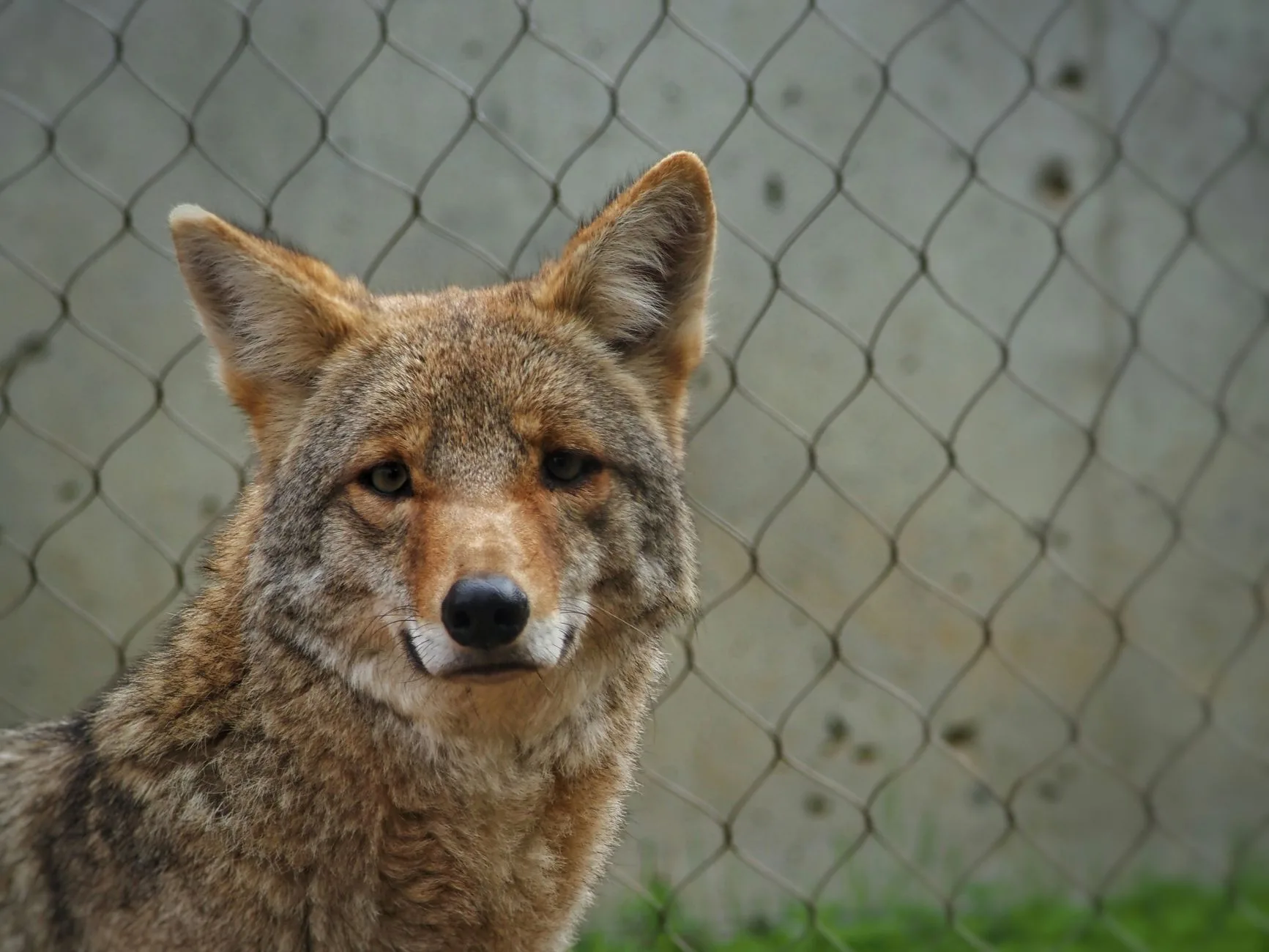
Montana hunters and ranchers aren’t wrong to look twice at unusual canids. There are real visual cues worth knowing. A pure coyote carries a narrow, tapered snout, prominent upright ears relative to head size, a distinctly bushy tail held low while running, and a lean, long-legged frame. A suspected coydog often shows a broader, more blocky head, ears that may be slightly floppy or mismatched in set, a thicker chest, and coat patterns that break from the classic tawny-gray-cream coyote template — sometimes showing black saddle marks or unusual leg coloration inherited from a dog parent.
Behavior can be just as telling as looks. Coydogs reportedly show less fear of humans and less predictable flight behavior than wild coyotes, which are famously wary. In my experience, a coyote that’s lived any time in the wild doesn’t hang around — it’s gone before you’ve finished raising your rifle. If a large canid is loitering near structures, following livestock without the typical hit-and-retreat pattern, or displaying dog-like body language around people, those are flags worth noting.
If you harvest something in Montana that genuinely doesn’t add up — and you’re hunting in a unit where wolves are also present — contact your FWP Region headquarters before moving the carcass. Misidentifying a wolf as a coyote carries serious federal and state consequences, and the agency does accept samples for genetic testing in ambiguous cases. Don’t guess on that one.
The coydog legend is real enough to keep ranchers talking around fence lines from Bozeman to the Hi-Line. The biology is real too — just far less common, and far less likely to survive, than the stories suggest. Know what you’re looking at before you pull the trigger or file the report. In Montana’s predator landscape, the details always matter.
Montana's outdoor week, in your inbox at 7am Friday.