
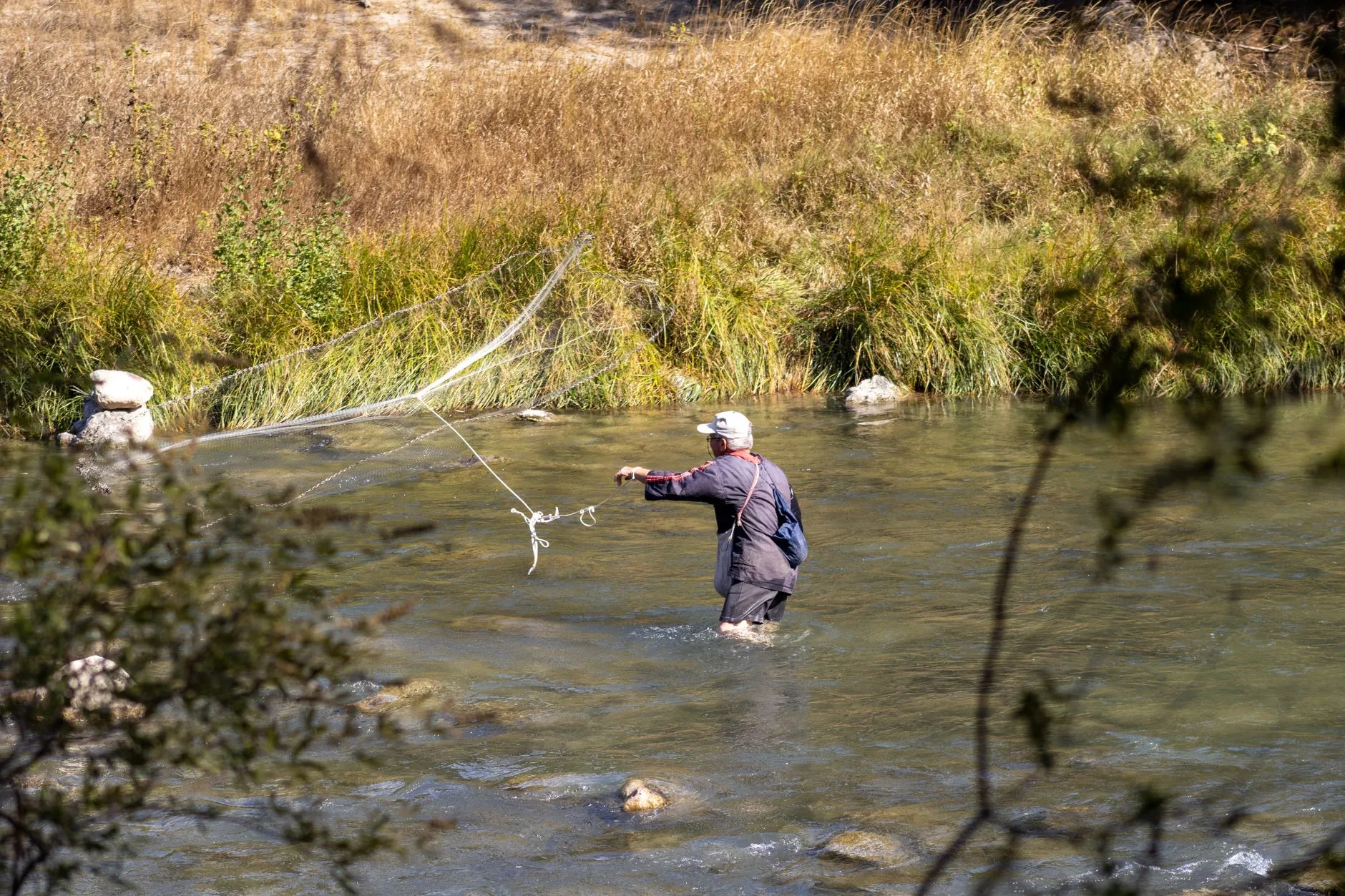
Last October, a Missoula carpenter named Dale made the three-hour drive to the Clearwater River on a Thursday afternoon, hit the water by 6 a.m. Friday, and was back home by Sunday night with two chrome B-run steelhead in his cooler and a story he’s still telling. He’d been watching the Idaho steelhead report for two weeks. When the numbers spiked, he went. That’s the whole game.
If you’re a Montana angler who’s been thinking about making the run west into Idaho for steelhead, this is what you need to read before you go. Not the generic one that lists rivers and wishes you luck — the one that tells you how it actually works when you’re leaving Missoula at 4 a.m. with a thermos of coffee and a rod tube rattling in the back.
Understanding the Idaho Steelhead Run — Timing Is Everything
Idaho’s steelhead fishery on the Clearwater River and its tributaries is one of the most accessible trophy fisheries in the entire inland Northwest, and from western Montana, it’s closer than most people think. Missoula to Orofino is roughly 165 miles. Kalispell adds another 120 miles to that, but it’s still a viable weekend trip if you leave Friday after work.
The Clearwater gets two waves of fish worth knowing. A-run steelhead — smaller fish averaging 6 to 8 pounds — typically push through August into early October. The fish Montana anglers make pilgrimages for are the B-run fish: heavy, ocean-fat steelhead that can hit 15 to 20 pounds and arrive in earnest from mid-September through November. Honestly, these are the fish that make you question every other species you’ve ever chased.
The most reliable live data comes from the Idaho Department of Fish and Game’s weekly steelhead report and the fish counts posted at Lower Granite Dam. When you see numbers climbing consistently at the dam, fish are moving. That’s your signal. The counts are updated regularly and are free to check online — make it a habit every Tuesday and Friday during the season.
Water temperature and clarity on the Clearwater matter enormously. Fish move and bite most aggressively when temps hold between 45 and 55 degrees Fahrenheit. Early in the season, the South Fork Clearwater and the main stem near Orofino and Kamiah tend to fish better. Later in the fall, as fish push further upstream, the North Fork and water closer to Kooskia picks up. If you’re seeing blown-out chocolate water from early fall rains, the North Fork often clears faster than the main stem — worth knowing before you drive three hours to stare at mud.
Access Points Near the Montana Border and What Gear Is Working
US Highway 12 is the spine of this whole operation for Montana anglers. It follows the Lochsa River from the Montana border all the way down to Kooskia, Idaho, where the Lochsa meets the Selway to form the Middle Fork Clearwater. The drive itself — through the Nez Perce-Clearwater National Forest — is worth the trip in fall color alone, though that’s not why you’re making it.
The Lochsa itself is a wild and scenic river with some steelhead opportunity, but fish counts run lower there and the water is technical. Most serious anglers push the extra 45 minutes to Kamiah or Orofino on the main Clearwater, where public boat launches and bank access are plentiful. The Nez Perce Tribe manages significant portions of this fishery, and tribal regulations apply in certain stretches — check current IDFG regulations and tribal notices before you fish, every single year. Boundaries and rules change, and ignorance won’t get you far with a warden.
The Clearwater is big water, and that shapes everything about how you fish it. If you’re bank fishing — and most Montana weekend warriors are — you need casting weight to reach the seams. Wool yarn rigs under a float work, as do beads in orange and pink and larger Spin-N-Glos in natural colors. If you’re drifting, side-drifting eggs or sand shrimp is the local standard. Many guided trips out of Orofino run jet sleds, and in my experience, hiring a guide for even one day will teach you more about reading that river than three solo trips ever will. It’s not a small stream where you can figure it out by walking the banks.
One licensing detail Montana anglers miss every year: you need an Idaho fishing license plus a steelhead permit tag. Buy them online before you leave home. You cannot fill an Idaho steelhead tag with a Montana license. Simple enough, but it burns people every season.
Planning the Weekend Trip from Western Montana
The move is straightforward. Start watching the Idaho steelhead report and dam counts in mid-September. When fish are stacking, book a room in Orofino or Kamiah — both have motels, both are centrally located to the best water, and neither is going to win a tourism award, but that’s not the point. Leave Missoula by 4 a.m. Saturday, fish all day, sleep, fish Sunday morning, and be home by dark. That’s the template, and it works.
Pack layers. October mornings on the Clearwater are genuinely cold, wading wet is not optional, and that thermos of coffee is gone by 7 a.m. Bring a net big enough for a fish that might go 15 pounds — your trout net from the Clark Fork isn’t going to cut it. And tell someone where you’re going. Cell service along Highway 12 through the canyon is spotty at best and nonexistent at worst.
Dale caught his fish on a pink bead, size 10, pegged two inches above a bare hook. He’ll tell you that if you ask him. He’ll also tell you the drive home with two steelhead in the cooler is the best drive he makes all year. After a weekend on the Clearwater, most Montana anglers who’ve made that run would have a hard time arguing with him.
Montana's outdoor week, in your inbox at 7am Friday.