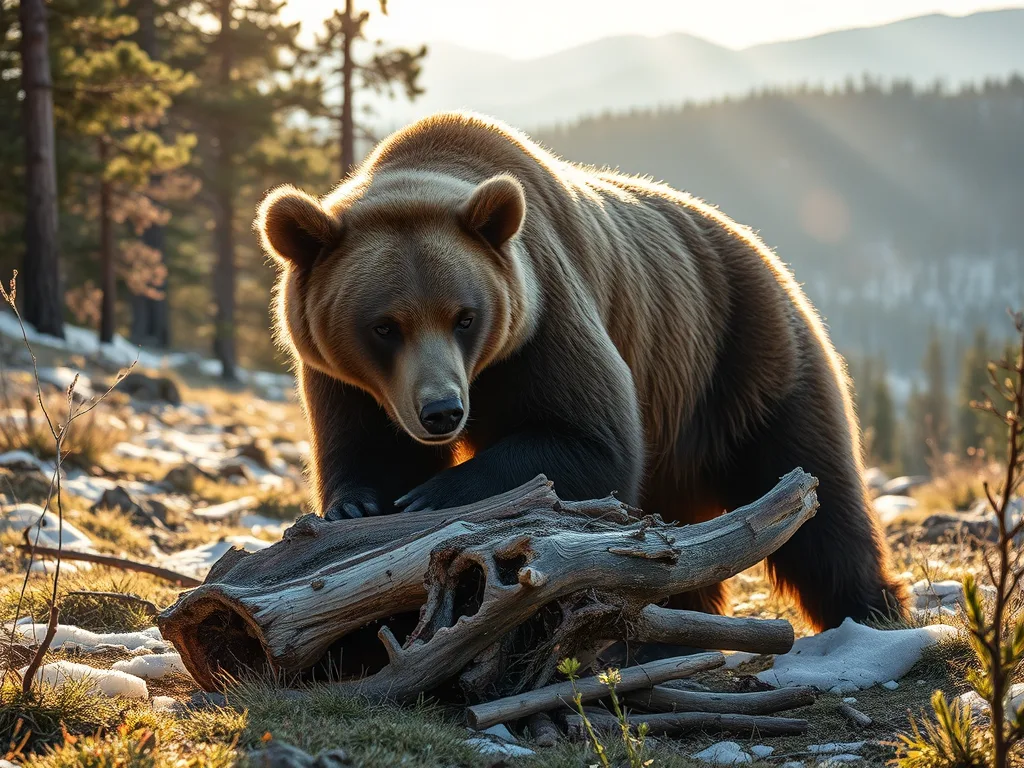
The first grizzly sighting of the year in Yellowstone—a big male scavenging a winter-killed bison near the park’s northern section—isn’t just a feel-good wildlife story. For Montana hunters, anglers, and backcountry users, it’s a critical reminder that the clock has started ticking on the most dangerous season in our mountains.
Key Takeaways
- The first grizzly out of the den signals a high-risk six-to-eight-week window as bears hunt calories in a spring “food deficit period.”
- Carcasses (winter-killed elk, deer, and other ungulates) create some of the most dangerous surprise encounters—especially when a bear is guarding one.
- Carry bear spray on your body (not buried in a pack) and be able to deploy it in seconds.
- Glassing for scavenger activity (ravens, magpies, coyotes) can tip you off to carcasses before you drop into a drainage.
- Sows with cubs follow later in April and May; defensive encounters rise as spring seasons overlap with that period.
When that first bear emerged from its den this week, it kicked off a period that every Montana outdoorsman needs to take seriously. Over the next six to eight weeks, hundreds more grizzlies will shake off their winter sleep across the Greater Yellowstone Ecosystem and the Northern Continental Divide. They’ll be hungry, irritable, and laser-focused on one thing: calories.
Why Early Spring Bears Are Different
A grizzly emerging from hibernation has lost up to 30% of its body weight. Its metabolism is firing back up, but natural food sources are still weeks away from abundance. This creates what biologists call a “food deficit period”—and it’s when bears become most unpredictable.
That Yellowstone bear was doing exactly what it should: feeding on a bison carcass. The problem for us is that winter-killed elk, deer, and other ungulates are scattered throughout the backcountry right now. Montana’s spring bear season opens in mid-April, and turkey hunters will be pushing into drainages and timbered bottoms where these carcasses—and the bears guarding them—are waiting.
A grizzly on a carcass is among the most dangerous encounters you can stumble into. It’s a food source they’ve invested energy to find or claim, and they’ll defend it aggressively. Unlike a chance trail encounter where a bear might flee, a bear on a kill is already in defense mode before you even know it’s there.
The Montana Reality: More Bears, Bigger Range
While Yellowstone gets the headlines, Montana hunters are dealing with the reality of a recovered grizzly population across a massive landscape. The Northern Continental Divide Ecosystem—stretching from Glacier National Park south through the Bob Marshall Wilderness and beyond—now holds over 1,000 bears. The Greater Yellowstone population has expanded well beyond park boundaries into prime hunting country across southwestern Montana.
This is a conservation success story, but it changes how we operate in the field. Areas that were grizzly-free twenty years ago now have established populations. That favorite spring bear spot or turkey ridge? There’s a good chance grizzlies are using the same habitat.
For a practical example of how proactive coexistence is being supported on the ground, see how the Greater Yellowstone Coalition has helped expand bear-safe storage in southwest Montana: Greater Yellowstone Coalition Delivers Bear-Proof Containers to Beaverhead-Deerlodge National Forest.
Practical Steps for the Next Eight Weeks
Here’s what Montana outdoorsmen need to be doing right now:
- Carry bear spray, every time. Not in your pack—on your chest or hip belt where you can access it in 2-3 seconds.
- Make noise in thick cover. That drainage bottom with fresh bear sign isn’t the place to move quietly. Bells are debatable, but loud conversation or periodic shouts work.
- Glass before you move. Before dropping into a basin or drainage, spend time glassing from above. Look for ravens, magpies, or coyotes—they’ll tell you where the carcasses are.
- Hunt with a partner. Groups of three or more have virtually zero chance of a negative bear encounter. Even a two-person team dramatically reduces risk.
- If you kill an animal, get it out fast. Don’t leave meat overnight in grizzly country during spring. If you must, hang it at least 100 yards from your camp and be prepared to yield it to a bear.
If spring has you branching out into new drainages and unfamiliar ground, it’s also a good time to think about how quickly rumors can spread when the public doesn’t understand what “legal” looks like in the field—especially as photos and clips travel fast online. This recent example shows how quickly a legal hunt can turn into a viral controversy: He Tagged a 170-Inch Alabama Whitetail Legally—Then the Internet Sparked Poaching Rumors and Calls to Game Wardens.
The Female Factor
Male grizzlies emerge first, but sows with cubs follow in April and May. A female with cubs is arguably more dangerous than a bear on a carcass—she’s programmed to eliminate any potential threat to her offspring. Montana’s spring seasons overlap perfectly with this period when sows and cubs are most vulnerable and defensive.
If you encounter a sow with cubs, she’s already decided you’re a threat. Your job is to prove you’re not. Back away slowly, talk calmly, and never run. The statistics are clear: sows with cubs are involved in the majority of defensive attacks on humans.
The Bigger Picture
That first Yellowstone grizzly is now part of a population that’s thriving and expanding. For Montana, this means adapting our backcountry practices to coexist with an apex predator that’s reclaiming its historic range. The skills our grandfathers used aren’t sufficient anymore—we’re hunting and fishing in genuinely wild country again, and that requires a higher level of awareness and preparation.
Spring in Montana is spectacular: gobblers sounding off at first light, black bears emerging onto green slopes, rivers clearing for runoff. (If you’re thinking about turkey season traditions and the culture that surrounds it, this tribute is worth reading: Fox Haas Dies at 95: Legendary Turkey Hunter, Mossy Oak Patriarch, and Mississippi Conservation Force.) But it’s also when the mountains belong most to the grizzlies.
Respect that reality, prepare accordingly, and we’ll all make it through another season.
Source inspiration: CBS News
FAQ: Spring Grizzlies and Montana Hunting Season
Why does the first grizzly sighting of the year matter for Montana hunters?
It’s a signal that den emergence is underway and the most volatile stretch of the year is beginning. Early spring bears are hungry and focused on calories when natural food sources are still limited.
What makes early spring grizzlies more unpredictable?
After hibernation, a grizzly may have lost up to 30% of its body weight. As metabolism ramps up during a spring “food deficit period,” bears can be more reactive while searching for food.
Why are carcass encounters so dangerous?
A grizzly on a carcass is defending a high-value food source. Unlike a brief trail crossing where a bear might flee, a bear guarding a carcass can already be in a defensive posture before you realize it’s there.
Where are hunters most likely to run into spring bears?
Timbered bottoms, drainages, and basins that hold winter-killed ungulates are high-risk, especially when spring bear season and turkey hunting push people into the same terrain bears are using.
What’s the single biggest bear-safety mistake people make in spring?
Carrying bear spray where it can’t be reached quickly. In this window, it needs to be on your chest or hip belt so it can be deployed in seconds—not buried in a pack.
How can I spot a likely carcass area before I walk into it?
Glass from above before dropping into a basin or drainage, and watch for scavenger activity. Ravens, magpies, and coyotes can point to where a carcass is being used.
Are sows with cubs more dangerous than boars?
They can be. Sows with cubs (often emerging later in April and May) may treat any close approach as a direct threat and respond defensively.
If I kill an animal in grizzly country during spring, what should I do differently?
Move quickly and prioritize getting meat out rather than leaving it overnight. If you must hang meat, keep it well away from camp (at least 100 yards) and be prepared to yield it to a bear.
Related Reading
- Greater Yellowstone Coalition Delivers Bear-Proof Containers to Beaverhead-Deerlodge National Forest
- Fox Haas Dies at 95: Legendary Turkey Hunter, Mossy Oak Patriarch, and Mississippi Conservation Force
- Freezout Lake Snow Goose Migration: Why Montana Hunters Should Go in March (Best Scouting Before Fall)
- Idaho Shed Hunter Stumbles on Two Napping Mountain Lions—Can You Spot Them in the Photos?
- Mountain Lions Can Roam Shockingly Far: One Traveled From South Dakota’s Black Hills to Connecticut
- He Tagged a 170-Inch Alabama Whitetail Legally—Then the Internet Sparked Poaching Rumors and Calls to Game Wardens
Montana's outdoor week, in your inbox at 7am Friday.