
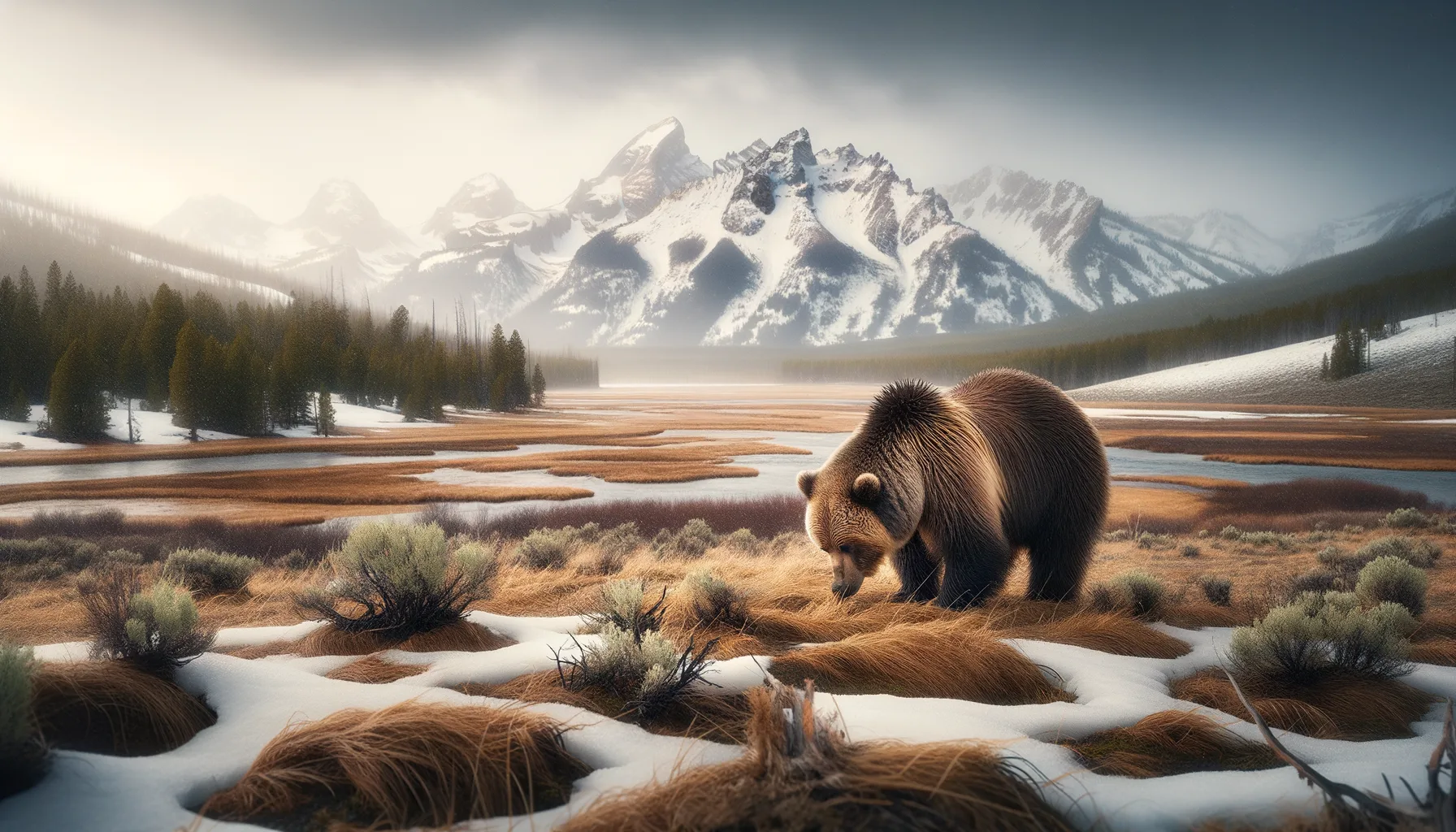
When grizzlies start emerging from their dens weeks—or even months—earlier than expected, it’s more than an interesting wildlife observation. It’s a signal Montana’s backcountry hunters, anglers, and outdoor enthusiasts should take seriously.
- Early grizzly emergence is increasingly showing up in January and February, not just late March or April.
- Big male grizzlies tend to wake first and may be especially driven by hunger and the coming breeding season.
- Winter-killed ungulates can concentrate bears in the same river bottoms, meadows, and south-facing slopes people target in early spring.
- Shed hunting, spring turkey hunting, and early trout fishing all overlap with the early-season bear window.
- Assume grizzlies are active any time you’re out between now and June—and adjust habits accordingly.
The recent January grizzly sighting at Yellowstone marks a trend we’ve been tracking for years across the Northern Rockies, and it has direct implications for anyone planning spring turkey hunts, early fishing trips, or shed hunting expeditions. For a deeper look at how this early-window risk plays out for hunters, see First Grizzly Spotted in Yellowstone Signals Montana’s Riskiest Backcountry Window—What Hunters Need to Know Now.
Why grizzlies are waking up early
Grizzly bears don’t follow a strict calendar when it comes to hibernation. Their emergence is triggered by a complex mix of environmental factors, physiological cues, and food availability. While the average grizzly in Montana and Yellowstone traditionally emerged in late March or April, we’re increasingly seeing bears active in January and February.
Several factors drive this early emergence. Warmer winter temperatures can trigger metabolic changes that rouse bears from torpor. More importantly, male grizzlies—especially mature boars—naturally emerge earlier than females with cubs. These big males are driven by hunger and the upcoming breeding season, making them particularly active and potentially more aggressive as they search for early food sources.
Winter-killed ungulates are the primary attractant. Elk, deer, and bison that didn’t survive the winter provide crucial protein for newly-emerged bears. In Yellowstone and across Montana’s grizzly country, these carcasses concentrate bears in specific areas—often the same river bottoms, meadows, and south-facing slopes we favor for early-season pursuits.
If you’re planning to spend time in Yellowstone as spring ramps up, it helps to understand where wildlife activity tends to stack up. Our broader seasonal guide is here: Yellowstone’s Spring Wildlife Boom: Where to Spot Bison, Elk, Bears, and Wolves This Season.
What this means for Montana’s spring outdoorsmen
If you’re planning to hit Montana’s backcountry between now and June, operate with the assumption that grizzlies are active—regardless of the date on the calendar.
Shed hunting
The overlap between prime shed hunting season and early grizzly emergence is significant. Those same south-facing slopes where elk drop antlers in March are exactly where hungry bears are foraging. If you’re hunting sheds in grizzly country—and that’s increasingly more of Montana—carry bear spray, make noise, and be especially cautious around carcasses.
Predator encounters aren’t limited to bears, either. If you spend time poking around thick cover and broken terrain, it’s worth reading: Idaho Shed Hunter Stumbles on Two Napping Mountain Lions—Can You Spot Them in the Photos?
Spring turkey hunting
Montana’s spring turkey season opens in late April, right when grizzly activity is ramping up. Turkey hunting requires stealth and camouflage, which is the opposite of what you want in bear country. Scout your areas thoroughly, know your exit routes, and keep that bear spray accessible—not buried in your pack.
For more turkey-hunting perspective and tradition, you may also want to read: Fox Haas Dies at 95: Legendary Turkey Hunter, Mossy Oak Patriarch, and Mississippi Conservation Force.
Early trout fishing
Spring creeks and lower-elevation streams fish well in March and April, but these riparian corridors are also grizzly highways. Bears follow waterways looking for winter-killed animals and early vegetation. When you’re focused on rising trout, it’s easy to lose situational awareness.
If you’re timing early outings around runoff and melt, keep tabs on conditions here: Montana River Report: Western Rivers Spike 14% as March Melt Arrives (Clark Fork, Bitterroot, Blackfoot).
Practical steps for coexistence
Living and recreating in grizzly country requires a different mindset than it did twenty years ago. Montana’s grizzly population has expanded significantly, and bears now occupy habitat they haven’t used in generations. Here’s how to adjust:
- Carry bear spray on every outing, year-round. Not in your truck—on your hip.
- Travel in groups when possible, especially in known grizzly habitat.
- Make noise consistently. Bear bells are largely ineffective; loud conversation or periodic shouts work better.
- Never approach or linger near carcasses of any size. Report large carcasses to Montana FWP.
- Be especially vigilant during low-light conditions—dawn and dusk—when both bears and outdoorsmen are most active.
- Store food, game meat, and attractants properly, even on day trips.
The bigger picture
Early grizzly emergence is part of a larger pattern we’re seeing across Montana’s wildlife populations as climate patterns shift and bear numbers increase. Rather than viewing this as a negative, it’s simply the new reality of outdoor recreation in one of North America’s premier wildlife strongholds.
The presence of grizzlies is, in many ways, a conservation success story—proof that Montana still maintains the wild character and intact ecosystems that make it special. But success requires adaptation from those of us who use these landscapes regularly. Stay informed, stay prepared, and recognize that sharing the landscape with apex predators is part of what makes Montana’s outdoor experience authentic and unmatched anywhere else in the Lower 48.
Source inspiration: MSN
FAQ: Early grizzly emergence in Montana
Are grizzlies really coming out in January and February now?
Increasingly, yes. While grizzlies traditionally emerged in late March or April in Montana and Yellowstone, we’re seeing more activity in January and February in recent years.
Why do some grizzlies wake up earlier than others?
Emergence is influenced by a mix of environmental conditions, physiological cues, and food availability. Mature male grizzlies commonly emerge earlier than females with cubs.
Where are newly emerged bears most likely to concentrate?
Early-season activity often focuses on places with food and easier travel—river bottoms, meadows, and south-facing slopes—especially where winter-killed elk, deer, or bison are present.
What’s the biggest risk for shed hunters in spring?
Shed hunting often puts people on the same south-facing slopes and transition zones where hungry bears are actively foraging—plus the risk increases around carcasses. Carry bear spray, make noise, and avoid carcass sites.
How does spring turkey hunting conflict with bear safety?
Turkey hunting relies on stealth and camouflage, which can reduce your ability to alert a bear to your presence. Plan exits, scout carefully, and keep bear spray accessible on your person.
Why should anglers think about grizzlies on early-season streams?
Riparian corridors act like travel routes for bears, and bears may be searching waterways for winter-killed animals and early vegetation. When you’re focused on fishing, it’s easy to lose awareness of your surroundings.
What’s the single most practical habit change for spring in grizzly country?
Assume grizzlies are active regardless of the calendar and carry bear spray on your hip every time you go out.
Should I approach a carcass if I’m trying to figure out what happened?
No. Don’t approach or linger near carcasses of any size. Leave the area and report large carcasses to Montana FWP.
Related Reading
- First Grizzly Spotted in Yellowstone Signals Montana’s Riskiest Backcountry Window—What Hunters Need to Know Now
- Yellowstone’s Spring Wildlife Boom: Where to Spot Bison, Elk, Bears, and Wolves This Season
- Montana River Report: Western Rivers Spike 14% as March Melt Arrives (Clark Fork, Bitterroot, Blackfoot)
- Idaho Shed Hunter Stumbles on Two Napping Mountain Lions—Can You Spot Them in the Photos?
- Fox Haas Dies at 95: Legendary Turkey Hunter, Mossy Oak Patriarch, and Mississippi Conservation Force
Montana's outdoor week, in your inbox at 7am Friday.