
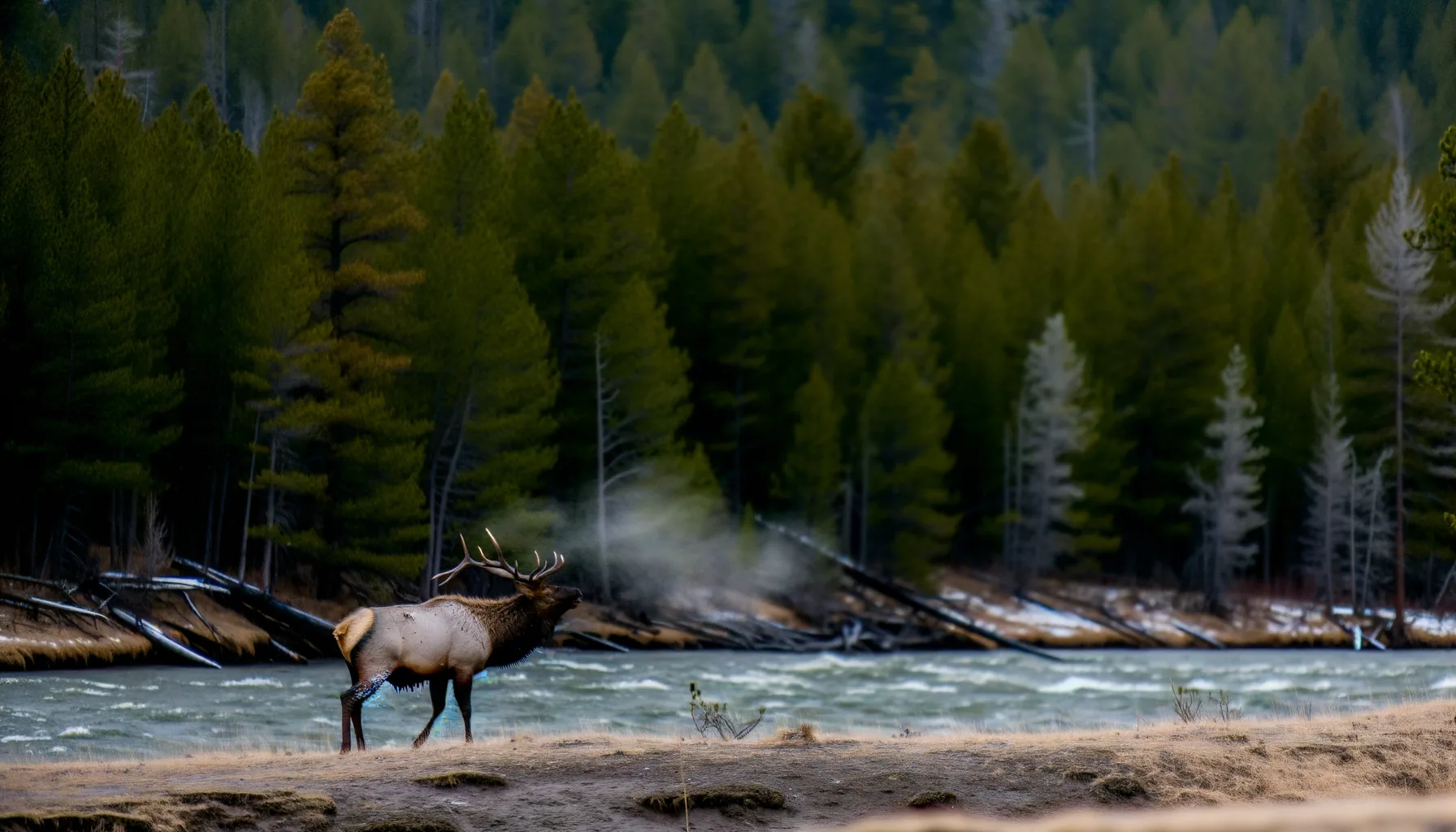
A debate has been simmering in East Texas after a number of elk escaped from private game farms and wandered onto neighboring properties, leaving landowners and hunters wondering: are these animals fair game? The legal ambiguity in that situation highlights a question that’s directly relevant here in Montana, where high-fenced game operations sit within rifle range of public land across the Blackfoot Valley, along the Rocky Mountain Front, and throughout the state. Before you head into the hills for spring bear season or early summer scouting, you need to know exactly where you stand under Montana law — because shooting the wrong elk, even accidentally, carries consequences that can follow you for years.
Montana Has Private Game Farms — More Than You Might Think
Montana licenses private alternative livestock operations — the legal term for game farms — under the Montana Department of Livestock, not Fish, Wildlife and Parks. These operations raise elk, bison, reindeer, and other cervids behind high fences for trophy hunting, meat, or breeding stock. There are dozens of licensed facilities scattered across the state, concentrated in areas like the Flathead Valley, the Bitterroot, and portions of central Montana near Lewistown and Great Falls. Many of these operations sit hard against national forests, Bureau of Land Management ground, or private ranches where public elk also roam.
That proximity creates real ambiguity in the field — and real legal risk for hunters who don’t understand the rules.
The Core Legal Distinction: Livestock vs. Wildlife
Here is the critical point that every Montana hunter needs to burn into memory: elk held in a licensed game farm are classified as livestock under Montana law, not wildlife. They are private property, the same as a Hereford cow or a Quarter Horse. It does not matter if that elk jumps a fence, wanders five miles onto public land, or sheds every piece of identification it was ever wearing. The moment you pull the trigger on a game farm elk, you could be looking at felony theft of livestock charges — on top of wildlife violations — depending on how prosecutors decide to frame the case.
Montana FWP is direct about this. Their position is that a livestock escape does not convert private property into a public resource. The owner retains legal title to that animal. Game wardens in Montana work closely with the Department of Livestock on escapee incidents, and both agencies take them seriously. If you encounter an elk that looks out of place — heavily muscled in unusual ways, unnaturally calm around humans, or wearing any kind of ear tag, collar, or brand — stop. Do not shoot.
How to Identify a Possible Game Farm Escapee
Game farm elk in Montana are required to be individually identified with official ear tags. A free-ranging elk wearing a bright orange or yellow ear tag is not a wild animal — full stop. But identification isn’t always that obvious. Some tags fall out. Some animals escape during chaotic events like storms or fence failures and may shed identification over time. Here’s what to look for in the field:
- Any ear tag at all — orange, yellow, metal, or plastic
- A brand or tattoo on the ear or hide
- Unusual body condition — game farm bulls are often significantly heavier and more muscular than wild bulls at the same antler development stage
- Atypical behavior — an elk that doesn’t spook at normal distances, approaches vehicles, or hangs near structures
- Location — if you’re hunting within a few miles of a known game farm operation, apply extra scrutiny to every animal you see
If anything feels off, don’t shoot first and ask questions later. In Montana, that instinct will protect you legally and ethically.
What to Do If You Encounter a Suspicious Elk
Your first call should be to Montana FWP’s regional dispatch. In western Montana, that means the Missoula or Kalispell regional offices. In central Montana, the Great Falls office covers a huge swath of game farm country. Give them your location, a description of the animal, and any identifying marks you observed. FWP can cross-reference the description with the Department of Livestock’s records of recent escape reports — and those reports do happen. A game farm near Augusta had a documented escape incident several years back that sent wardens scrambling across the Sun River country for days.
Do not attempt to herd, capture, or harm the animal. That’s the Department of Livestock’s job, in coordination with the game farm operator. Your legal obligation is to report and step back.
The Ethical Case Is Just as Clear as the Legal One
Even setting aside the law for a moment, shooting a pen-raised elk that wandered off a game farm isn’t a hunting story worth telling. Wild elk hunting in Montana — chasing bugling bulls through the dark timber above the Blackfoot, glassing September basins in the Beartooths — carries a standard that matters to this community. Protecting that standard means knowing the difference between wild game and escaped livestock, and acting accordingly.
The rules are clear enough — you just have to know them. Ear tag in the field? Make the call, not the shot.
Montana's outdoor week, in your inbox at 7am Friday.