
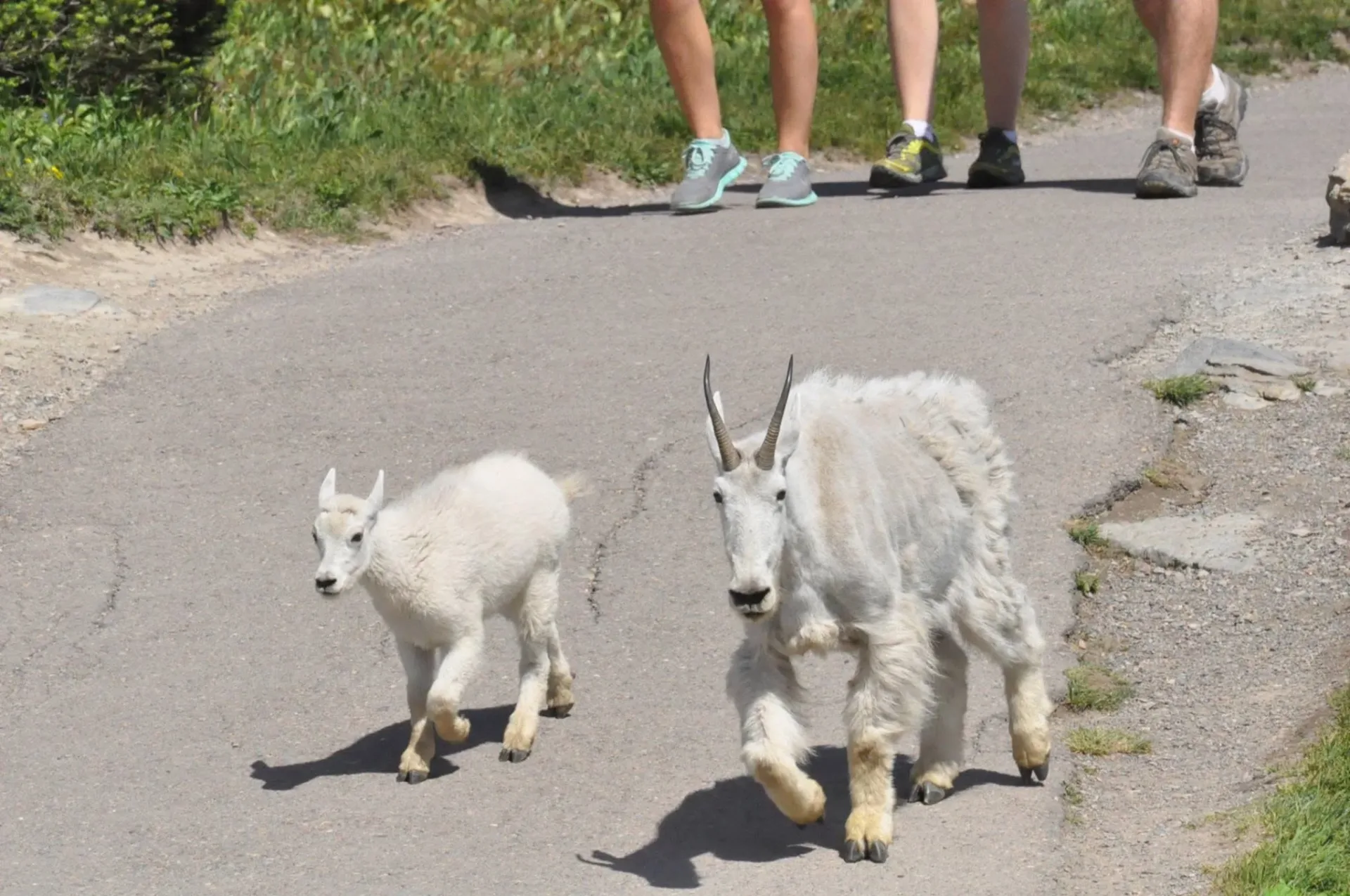
A new long-term study out of Glacier National Park is raising red flags about one of Montana’s most iconic alpine species. Researchers found that mountain goat numbers in the park dropped sharply over a 12-year period, highlighting growing concerns about how climate change and shifting environmental conditions are affecting wildlife in high-elevation ecosystems.
The study, led by Tabitha A. Graves, William M. Janousek, Michael J. Yarnall, and Jami Belt, tracked mountain goat populations from 2008 to 2019 using a combination of citizen science surveys and advanced statistical modeling. Their findings show a striking 45% decline in goats per survey site during that time—far exceeding the threshold used by conservation groups to classify a population as vulnerable.
According to the research, goat numbers fell steadily until about 2015, when they appeared to level off—but at much lower levels. The steepest declines were seen in the northeastern part of the park, while only a couple of sites in west-central areas showed increases. Overall, most monitored locations either declined or showed downward trends, signaling a widespread issue rather than a localized one.
Climate appears to be a major driver behind the decline. The study found that factors like reduced snowpack, warmer temperatures, and especially lower precipitation during the early summer “neonatal” period—when kids are born—had strong negative impacts on population growth. Less moisture during this critical window likely affects forage quality and survival rates for newborn goats.
The research also points to the importance of snowfields, glaciers, and natural mineral licks in supporting goat populations. As permanent snow and ice continue to shrink across Glacier National Park, those essential habitat features may become increasingly scarce. Combined with rising temperatures and changing precipitation patterns, the outlook for mountain goats at the southern edge of their range is uncertain.
Despite the troubling trends, the study highlights the value of long-term monitoring and the role of citizen scientists in gathering critical data. The authors say more research is needed to understand the exact causes behind the decline and to guide conservation efforts—but one thing is clear: Montana’s high-country mountain goats are facing mounting challenges in a rapidly changing climate.
To access the full report, click here.
Photo: Megan Strickland Sacry, 2013, Glacier National Park
Montana's outdoor week, in your inbox at 7am Friday.