
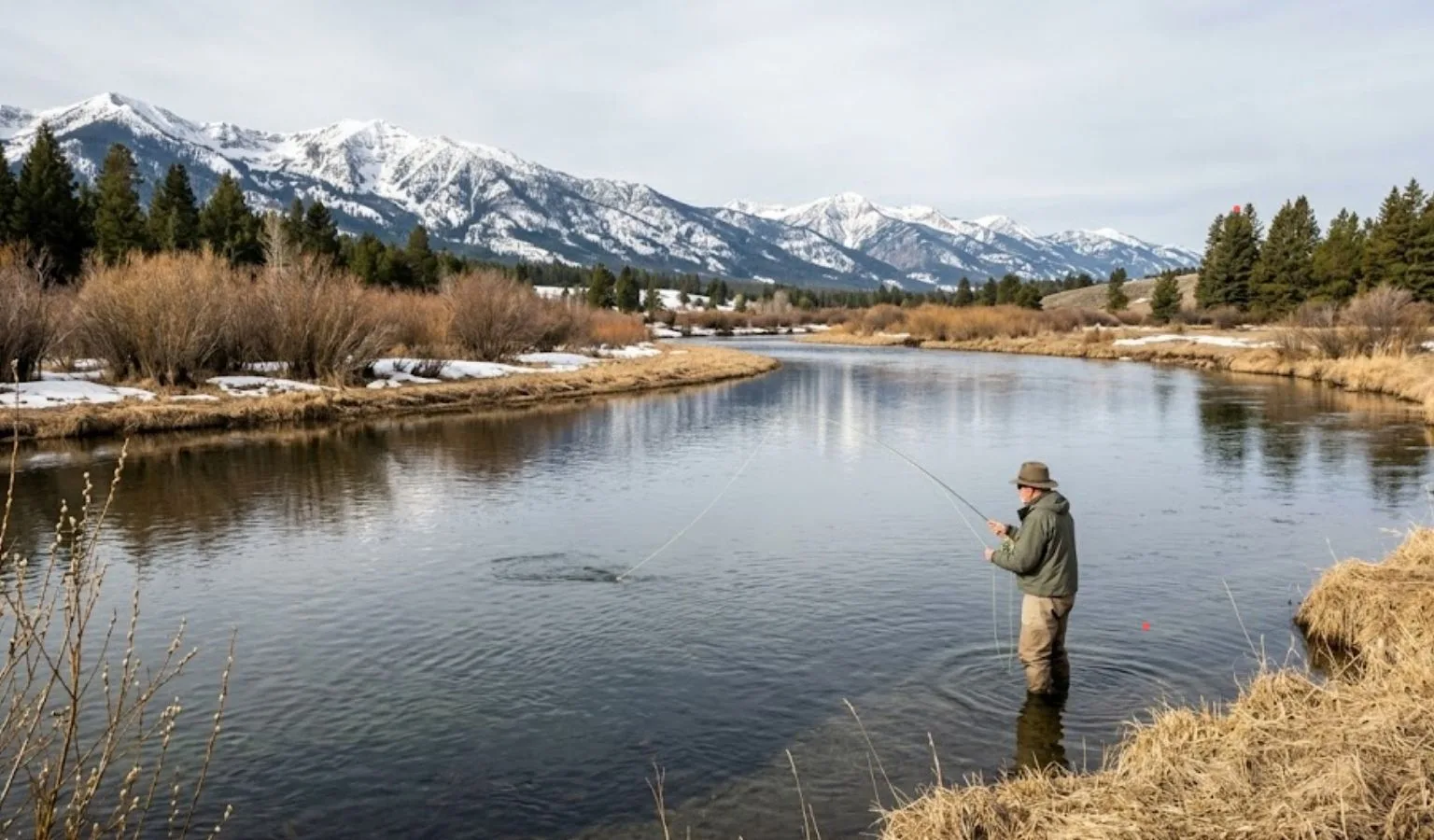
Southwest Montana is officially shaking off its winter slumber, trading icy stillness for the slow-motion thrill of the shoulder season. While the high-mountain streams remain locked in a deep chill, the larger rivers are waking up as trout congregate in “honey hole” densities that have to be seen to be believed. It’s a game of patience and timing—wait for the afternoon sun to bump the water temps, keep your flies deep in the slow runs, and watch your step around the spawning gravel. Whether you’re headhunting midge-sippers or stripping big bunnies for a territorial brown, the spring “swing” is officially on.
Here’s the latest fishing report for Southwest Montana by Montana Angler:
Summary of current conditions
Fishing is definitely on the upswing around Southwest, Montana. Good hatches of midges are often bringing trout to the surface on the right days. The spring baetis hatches are just getting started and will become much more important in the weeks to come. The streamer fishing has also been very good – not always a lot of action but for those willing to stay with the big bunny patterns some big browns are coming to the net. Small streams are cold and not worth bothering with the exception of the spring creeks, but most larger and medium sized rivers fishing very well. Rainbows are in spawning mode and are filling up some tributaries and the spring creeks so be careful to stay away from fish on their redds in the spawning gravel. Redds are easy to spot and you will see “clean” gravel and often active fish.Trout metabolism is tied to water temperature and as rivers and streams slowly warm they are becoming more and more active but still plan on using some winter tactics. Trout are still in their winter runs and will be there for most of the early spring. This time of year you need to be have laser focus on where you fish and target the deeper runs with slow to medium currents. Trout will not move into the fast riffles or bustling pocket water until much later in the spring and early summer. The good news is that once you find some of these cold water honey holes they will be packed with trout. Fish densities in the best winter runs can be staggering with dozens upon dozens of trout packed together. Time of day is also very important. Morning water temperatures are cold and the fish don’t start moving in earnest until the late morning. Slow stripping streamers in deeper runs can produce a connection some mornings but usually activity doesn’t pick up until midges start hatching around 10am or so. The best fishing is often after lunch when water temperatures peak.
Important hatches right now
If you get lucky and the forecast sustains for daytime highs above 60 degrees for several days, you might luck out and see a few March Browns or some early Blue-Winged Olive hatches. Midge hatches can be strong in some locations in the late morning and early afternoon when warmer, mild weather settles in. Otherwise, the fishing is a nymphing game.Late winter and early spring fly box
Fly selection is still simple–rubber legs and beadheads on freestones and the smaller beadheads, SJ wormies, and Zebra midges on spring creeks and tailwaters. If there is a midge hatch, choose your favorite midge dry or cluster pattern. Palomino midges and Griffith’s gnats are good enough. For sub-surface, try a rubber leg, egg, or worm pattern on top and a smaller midge larva or baetis nymph on bottom.Where to find trout in late winter and early spring
Trout are going to be hanging and feeding in similar lies that they have been for months–the deeper and slower runs. A few trout may start to migrate to the slower runs along deep banks as well. Target water that is medium-slow paced and at least 4 feet deep. If a midge hatch occurs, look for slower back-eddies and slow current seams or foam lines where mats of midges can collect.
Montana's outdoor week, in your inbox at 7am Friday.