
Planning a trek through Yosemite, Sequoia, or Redwood National Park? If you just tossed a canister of bear spray into your backpack, do yourself a favor and pull it right back out. It might be standard issue in our neck of the woods, but in California, that can of spicy deterrent is a major no-no.
For many used to hiking in Montana or other grizzly strongholds, leaving your bear spray behind can feel like hitting the trail without boots. In places like Glacier or Yellowstone, bear spray isn’t just an option—it’s a necessity. Those parks are grizzly country, and encounters there require serious tools. But Montana and California are completely different ball games. It is simply one of those things you have to remember when crossing state lines: different terrain, different bears, different rules
The bear spray ban catching many visitors off guard in California often boils down to a classic case of mistaken identity—or rather, mistaken bear identity. According to legal insights on California Bear Spray Laws, carrying these high-powered canisters into federal park boundaries can cross the line into possessing an illegal weapon, leading to steep fines or a federal misdemeanor charge.
The rationale behind the ban makes perfect sense when you look at who actually lives in these woods:
- The Reality: California’s national parks are home exclusively to black bears, as highlighted by Unofficial Networks.
- The Vibe: Unlike their aggressive grizzly cousins up north, black bears are usually far less territorial and generally much less aggressive.
- The Stats: The National Park Service explicitly states that bear spray is total overkill in California. In fact, NPS Wildlife Safety Guidelines point out that there is exactly zero recorded history of anyone being killed or seriously injured by a black bear in Yosemite.
Just because the local wildlife won’t actively hunt you doesn’t mean you should stroll into the woods without a plan. You just need to shift your strategy from biological warfare to mild public disturbance. For black bears, the most effective deterrents are often the loudest ones.
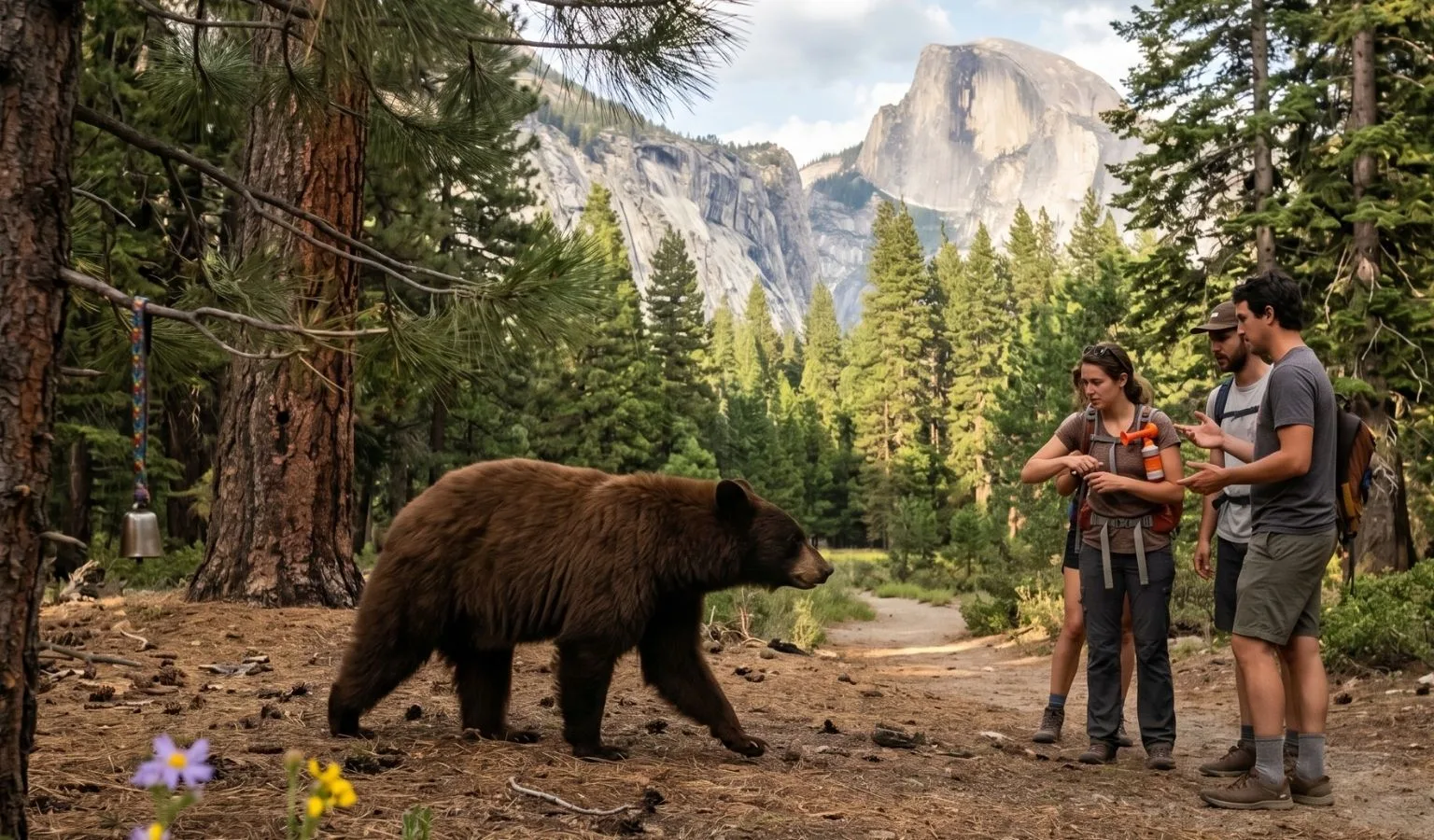
If you want to keep the local residents at bay, try these perfectly legal alternatives outlined in TheTravel’s guide on bear deterrents:
| Gear | How it Works | Why it Rules |
| Air Horns | Emits a sudden, deafening blast. | Startles the bear into rethinking its life choices while you back away. |
| Bear Bells | Jingles consistently with every step you take. | Acts as a polite “heads up” so you don’t accidentally startle a bear while it’s napping. |
At the end of the day, the best defense is always good trail etiquette. As emphasized in the recent National Park Service Bear Safety Warning, your safety comes down to awareness and clean habits. Store food in bear canisters or lockers, keep a pristine camp, and never approach a bear.
If you do spot a furry influencer on the trail, give them at least 50 yards of room. They don’t want your company—they just want your trail mix….most likely.
(Please note that this feature photo is the epitome of what not to do if you encounter any type of bear)
Montana's outdoor week, in your inbox at 7am Friday.