
BRETT FRENCH | bfrench@billingsgazette.com
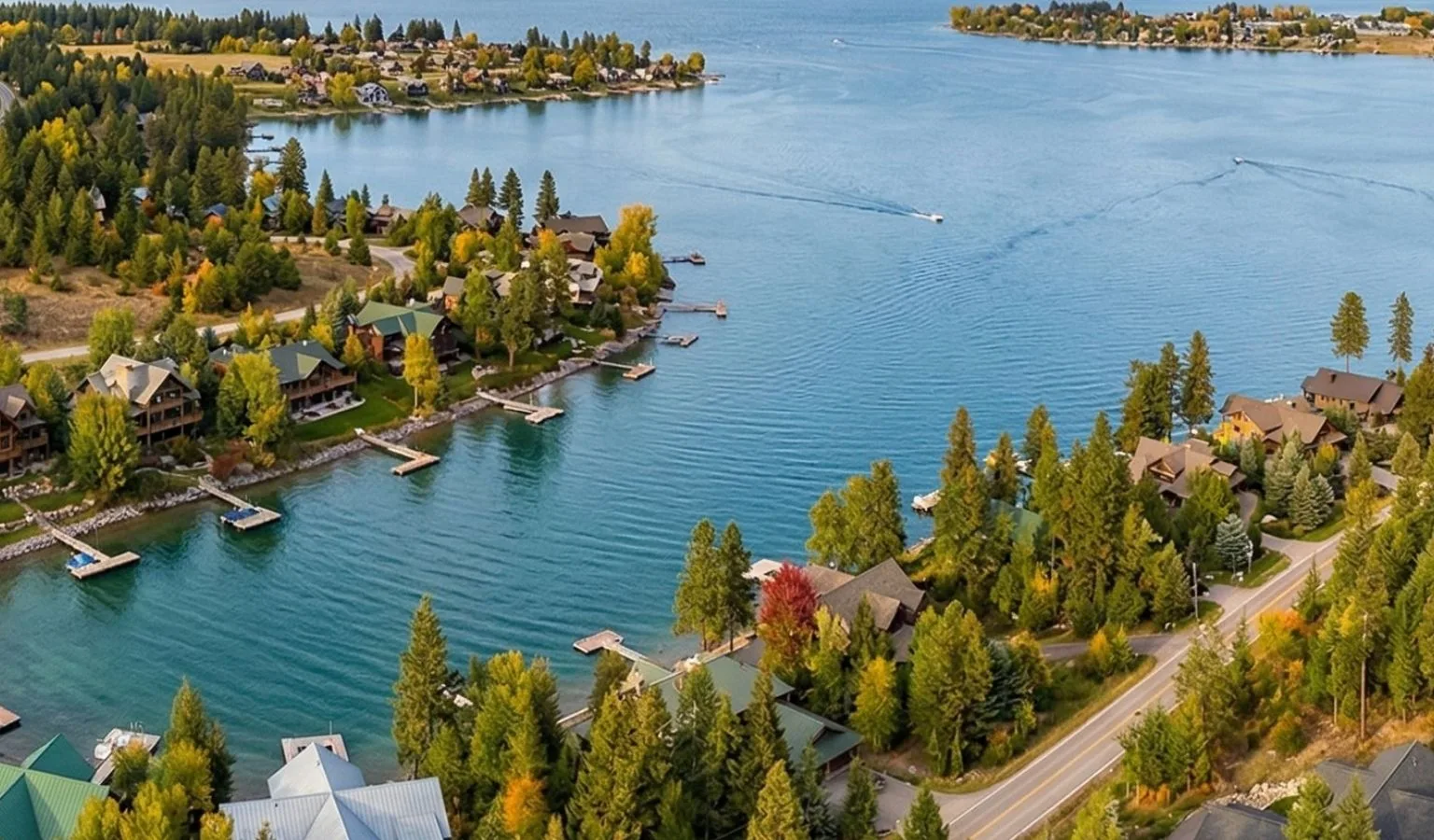
If you think the trails and waters are crowded in northwest Montana now — home to Flathead Lake and Glacier National Park — you may be really disappointed in 15 years.
By 2040, Flathead County is predicted to have grown by almost 30% in a region where residents, along with many other Western Montanans, already complain of overcrowding.
That population prediction, the fastest growth rate statewide in that time period, comes from the Montana Department of Commerce’s Census and Economic Information Center. The center’s data was broken down for the Department of Fish, Wildlife & Parks’ seven management regions.

The SCORP report
This information, and similar data for each of Montana’s other six FWP management areas, can be found in the 2026–2030 Statewide Comprehensive Outdoor Recreation Plan, or SCORP. The document provides “a five-year framework to guide outdoor recreation planning, investment and coordination across Montana,” the introduction noted.

The document is also a requirement for the state to receive Land and Water Conservation Fund disbursements, such as matching grants for “outdoor recreation development and access.” In the 2023-24 funding cycle, LWCF Community Grants provided more than $1.71 million to seven towns for projects like Big Sandy’s swimming pool ($615,400).
FWP administers the federal program for Montana, so it compiles the SCORP report.
Public land allure
Flathead County is in FWP’s Region 1, which also includes Lake, Lincoln and Sanders counties. The area’s popularity and predicted growth is no doubt tied to it containing the highest proportion of public land among FWP’s seven regions.

Past studies by Headwaters Economics have highlighted public lands as one of the driving forces behind population growth, whether that be retirees looking for amenities or companies seeking to boost employees’ quality of life. About 71% of Region 1, or roughly 6.9 million acres (4.41 million square miles), is public land where ski areas, hiking trails, national forests and wild rivers lure outdoor recreationists.
Although the Flathead Valley is predicted to lead the charge in population growth, the urban areas of Bozeman and Missoula are also likely to “face intensified demand on nearby trails, access points and recreation facilities,” the report noted.

Based on survey, meetings
Within the document’s 147 pages there are some interesting insights to what some Montanans, those who participated in surveys and meetings, said are the most important investments in outdoor recreation and access.
For example, in northeastern Montana’s Region 6, survey respondents identified fishing as their most popular outdoor recreation resource. This makes sense considering the nine-county region is close to the Missouri River and the vast Fort Peck Reservoir. In the past decade, Fort Peck has become well-known for its smorgasbord of chinook salmon, smallmouth bass, walleye, northern pike and lake trout, drawing anglers from across the West and Midwest.
Unlike Region 1, this area of Montana is predicted to see the largest population decline over the next 15 years, an estimated 11.42% or about 7,000 people. Consequently, the SCORP report sees one of the area’s biggest challenges being its ability to hold on to enough people to maintain communities while also supporting recreation-related businesses for the many anglers and hunters who visit.
“Many community members see potential in highlighting ‘undiscovered’ sites, such as smaller reservoirs, local trail and wildlife viewing areas, to attract visitors and provide alternatives to heavily used destinations,” the report said.

Trail access leads
What’s common across much of the state, whether the population is booming or busting, is that Montanans continue to be concerned about loss of access to public lands and in the most populous communities want more trails for walking, hiking and biking.
“Bike lanes on roads, walking/jogging/biking paths, and interpretive trails were frequently identified as being low in both quantity and condition, suggesting strong support for directing additional resources toward these facility types,” according to the SCORP report.
Such support is not surprising considering many of Montana’s newest residents are attracted to the state specifically because of its variety and wealth of lands accessible to the public.
Whether Eastern Montanans are moving west or out-of-staters are moving in, the report found that more than 44% of Montanans had lived at their current address for less than five years.

Montana’s private corner
That’s less true for Region 7 in southeast Montana, which is 75% privately owned, but nonetheless has some unique public land attractions such as the Ashland Ranger District’s forested hills as well as Medicine Rocks and Makoshika state parks.
This corner of the state has also been the focus of a state investment in infrastructure — such as campgrounds and boat launches along the Yellowstone River — to boost tourism.
That’s important considering that outdoor recreation in Montana generated $3.8 billion in value added output in 2024. (Value added output is gross sales minus the cost of materials and services.) This accounts for 4.9% of the state’s gross domestic product and supported more than 32,000 jobs, according to the U.S. Bureau of Economic Analysis.
For comparison, agriculture, forestry, fishing and hunting combined generated $2.4 billion in value added output in 2024 in Montana, according to Headwaters Economics.
Nationally, Montana ranks third behind Hawaii and Alaska for states with the highest percentage of GDP from outdoor recreation.
Consequently, it’s easy to see why “outdoor recreation is a cornerstone” of the state’s economy, the SCORP report noted, as it contributes “significantly to employment, income, and community development.”
Montana's outdoor week, in your inbox at 7am Friday.