
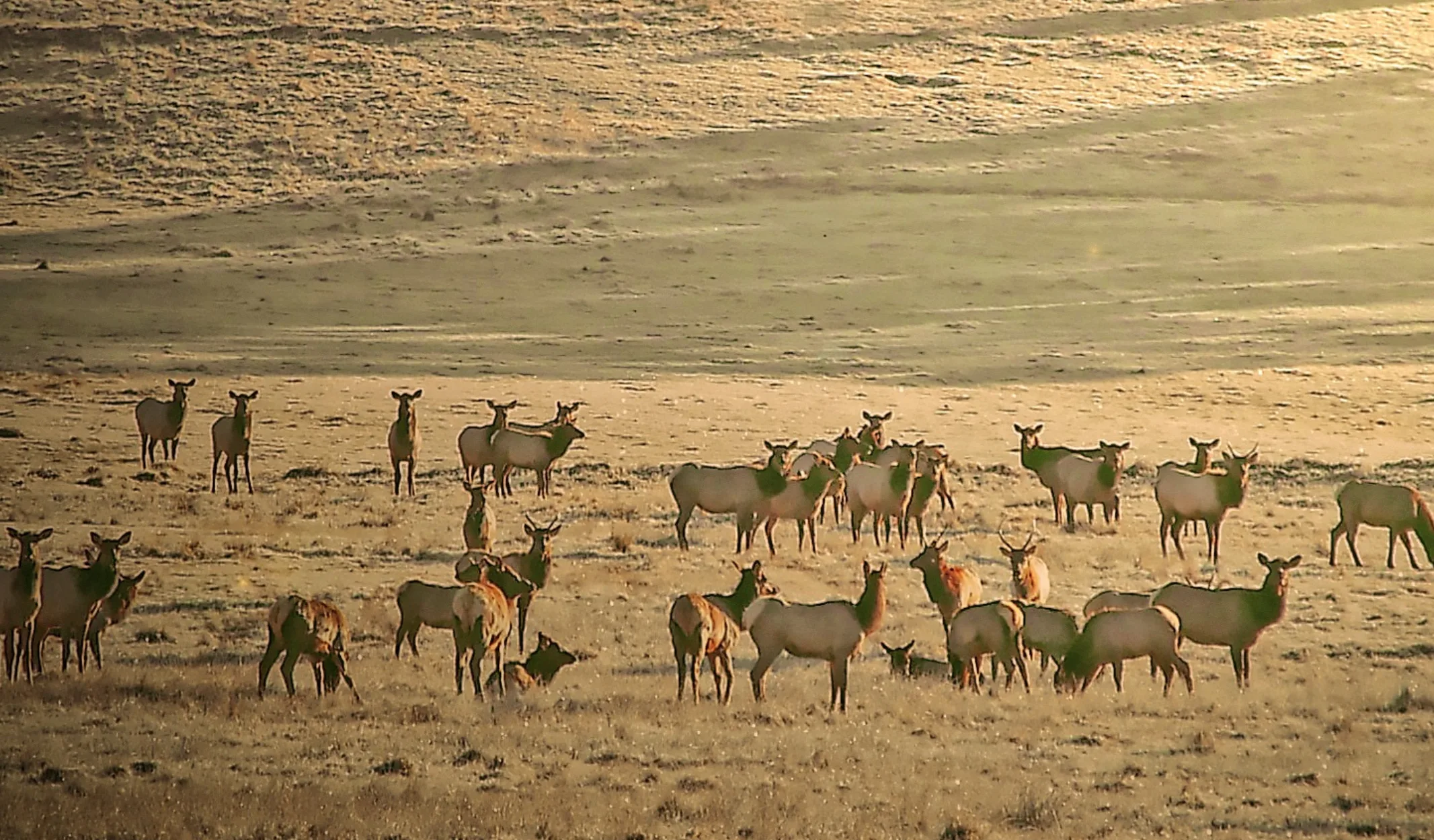
Elk handle the landscape a lot like we do: they go where the gates are, and they leave when the pressure climbs.
Montana Fish, Wildlife & Parks collared about 60 cow elk in the Devil’s Kitchen unit — hunting districts 445, 446 and 455, including the Beartooth Wildlife Management Area — over the winters of 2019–20 and 2020–21. Three years of GPS data, filtered down to daylight hours during hunting seasons, told the story.
Early on, in the shoulder and archery seasons, elk slid toward private ground hunters couldn’t easily reach. Then the general season’s restrictive regulations on public land flipped the script: given the choice, elk drifted back onto public acreage and stayed through the late shoulder season — fewer headaches for neighboring landowners. The Beartooth WMA, with limited-entry licenses and no shoulder seasons, was especially good at holding a crowd.
“Elk are very smart and respond to gradients of hunting pressure quite strongly,” said Nicole Bealer, then a graduate student at Montana State University.
But there’s no free lunch. Make a place safe and elk will use it — which can also mean fewer animals in the harvest and a harder climb toward population goals. Hence the local balancing act: landowners, biologists and hunters working the same table.
Montana's outdoor week, in your inbox at 7am Friday.