
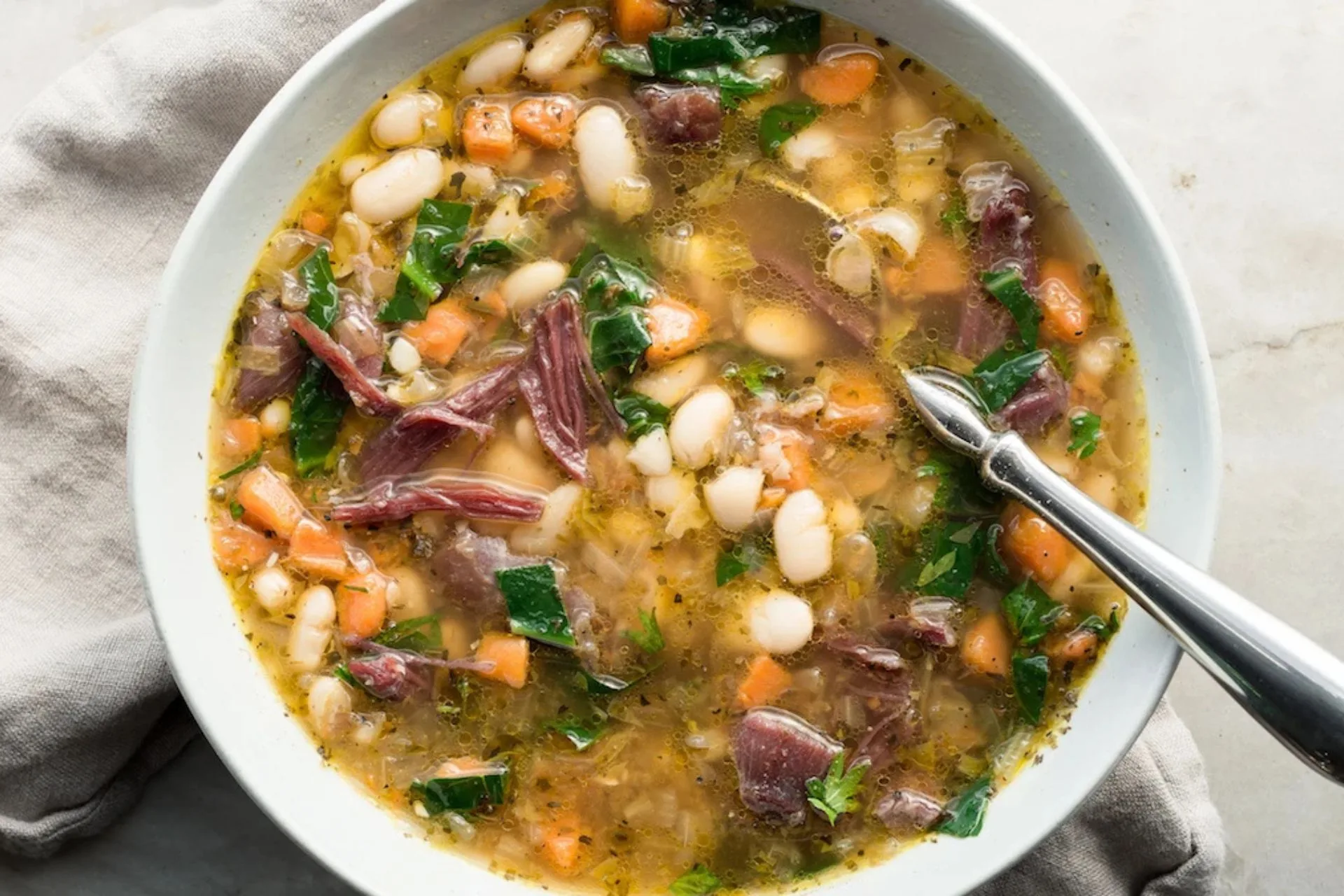
Forget the usual soup routine — Kokanee Quinn just discovered a bowl-warming version that turns plain venison shanks into liquid gold. This isn’t your average deer stew; it’s slow-cooked with rich flavor that practically slurps itself. It doesn’t matter if you bagged the shanks in the field or at the butcher shop, this recipe will have you cozying up with something hearty, clever, and simply delicious.
Here’s the recipe via MeatEater:
Ingredients
- 1 1/2 cups dry beans (great northern, cannellini, etc.)
- 1 1/2 pounds of venison ham hocks
- 1 onion, chopped
- 1 celery rib, chopped
- 1 large carrot, chopped
- 3 cloves of garlic, minced
- 1 tbsp. Herbs de Provence, or Italian seasoning
- 1 cup dry white wine
- 2 quarts unsalted chicken broth
- 3 cups water
- 2 collard green leaves, sliced
- Cooking oil
- Salt and pepper to taste
Also works with
Venison, bear, or hog neck or shanks; turkey thighs
Special equipment
Large pot
Preparation
- Place the beans in a colander and rinse well. Transfer to a bowl and cover with at least 4 cups of water. Let the beans soak overnight, or for about 8 hours.
- Heat a large pot over medium heat. Add a drizzle of cooking oil and sweat the onions. When they’re soft and translucent, add the carrots and celery. Cook for another 3 to 5 minutes, then add the garlic. Cook for one more minute, or until fragrant.
- Deglaze the pot with white wine, unsalted chicken broth, and water. Scrape up the bits of fond at the bottom. Season with the Herbs de Provence and add in the venison ham hocks. Refrain from seasoning with salt because the ham hocks are already salty.
- Bring to a simmer, then reduce the heat to low so that it gently bubbles. Simmer for 2 hours with the lid ajar so that it slightly reduces.
- Rinse the soaked beans after soaking, then add them to the pot. Cover and cook for 2 to 3 more hours, or until the beans and the venison are both very tender. The meat should fall off the bone. As the soup cooks, add more water if needed. Taste and season with extra salt and black pepper, if needed.
- Drop the collard greens in during the last phase of cooking. Serve hot.
Feature photo via themeateater.com