
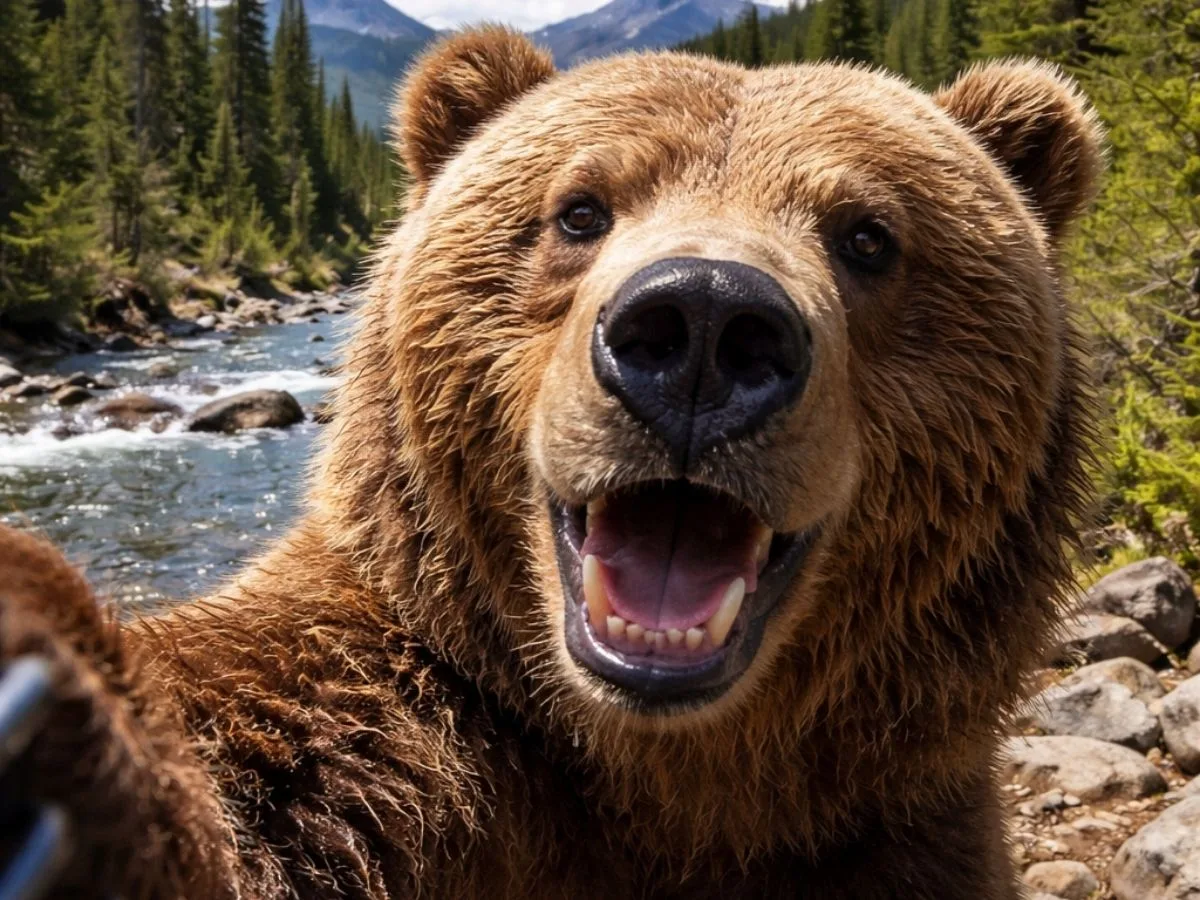
A hunter left a GoPro Hero 11 at the Grizzly & Wolf Discovery Center in West Yellowstone, and what the bears did with it might change how you think about every piece of gear you leave unattended in the backcountry. The footage isn’t dramatic in a Hollywood sense — there’s no roaring, no charging. It’s quieter than that, and somehow more unsettling. A 600-pound animal picks up the camera, mouths it, works it over with its paws, carries it around like it’s deciding something. That’s the part that sticks with you.
This isn’t just entertaining wildlife content. It’s a look at the exact behavior that destroys trail cameras, tears open day packs, and turns a carefully planned pack-out into a disaster.
What the Footage Shows
The bears didn’t sniff it and move on. They investigated it the way grizzlies investigate everything they don’t immediately recognize — thoroughly, persistently, with teeth and claws involved. The protective case held up, but the interaction went on long enough to capture close-up footage that no wildlife photographer would ever get voluntarily. You can see the curiosity working in real time. The animal isn’t frightened, isn’t aggressive. It’s just methodical.
That same methodical curiosity is what drives a wild grizzly to rip apart an improperly hung food bag, destroy a trail camera on a game trail, or dig into a hunter’s unattended day pack during a pack-out. The setting is different. The behavior is identical.
Montana’s Expanding Grizzly Range
Grizzlies aren’t staying put anymore, obviously. They’ve pushed well beyond the traditional Greater Yellowstone and Northern Continental Divide recovery zones. Bears are documented in the Bitterroot. The Little Belts. Increasingly across central Montana in country where most hunters my age never thought twice about bear sign growing up. That’s changing fast, and a lot of folks who’ve spent years hunting elk in the Crazies or packing mule deer out of the Madison Range are encountering grizzly sign for the first time — and not always sure what to do with that information.
Honestly, the GoPro footage cuts through a lot of the noise on this topic. Three things come out of it clearly. First, grizzlies investigate everything that smells wrong, looks out of place, or might contain calories — and that includes game bags, optics cases, coolers, and electronics. Second, hard cases aren’t grizzly-proof unless they’re IGBC-certified. The GoPro case survived, but most Pelican boxes and plastic bins won’t hold up against a determined 500-pound animal. If it doesn’t have that certification, assume a bear can get into it given enough time and motivation. Third — and this is the one people underestimate — habituation starts with curiosity. A bear that repeatedly encounters human gear and occasionally gets rewarded with food learns a pattern. That’s how you end up with a problem bear that has to be put down. We’re definitely not doing bears any favors by being sloppy.
Highlights for This Season
Whether you’re bowhunting elk in the Absarokas, running trail cameras on public land, or doing an early-season scouting trip near the Bob Marshall, treat every piece of gear like a potential attractant. The scent of human handling, batteries, and plastic is enough to draw investigation.
- Never leave packs, panniers, or loose gear unattended during pack-outs. Twenty minutes back to the truck is all it takes. Bear canisters or IGBC-certified panniers are the standard for overnight trips — rope hangs are better than nothing in the backcountry, but grizzlies in high-use areas have figured them out.
- Pack out every wrapper, every scrap of food, every piece of bloody packaging immediately. The curiosity that sent that bear after a GoPro applies equally to a granola bar wrapper in your jacket pocket or a game bag hanging from your frame pack.
Some believe that the hunters who get complacent about this tend to be the ones who’ve spent years in black bear country and are applying the same logic to grizzly territory. However, it doesn’t transfer. Black bears are mostly opportunists. Grizzlies are investigators. There is a huge difference in how they engage with the world, and your camp setup needs to reflect that.
What is Yellowstone’s Grizzly & Wolf Discovery Center
The Grizzly & Wolf Discovery Center houses bears that can’t go back to the wild — most of them because they got into human food, learned the association, and crossed a line that wildlife managers couldn’t walk back. The facility does two things well: it educates the public about grizzly behavior, and it physically tests bear-resistant products. If a cooler or canister survives a session with those bears, it earns its certification. That’s not a marketing claim — it’s a real standard.
The fact that this footage came from captive animals doesn’t “water it down” by any means. These bears show the same bite pressure, the same problem-solving, the same curious drive as any wild grizzly working a drainage in the Selway-Bitterroot. The controlled setting just lets us watch it clearly, without the footage ending right away.
Grizzlies don’t ignore what they don’t understand. They test it, taste it, and take it apart. The more we anticipate that — and adjust how we camp, how we store gear, and how we move through country where bears are re-establishing themselves — the better it goes for everyone. Including the bears!
Source inspiration: https://www.msn.com/en-us/video/animals/grizzly-bear-gopro-selfie-raw-unedited-footage/vi-AA1YLh0w