
BRETT FRENCH | bfrench@billingsgazette.com
Following a warm and dry winter, one of south-central Montana’s major tourist attractions, the Bighorn River, is facing low water levels despite its location below Yellowtail Dam.
“We’re potentially looking at flows below 1,500 (cubic feet per second) on the Bighorn River, which when you drop too low, you start seeing effects to the fisheries,” Anne Marie Emery, executive director of the Bighorn River Alliance told the Billings Trout Unlimited chapter on Tuesday night.
The concern is that rainbow trout spawning beds could be left high and dry if the river drops. That’s why Emery would rather see declines in the flow now, since the spawning season typically peaks in the first week of June.
“We really want changes to be made before the spawn occurs so it doesn’t disrupt those spawning trout,” she said.

This dim news comes on the heels of a bright report on fish numbers in the river.
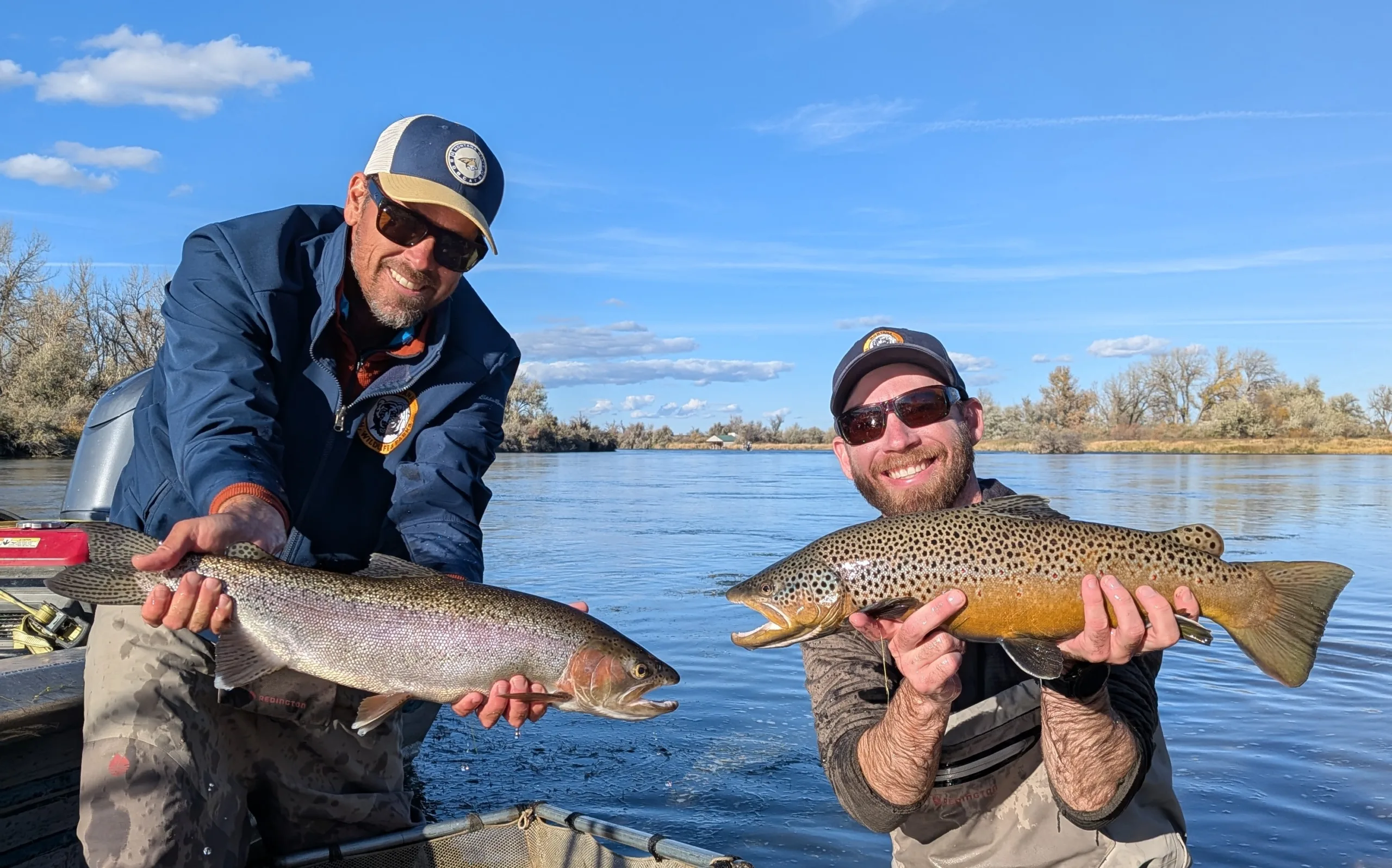
According to Demi Blythe, a fisheries biologist for Montana Fish, Wildlife & Parks, brown trout and rainbow trout populations in two survey areas are doing well. Especially important to her, younger fish are showing up in the surveys.
To Emery, the increase in juvenile fish is a positive sign that restoring habitat is paying off. The nonprofit group, in partnership with FWP and the Great Plains Fish Habitat Partnership Program, has dredged nine side channels over the past three years that had been cut off from the main river.
The problem with dam-controlled rivers, like the lower Bighorn, is that the channel can become deeply incised over the years with steep banks, cutting off side channels. Restoring the channels is an attempt to make the river more natural under unnatural conditions, Emery said.
“As the river starts to cut down, it loses access to its floodplain,” Blythe said. “And floodplains are super productive for fish habitat for a multitude of ecological benefits.”

Among the benefits is providing a place for smaller fish to hide from big, hungry trout that will eat them.
“This year is going to be a big test for us,” Emery said. “Last year, we saw all of our side channels remain active at flows of 2,000 (cfs). Well, guess what? Now it’s 1,750 and we’re probably going to reach that level where they’re going to go dry, but we’re going to learn.”
One theory, Blythe said, is that during drought years rainbow trout do well on the Bighorn River because the flows are stable while brown trout numbers fall.

Blythe was happy to report that both species were doing well based on two surveys that are conducted every year on the upper 23-mile stretch of the stream. One survey is conducted in the fall above Mallard’s Landing fishing access site and the other in the spring downstream from Three Mile FAS. Both surveyed stretches are about 4 miles long.

In 2025, the upper stretch contained an estimated 2,446 trout per mile more than 7 inches long, Blythe said, of which about half were rainbows and half were browns. This was an increase in brown trout compared to the last few years, she added.
“We definitely saw an increase in the rainbow trout population estimate for the upper section in 2025,” she added.
In the lower survey section she estimated 2,187 trout per mile that were longer than 7 inches — 531 brown trout and 1,642 rainbows. The brown trout population is up compared to the past five years, and the rainbow count was more than double what surveyors found in 2024.
“So we obviously had good recruitment, and then we have adults that are coming into the population,” Blythe said. “So overall, this was a really exciting kind of comeback.”
Tailwater streams, as those below dams are called, are typically better off in drought years if the reservoir feeding them can store enough water. However, the challenge is that rivers serve so many masters beside recreation — including power generation, irrigation, drinking water and tribal needs.
If the Bighorn Reservoir drops too low over the summer, not only does it make boat launch conditions on the lake difficult for reservoir recreationists, it could threaten winter flows in the river downstream.
“That is kind of the critical period for getting our young trout to recruit into the main population is those winter flows,” Emery said.

Shannon Blackburn, fisheries manager for FWP’s Region 5 management area, told the group she has already been losing sleep over low snowpack in the mountains and how that will affect fisheries this summer.
For the mountains that feed the Bighorn River, based on the snowpack between 1991 and 2020, Blackburn said this year it is only 65% of the median.
She told the anglers to be prepared for the possibility of restrictions that close rivers to fishing between 2 p.m. and midnight to avoid stressing trout. The restrictions are placed on waters after the temperature hits 70 degrees for three consecutive days.
Feature image FWP courtesy photo: FWP’s Ben Bailey, left, and Bryan Giordano hoist trout captured during the agency’s annual fish survey on the Bighorn River in 2025.
Montana's outdoor week, in your inbox at 7am Friday.