
The Day Modern Tech Met Old-School Iron
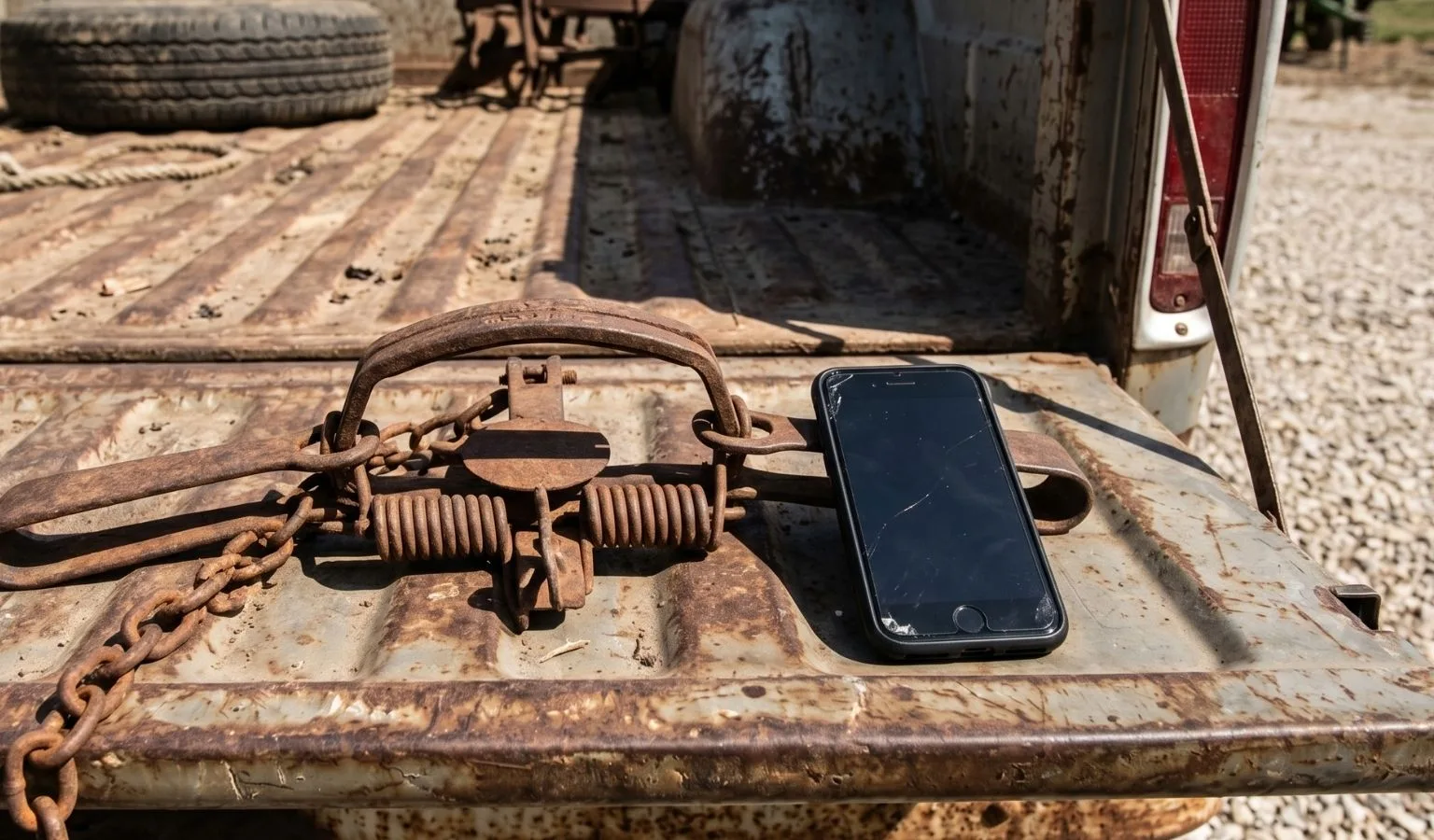
In the battle between the 21st century’s most advanced communication tool and a centuries-old mechanical design, the winner wasn’t the one with the high-speed processor. When legendary sportsman Tom Miranda watched his smartphone tumble from his shirt pocket, it didn’t just hit the dirt—it hit the “pan” of a Minnesota Brand 550.
The resulting image is a masterclass in the contrast between “New Tech” and “Old Tech.” On one side, you have a device worth hundreds (sometimes thousands) of dollars, capable of reaching across the globe but shattered by a simple three-foot drop. On the other, you have a hunk of cast steel and coil springs—a design that has remained largely unchanged because, frankly, you can’t improve on perfection.
The Unstoppable Force vs. The Fragile Object
The MB-550 is built like a tank. It’s a tool designed to sit in the freezing mud, withstand the elements, and hold a coyote without breaking a sweat. It doesn’t need software updates, it doesn’t run out of battery, and its “user interface” is a hair-trigger pan tension that has worked for generations.
Modern smartphones, for all their “Gorilla Glass” and water resistance, are effectively glass sandwiches. They are marvels of engineering, yet they are completely helpless when they meet the uncompromising leverage of high-tension steel. As Miranda found out, the MB-550 doesn’t care about your data plan; if you step on the pan (or fall on it), the jaws are coming home.
“Dropped right out of the ‘ole shirt pocket!…. Minnesota Brand 550 will catch anything!! Don’t you just hate it when that happens?????” — Tom Miranda
Why the “Old Ways” Still Win in the Woods
This accidental “stress test” highlights why outdoorsmen like Miranda still rely on traditional gear:
- Reliability: While the phone’s screen became a spiderweb of useless glass, the trap remained perfectly functional. You could reset that MB-550 right now, and it would work exactly as intended.
- Simplicity: There are no “low battery” warnings on a foothold trap. Its power comes from mechanical potential energy—old-school physics that doesn’t care about signal strength.
- Durability: We spend hundreds on protective cases to keep our tech alive, while the “case” for a trap is simply the earth it’s buried in.
The Moral of the Story
The next time you’re out on the line, remember: your phone might be smarter, but the trap is definitely tougher. In the rugged world of Montana backcountry or the rangelands of South Dakota, “smart” doesn’t mean much if you can’t survive a snap. Keep your tech buttoned up, because when it comes to a showdown between silicon and steel, the iron always gets the last word.
Montana's outdoor week, in your inbox at 7am Friday.