
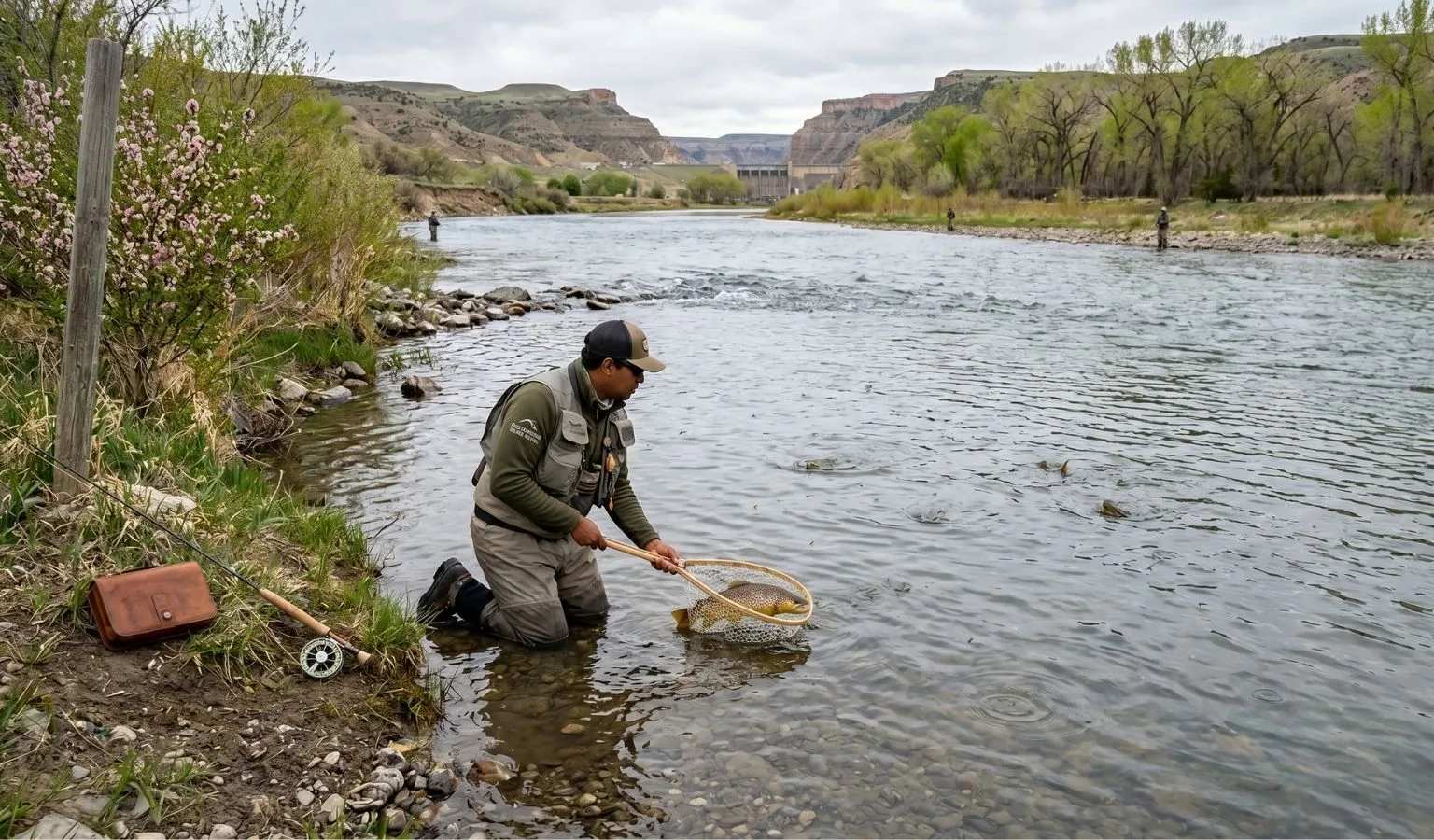
Spring has officially hit its stride in Fort Smith, Montana, bringing with it some of the most anticipated fly fishing conditions of the year. Whether you are planning an upcoming trip or waiting for the perfect moment to head to the water, the latest conditions on the tailwater show a river pulsing with life. From shifting water temperatures to the legendary May hatches, here is exactly what you need to know about what’s biting, what’s hatching, and how to fish the Bighorn right now from Forrester’s Bighorn River Resort:
May on the Bighorn River has arrived — and if you’ve been watching this season from a distance, now is the time to pay attention.
The river is in that beautiful spring rhythm that anglers who know the Bighorn wait all winter for. Flows are stable, the water is running clear, and after a long cold season, the trout are out and feeding in earnest. Water temperatures are climbing into the high 40s and low 50s — the precise window where trout shift from sluggish and dormant to aggressive and opportunistic.
This is the month serious anglers come for.
What the River Looks Like Right Now
The Bighorn is a tailwater fishery fed by the cold, consistent releases of Yellowtail Dam — which means it doesn’t blow out in spring runoff like most Montana rivers. Right now that means clear water, stable flows, and fish that are exactly where you’d expect them to be.
Browns and rainbows are holding in the slower runs and deeper buckets, moving into feeding lanes as the day warms and the hatches begin to build. On a good overcast afternoon right now you can watch fish rising in every direction.
This is the Bighorn at its most alive.
The Hatches — What’s Coming Off
Midges are the steady morning producer — reliable, consistent, and absolutely deadly on a clean dead drift. As the day warms and light softens, the Blue Winged Olives take over.
The BWO hatch on the Bighorn in May is something every serious dry fly angler should experience at least once. On overcast afternoons the surface comes alive with rising fish and clouds of emerging duns. If you have the right fly on a clean drift, the fishing becomes extraordinary.
We are also starting to see the very first caddis nymphs appearing in the system — an early signal that the caddis hatch is building toward its June peak. By the end of May expect to see the first true caddis activity of the year.
What’s Working Right Now
Nymphs — this is where most of your fish will come from in May:
- Soft Hackle Sow Bug #16 — the Bighorn staple, never wrong
- Orange Scud #16 — deadly in the slower runs
- Zebra Midge #18-20 — essential morning pattern
- Pheasant Tail #16-18 — reliable all day
- Small pink and purple perdigons — keep everything deep and drifting clean
The key in May is depth and drift. If you’re not occasionally ticking the bottom, add weight before you change flies. A sow bug or scud trailed by a small BWO nymph or perdigon set 4 to 5 feet under an indicator has been the most consistent setup on the river right now.
Dries:
- CDC Baetis #18 — the go-to BWO pattern on calm overcast afternoons
- Watch the softer water along the banks and in the tailouts of long flats — that’s where the rising fish concentrate
Streamers:
- Olive Woolly Bugger #6 — first thing in the morning near structure
- Black Leech #10 — slow and deliberate along the banks
Work the streamers early before the BWO hatch kicks in, then transition to nymphs through midday and dries in the afternoon. That three-part day is one of the most complete days of fly fishing you’ll find anywhere in the American West.
Fish Size — What to Expect
The Bighorn holds nearly 2,500 fish per mile at an average of 19 inches or better. Right now healthy 16 to 20-inch wild browns and rainbows are everywhere. The 24-inch fish are out there — and in May they are actively feeding and making mistakes they won’t make in the heat of summer.
Browns outnumber rainbows roughly 3 to 1 on the Bighorn. In May the browns are aggressive and will chase a streamer or take a dry fly with authority. If you want a shot at the biggest fish of the season, May is your month.
One Important Note for 2026
Montana Fish, Wildlife & Parks no longer allows fly shops to sell fishing licenses on-site. You must purchase your fishing license online before you arrive in Fort Smith. Cell service can be unreliable in the area — take care of this before you leave home.
Open Dates This Season
We still have a few dates available in May, along with August 21–26 and September 1–10. If this report has you thinking about getting on the water — that instinct is correct.
Call us at 800.665.3799 or email info@forrestersbighorn.com. We’ll take it from there.
Forrester’s Bighorn River Resort — Fort Smith, Montana — Orvis-endorsed fly fishing since 1992
800.665.3799 | info@forrestersbighorn.com | forrestersbighorn.com
Montana's outdoor week, in your inbox at 7am Friday.